
If your furnace is not turning on, first check that the thermostat is set to HEAT above room temperature, the furnace switch is ON, the breaker has not tripped, and the access panel is securely closed. If those checks pass, note whether the furnace stays silent, clicks, hums, or starts its small exhaust fan without lighting. That behavior helps distinguish a thermostat or power problem from an ignition or safety shutdown.
This guide focuses on a furnace that will not begin or complete startup. If yours starts heating but repeatedly stops, see our guide to furnace short cycling. If the blower runs but the air stays cool, use our furnace blowing cold air troubleshooting guide.
Before Troubleshooting: Know When to Leave the House
Smell gas or rotten eggs? Leave immediately. Do not operate the thermostat, furnace switch, lights, or a phone indoors, and do not try to find the leak. Call your gas utility or 911 from a safe location outside. PECO’s natural gas safety instructions explain these precautions.
If a carbon monoxide alarm sounds, get everyone outside and call 911. Do not reenter until emergency responders permit it. Carbon monoxide has no smell; a lack of gas odor does not establish safety. Follow the CPSC’s carbon monoxide guidance.
Without those emergency signs, stop using the furnace and arrange service if you notice scorching, electrical burning odors, a loud ignition bang, or repeated failed starts. Never bypass a door switch, pressure switch, limit control, or other safety device.
Furnace Not Turning On: What Should I Check First?
Work through these accessible checks before attempting any reset. Keep the furnace cabinet closed during operation; internal electrical and combustion testing belongs to a technician.
- Confirm a request for heat. Select HEAT and raise the setpoint a few degrees above the displayed room temperature. Review schedules, Away settings, and temporary holds. Set the fan to AUTO so continuous fan operation does not confuse the diagnosis.
- Check thermostat power. Replace batteries if your model uses them. A blank hardwired thermostat may indicate lost equipment power, not a defective thermostat. Follow its user guide rather than changing wiring.
- Check the furnace service switch. It often resembles a light switch near the furnace. Verify it is ON, provided there is no gas odor, burning smell, or visible damage.
- Look at the labeled breaker. A gas furnace still needs electricity. If the breaker is tripped, do not keep resetting it. Leave it off and arrange electrical or HVAC diagnosis if you cannot establish why it tripped.
- Check the access panel. A panel left loose after filter replacement can leave the door interlock open. With furnace power off, secure the panel according to the manual, then restore power. Do not tape the switch down.
- Inspect the filter and air openings. With power off, replace a dirty filter with the specified size and type, pointing its airflow arrow toward the blower. Clear blocked return grilles and supply registers. Restricted airflow can trigger overheating protection, although it does not explain every completely silent furnace.
After correcting a simple setting or panel issue, allow one normal startup attempt. Follow any waiting message or delay specified in your thermostat or furnace manual. Repeatedly changing the temperature or cycling power can make the original failure harder to identify.
Match the Startup Symptom to the Next Step
A sound or indicator narrows the investigation; it does not prove a particular part has failed.
| What you notice | What it may indicate | What to do next |
|---|---|---|
| Nothing happens; thermostat is blank | Thermostat batteries, equipment power, or control-power interruption | Check batteries, service switch, breaker, and panel seating. |
| Thermostat shows HEAT ON; furnace stays silent | Heat-call wiring, control power, safety circuit, or board issue | Record the display and visible fault code; request diagnosis. |
| Clicking without ignition | A startup attempt without successful ignition | Stop repeated attempts; have ignition and fuel delivery checked. |
| Humming or buzzing without motor rotation | Motor, electrical supply, capacitor where fitted, or control fault | Turn heating off and arrange service; do not push the fan. |
| Small exhaust fan starts; burners do not | Draft verification, venting, drainage, or ignition issue | Observe accessible outdoor openings and drainage; leave internal testing to a technician. |
| Fan works, but heating never starts | Blower operation without a successful heating sequence | Confirm HEAT mode; a working fan does not establish burner operation. |
Basic checks complete, but your furnace still will not start? Home Rangers can trace the startup sequence, check the thermostat signal and safety controls, and identify why heating is being interrupted. Schedule a diagnostic visit to understand the problem before replacing parts.
Thermostat Calling for Heat but Furnace Not Turning On
A HEAT ON message means the thermostat is requesting heat; it does not confirm that the request reached the furnace or that its safety checks passed. Likewise, a clicking thermostat only confirms an audible action at the thermostat.
Check the active setpoint on the thermostat itself. An app schedule or remote sensor may explain why the furnace is not turning on when the temperature drops where you are sitting. If a temporary temperature hold starts the system but the regular schedule does not, review scheduling and sensor selection before assuming a furnace failure.
If heating remains unresponsive, a technician can verify the heat-call signal, control voltage, wiring, and furnace response. Avoid jumping thermostat terminals: this can damage controls or start equipment unexpectedly.
Use the guide for your exact thermostat when interpreting its display. For example, the Resideo T3 Pro user guide includes checks for heating response and a securely closed furnace door. Another model may use different messages or settings, so do not assume every display means the same thing.
Furnace Not Turning On After Changing the Thermostat
Tell the technician the problem began immediately after replacement. Equipment compatibility, terminal assignments, heating-system configuration, or power requirements may be involved. Some smart thermostats need a C wire or an approved power accessory; requirements depend on the model and system.
A lit screen does not confirm correct installation. Stop moving wires by trial and error and turn equipment power off before any wiring inspection. Home Rangers’ smart thermostat installation service can address compatibility and setup.
Gas Furnace Not Turning On: Where Startup Can Stop
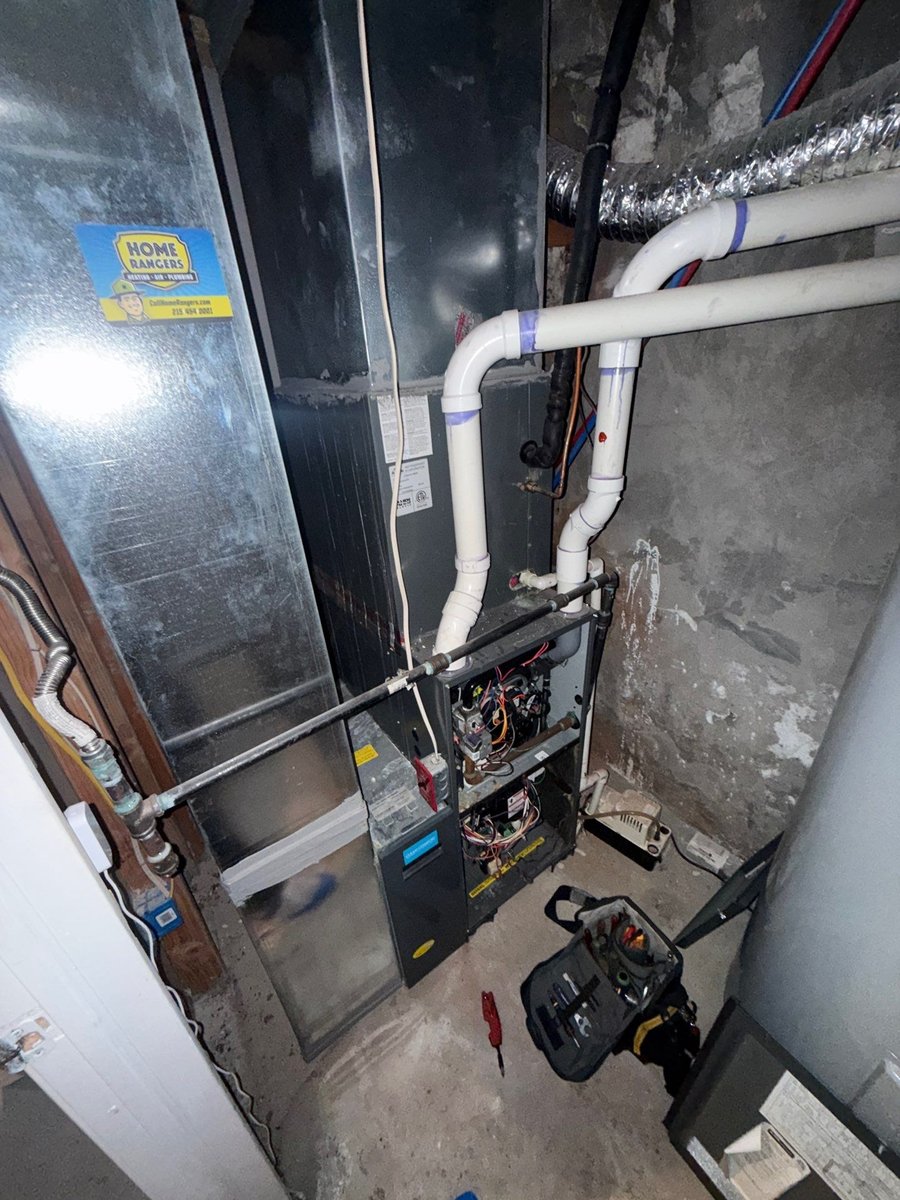
On many modern induced-draft gas furnaces, a heat request starts a small exhaust fan called the inducer. Controls verify draft before ignition and gas delivery. Flame must then be established and confirmed before the main blower delivers warm air. Exact timing and component order vary by model.
This sequence explains why a furnace can have power yet fail to start heating. An illuminated diagnostic light means part of the control system has power, not that every motor, circuit, or safety condition is correct.
Furnace Clicking but Not Turning On
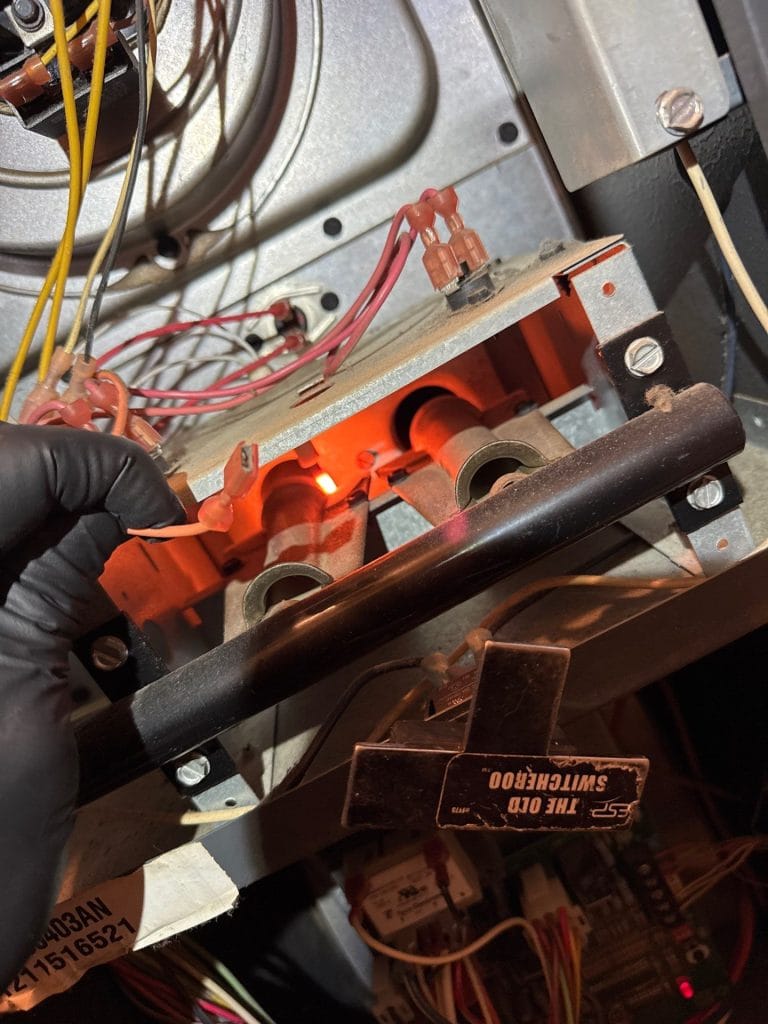
A brief click during normal startup can be expected. Repeated clicking without successful ignition needs investigation. Depending on the furnace, the sound could come from a relay, spark ignition, or another component; listening alone cannot distinguish an igniter problem from interrupted fuel delivery.
If the burners briefly light and then go out, report that detail. It differs from burners that never light and may involve flame verification. Do not clean burners, adjust gas pressure, or repeatedly restart the furnace to force ignition.
Furnace Humming or Buzzing but Not Turning On
A quiet operating hum differs from a motor that hums without starting. Note whether the sound comes from the upper combustion area or lower blower compartment, without opening either during operation.
Possible causes include a stalled motor, electrical fault, or failed capacitor on motors that use one. Some furnaces use electronically controlled motors, so a capacitor is not a universal answer. Turn heating off and arrange service rather than trying to spin the blower or replace electrical parts yourself.
Inducer Runs but the Furnace Does Not Ignite
Failure to prove adequate draft can prevent ignition. On condensing furnaces, backed-up condensate can also interrupt operation. A pressure-switch fault may reflect a vent, drain, or inducer problem; it does not automatically establish a bad switch.
From ground level, look for snow or debris covering accessible intake and exhaust openings. Clear only loose material around them; do not dismantle piping, insert tools, or chip ice from a termination. Report water around the furnace or condensate pump. Internal drains, traps, tubing, and switches require qualified diagnosis.
Old Gas Furnaces and Propane Supply
Some older furnaces use standing pilots; many others use electronic ignition. Identify your model before assuming a pilot needs lighting. Follow its printed instructions, and seek service if the pilot repeatedly goes out or you are unsure of the procedure.
For propane equipment, check the tank gauge if safely accessible. If the tank ran empty or service was interrupted, contact the supplier before restarting. With natural gas, check for a reported utility outage rather than lighting another appliance as a test. Do not reopen a valve closed for an unknown reason.
No heat during freezing weather? If your furnace cannot complete startup, contact Home Rangers to discuss emergency heating service and appointment availability. Describe any clicking, humming, fault codes, or recent power interruption. For gas odor or a carbon monoxide alarm, leave the home and contact emergency services first.
Furnace Not Starting After Summer, an Outage, or Maintenance
After Summer
Check whether the thermostat is still in COOL or OFF, whether a service switch was left off, and whether the filter or panel needs attention. Before the first cold spell, request heat and confirm a complete heating cycle. Seasonal timing alone does not identify a failed component.
After a Power Outage
Confirm household power has stabilized, then check the thermostat’s clock, schedule, and operating mode. Many furnaces resume automatically when power returns, but a lockout, interrupted control power, or damaged component can prevent recovery. Record any fault indication before resetting; an outage does not by itself prove surge damage.
After Changing the Filter or Installing a New Furnace
For a problem immediately after filter replacement, first check the service switch and panel seating. Confirm the filter size, orientation, and approved type. Do not operate without a filter as a workaround.
If a new furnace will not start, contact the installer. Provide the model, thermostat message, and any fault code. Commissioning, wiring, configuration, fuel supply, and safety checks should be verified before assuming new equipment has failed.
When to Call for Furnace Repair
Arrange professional furnace repair when the basic checks do not restore operation, a breaker trips, a motor stalls, or startup repeatedly fails. Do not keep power-cycling a furnace in lockout. Any permitted reset procedure and waiting period must come from that model’s manual.
Before the visit, record:
- The furnace model and thermostat display.
- Any fault code visible through the viewing window, including its flash pattern.
- The last startup event you noticed: silence, inducer, click, ignition, or blower.
- Recent outages, thermostat changes, filter replacement, or fuel delivery issues.
Read codes against the correct manual: the same flash count can mean different things across models. A code identifies a condition to investigate, not necessarily the component to replace.
Home Rangers Heating, Air & Plumbing serves homeowners in Bucks County, Montgomery County, and Philadelphia. If loss of heat is becoming urgent, contact us about emergency heating service and appointment availability.
Frequently Asked Questions
Why is my furnace not turning on automatically but runs when I raise the temperature?
The active schedule, temperature differential, Away mode, or selected remote sensor may explain the behavior. Check the active setpoint and room reading. If settings are correct but starts remain intermittent, have the thermostat signal and furnace controls tested.
Why does my furnace have power but not turn on?
Power at an indicator light does not confirm a valid heat request or successful safety checks. Thermostat wiring, ignition, draft verification, drainage, or motor problems can interrupt startup. Record the fault code and last startup sound before calling for service.
Why is my furnace not turning on but the fan works?
The circulation fan can operate independently of the burners. Confirm HEAT mode and a setpoint above room temperature. If the fan runs without heat, the furnace may have an ignition, fuel, or safety-control problem even though its blower works.
Can a dirty filter stop a furnace from turning on?
A clogged filter can restrict airflow and cause overheating protection to interrupt heating. It is worth checking, especially after previous shutdowns. A furnace with no lights or sounds still needs power and thermostat checks; replacing the filter does not fix every no-start condition.
Should I reset a furnace that will not start?
Record any fault code first and consult the model’s manual. Do not reset equipment with gas odor, scorching, electrical burning smells, or a tripped breaker. Repeated resets can restart a fault without fixing it; recurring lockout requires diagnosis.
Get your furnace starting reliably again.
Thermostat set correctly, power checked, and still no heat? Schedule a furnace diagnostic visit with Home Rangers. We can identify what is interrupting startup and explain the repair options for your home’s heating system.
Or call us directly at (215) 454-0001