Tankless Water Heater Installation in Bucks County & Montgomery County, PA

Imagine never running out of hot water again. No more timing showers around laundry cycles or waiting for the tank to recover after the kids get ready for school. Tankless water heaters deliver hot water on demand—as much as you need, for as long as you need it. And when properly sized and professionally installed, they do it more efficiently than traditional tank water heaters.

At Home Rangers LLC, we help homeowners throughout Bucks County, Montgomery County, and the Philadelphia area make the switch to tankless water heating. But we’re not here to sell you on tankless if it’s not right for your situation. We take time to understand your hot water needs, evaluate your home’s infrastructure, and give you honest guidance about whether tankless makes sense—and if so, which unit will actually deliver the performance you’re expecting.

As a family-owned company based in Warminster, we’ve seen too many tankless installations done wrong—undersized units that can’t keep up, improper venting that creates safety hazards, and gas lines that weren’t upgraded to handle the demand. We do it right the first time, with proper sizing, code-compliant installation, and thorough testing to ensure your new tankless water heater performs exactly as promised.

Benefits of Tankless Water Heaters

Tankless water heaters offer genuine advantages over traditional tank units—but they’re not magic, and they’re not right for every situation. Here’s an honest look at what tankless technology can and can’t do:

Endless Hot Water

This is the headline benefit and it’s real. A properly sized tankless water heater will never run out of hot water because it heats water as you use it rather than storing a limited supply. Fill a soaking tub, take a long shower, run the dishwasher—hot water keeps flowing.

Energy Efficiency

Tank water heaters constantly heat and reheat water to maintain temperature—even when you’re asleep or at work. Tankless units only fire when you turn on a hot water tap. This “on-demand” operation typically reduces energy consumption by 24-34% for average households.

Longer Lifespan

While tank water heaters typically last 10-15 years, tankless units often last 20+ years with proper maintenance. The higher upfront cost is offset by longer service life and lower operating costs over time.

Space Savings

Tankless water heaters mount on the wall and take up a fraction of the space of a 50-gallon tank. This frees up valuable floor space in your utility room, basement, or garage—especially valuable in smaller homes.

No Tank Failure Flooding

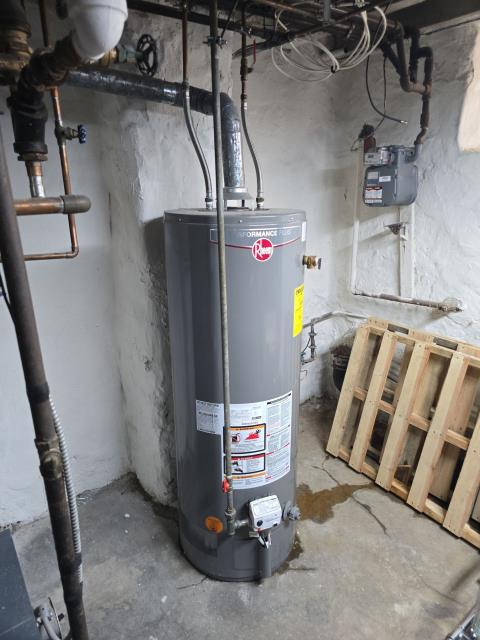
Tank water heaters can fail catastrophically, dumping 40-75 gallons of water into your home. Tankless units don’t store water, eliminating this flooding risk. They can still develop leaks, but never the sudden tank rupture that causes major water damage.

Cleaner Hot Water

Tank water heaters accumulate sediment and can develop rust over time, affecting water quality. Tankless units heat fresh water instantly without storage, delivering cleaner hot water throughout their lifespan.

The Honest Truth About Energy Savings

You’ll see claims of 30-50% energy savings for tankless water heaters. Actual savings depend on your usage patterns. Households that use a lot of hot water throughout the day see smaller percentage savings (though tankless still saves money). Households with lower, more spread-out usage see the biggest efficiency gains. We’ll help you understand realistic savings for your situation.

Is a Tankless Water Heater Right for Your Home?

Tankless water heaters are excellent—but they’re not the best choice for everyone. Here’s how to think about whether tankless makes sense for your situation:

Tankless Is Often a Good Fit When:

  • You frequently run out of hot water with your current tank
  • You have natural gas or propane service (gas tankless provides highest flow rates)
  • You’re building new or doing major renovation (easier to design around tankless requirements)
  • You plan to stay in your home long enough to recoup the higher upfront cost
  • You want to reclaim the floor space occupied by your current tank
  • You’re replacing a failing water heater anyway and want to upgrade
  • Energy efficiency is a priority for your household

Tankless May Not Be the Best Choice When:

  • Your current tank water heater meets your needs adequately
  • You don’t have gas service and would need extensive electrical upgrades
  • Your home’s gas line can’t be easily upgraded to handle tankless demand
  • You’re on a tight budget and the payback period doesn’t work for you
  • You plan to sell the home in the near future
  • Installation challenges (venting, gas line routing) make the project impractical

We don’t push tankless on every customer. During our assessment, we evaluate your hot water needs, your home’s infrastructure, and your budget to determine whether tankless truly makes sense. If a quality tank water heater would serve you better, we’ll tell you that.

Sizing Your Tankless Water Heater: Getting It Right

Proper sizing is the single most important factor in tankless water heater satisfaction. An undersized unit is the leading cause of tankless disappointment—and unfortunately, it happens all too often when installation is rushed or done by inexperienced contractors.

Understanding Flow Rate (GPM)

Unlike tank water heaters measured in gallons of storage, tankless units are rated by flow rate—gallons per minute (GPM) they can heat to the desired temperature. The key question is: how much hot water do you need flowing simultaneously at peak demand?

Typical Flow Rates by Fixture

  • Bathroom faucet: 0.5-1.5 GPM
  • Kitchen faucet: 1.0-2.0 GPM
  • Shower: 1.5-2.5 GPM
  • Dishwasher: 1.0-2.0 GPM
  • Washing machine: 1.5-3.0 GPM

Peak Demand Example

Two showers running (5 GPM) + dishwasher (1.5 GPM) = 6.5 GPM peak demand. Your tankless unit must handle this flow while raising water temperature to your desired setting. In our climate, that’s a significant temperature rise.

Temperature Rise Matters

Tankless water heaters must raise incoming water temperature to your desired output temperature. In Bucks County, incoming water temperature varies seasonally—roughly 50-55°F in summer and 40-45°F in winter. If you want 120°F hot water, that’s a 65-80°F temperature rise depending on season.

The Winter Performance Reality

A tankless water heater rated at 9 GPM might only deliver 6 GPM in winter when incoming water is coldest and the temperature rise is greatest. We size for worst-case winter conditions so your unit performs well year-round—not just during the summer demonstration.

Our Sizing Process

We don’t guess at sizing. We evaluate your household’s actual hot water usage patterns, count fixtures, consider realistic simultaneous usage, and factor in our local groundwater temperatures. The result is a tankless unit that genuinely meets your needs—not one that leaves you frustrated during high-demand periods.

Gas vs. Electric Tankless Water Heaters

Both gas and electric tankless water heaters have their place, but they’re very different in capability and installation requirements. Understanding these differences helps you make the right choice.

Gas Tankless Water Heaters

Gas tankless units (natural gas or propane) are the most popular choice for whole-house applications because they deliver significantly higher flow rates than electric models. A quality gas tankless unit can handle multiple simultaneous demands—showers, dishwasher, laundry—without compromise.

Advantages:

  • Higher flow rates (7-11+ GPM)
  • Better for whole-house applications
  • Lower operating costs in most areas
  • Can handle high simultaneous demand

Considerations:

  • Requires proper venting (adds to installation complexity)
  • May need gas line upgrade
  • Higher installation cost
  • Requires combustion air supply

Electric Tankless Water Heaters

Electric tankless units are simpler to install with no venting required, but they require substantial electrical capacity and deliver lower flow rates. They’re often better suited for point-of-use applications (single bathroom, remote sink) rather than whole-house service.

Advantages:

  • No venting required
  • Simpler installation
  • Compact size
  • Good for point-of-use applications

Considerations:

  • Lower flow rates (2-5 GPM typically)
  • May require electrical panel upgrade
  • Higher operating costs (electricity vs. gas)
  • Limited for whole-house in cold climates

Our Recommendation for Bucks County Homes

For whole-house tankless water heating in our area, gas tankless units are almost always the better choice. Our cold winter groundwater temperatures require significant heating capacity, and gas units deliver the flow rates needed for comfortable whole-house service. Electric tankless works well for supplemental applications—a basement bathroom, a detached workshop, or boosting hot water to a distant fixture.

Quality Tankless Brands We Install

We install tankless water heaters from manufacturers with proven track records for reliability, performance, and service support. These are brands we trust to perform in real-world conditions:

Navien

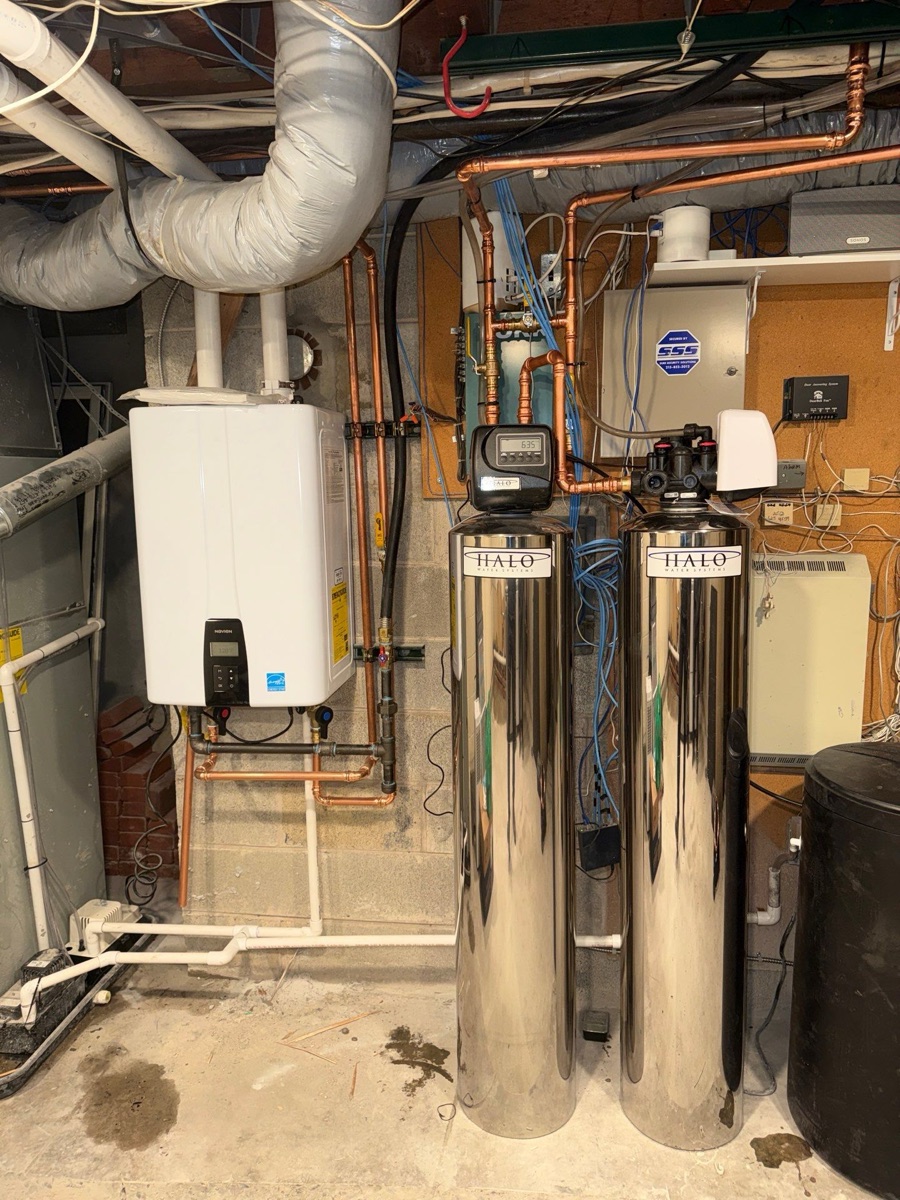
A leader in condensing tankless technology, Navien units offer exceptional efficiency ratings (up to 0.97 UEF) and innovative features like the NaviLink Wi-Fi control system. Their NPE-2 series is particularly popular for its reliability and performance. Navien’s dual stainless steel heat exchangers provide durability and excellent heat transfer.

Rinnai

One of the most recognized names in tankless water heating worldwide. Rinnai offers a range of options from their efficient Value Series to their premium Sensei units with built-in recirculation. Known for build quality and extensive dealer support network for parts and service.

Rheem

A trusted name in water heating for decades. Rheem’s tankless lineup includes both condensing and non-condensing options at various price points. Their Professional Prestige series offers strong performance with features like built-in leak detection and EcoNet smart connectivity.

Noritz

A Japanese manufacturer known for quality engineering and reliability. Noritz offers both residential and commercial tankless units, with their EZ Series designed specifically for easy installation and service. Strong reputation for longevity and consistent performance.

We don’t push one brand over another. We recommend the tankless water heater that best fits your specific needs—your flow rate requirements, efficiency priorities, budget, and any installation considerations unique to your home.

What Tankless Installation Involves

Tankless water heater installation is more complex than simply swapping out a tank unit. Proper installation requires attention to several critical factors that directly affect performance and safety.

Gas Line Requirements

Gas tankless water heaters require significantly more gas flow than tank units—often 150,000-200,000 BTU versus 40,000-50,000 BTU for a typical tank. Your existing gas line may need to be upgraded to handle this demand.

What We Evaluate

  • Gas meter capacity
  • Gas line size from meter to installation location
  • Total BTU load of all gas appliances
  • Distance from meter to unit
  • Whether line upsizing is needed

Common Upgrades Needed

  • Larger gas line from meter to unit
  • Gas regulator upgrade
  • Meter upgrade through utility company
  • Dedicated gas line run

Venting Requirements

Gas tankless water heaters require proper venting to exhaust combustion gases safely. The venting type depends on the unit and installation location.

Direct Vent / Sealed Combustion

Uses concentric or two-pipe venting that draws combustion air from outside and exhausts outside. Most common for residential installations. Can vent horizontally through a wall or vertically through the roof.

Power Vent

Draws combustion air from inside the home and power-vents exhaust outside. Requires adequate combustion air supply to the installation space.

Condensing Units

High-efficiency condensing tankless units produce acidic condensate that requires proper drainage. Condensate must be neutralized or drained appropriately—not simply dumped outside in freezing weather where it can create ice hazards.

Electrical Requirements

Even gas tankless water heaters require electricity for the control system, ignition, and internal components. Most require a dedicated 120V outlet near the unit. We ensure proper electrical supply as part of every installation.

Water Line Connections

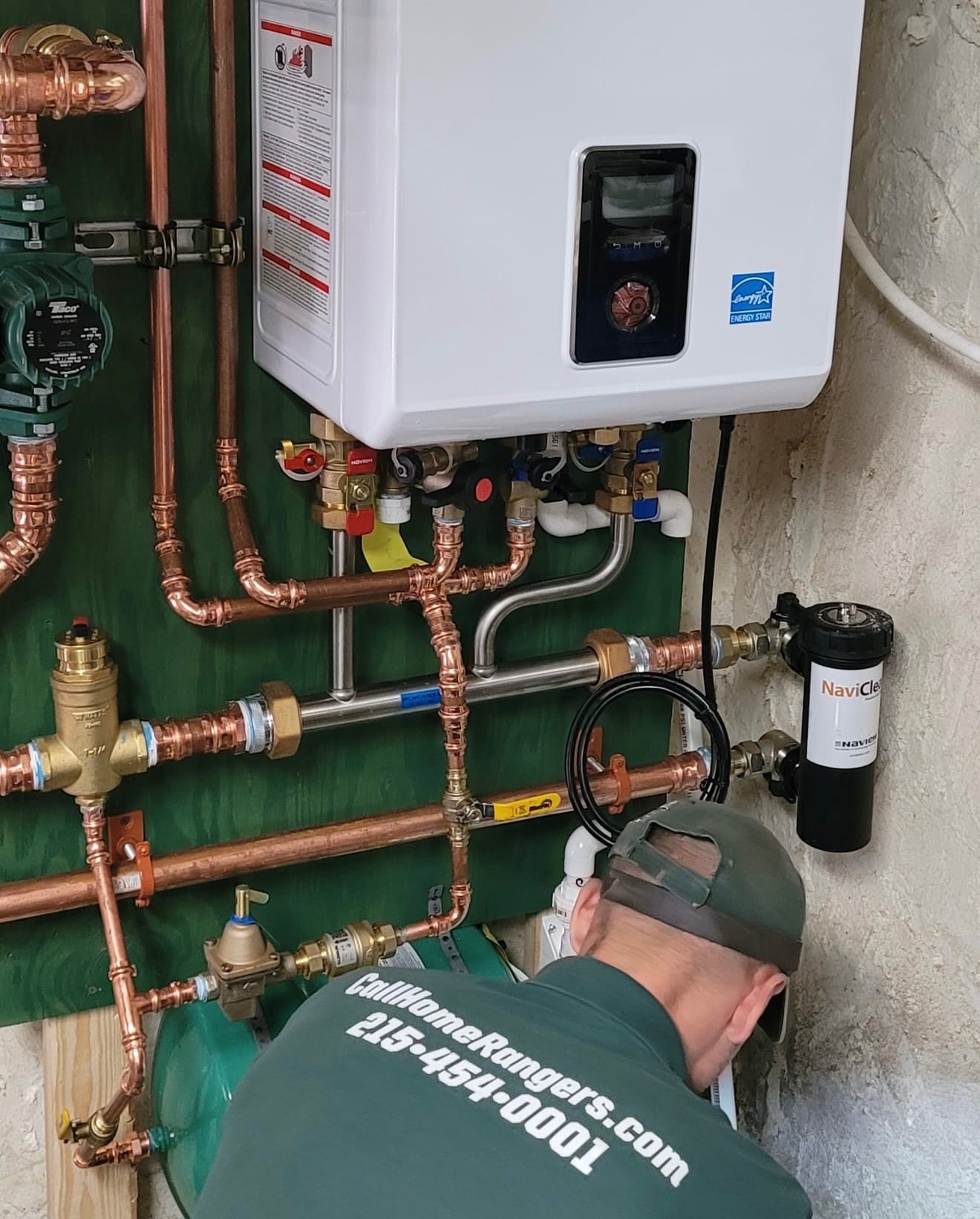
Proper water connections include shutoff valves for service access, unions for easy removal if needed, and often a service valve kit that allows for flushing and maintenance. We install quality connections that facilitate long-term serviceability.

Our Tankless Water Heater Installation Process

A successful tankless installation starts with proper planning and ends with thorough testing. Here’s exactly what to expect when you work with us:

Step 1: In-Home Assessment

We visit your home to evaluate your hot water needs, inspect existing infrastructure, and identify installation requirements. We look at your current water heater setup, gas line routing and capacity, electrical availability, and venting options. We discuss your hot water usage patterns and expectations.

Step 2: Detailed Proposal

Based on our assessment, we provide a detailed proposal that includes our recommended unit (properly sized for your needs), all installation work required (gas line, venting, electrical, water connections), any necessary upgrades or modifications, and complete pricing with no hidden costs. We explain our recommendations and answer your questions.

Step 3: Scheduling and Preparation

Once you approve the project, we schedule installation at a time that works for you and order your tankless water heater along with all necessary materials. We coordinate any required permits. For most installations, you can expect to be without hot water for several hours on installation day.

Step 4: Professional Installation

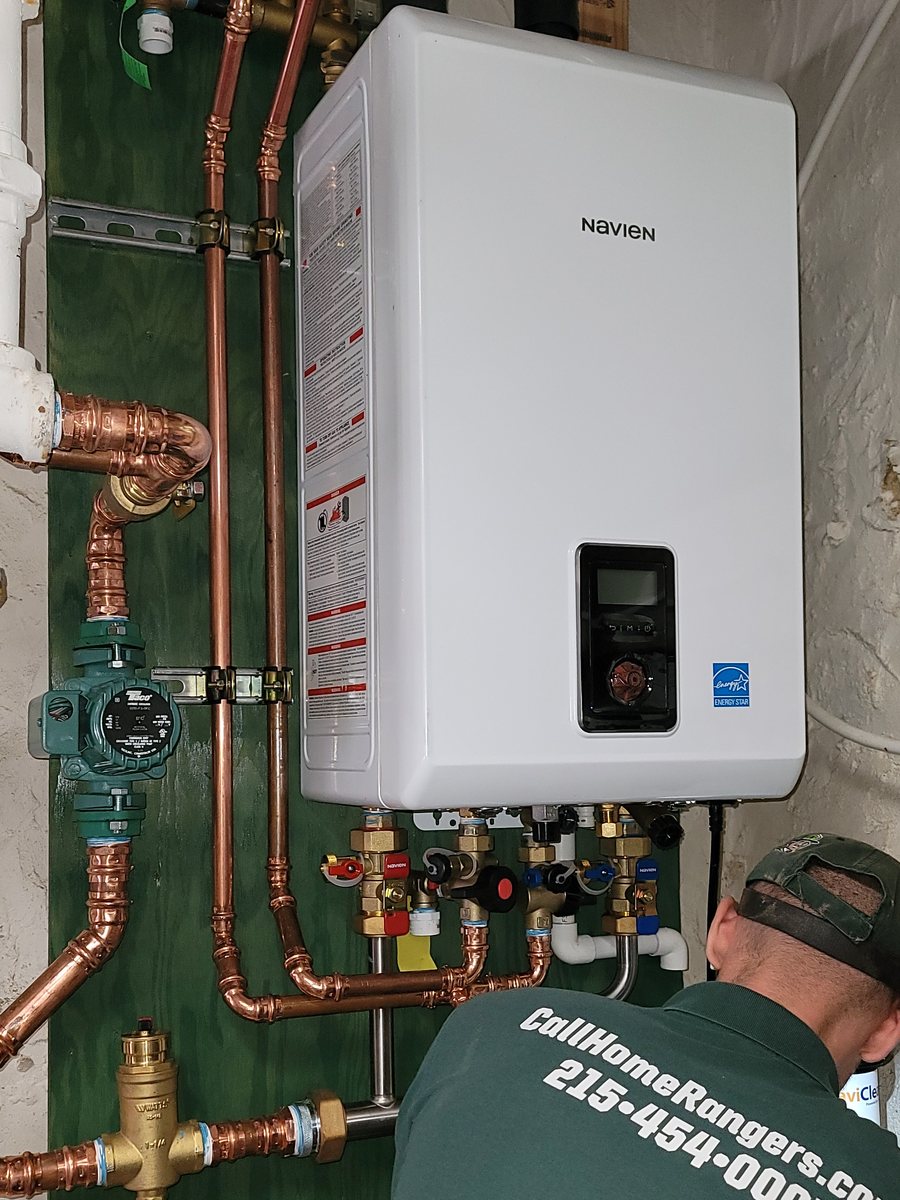
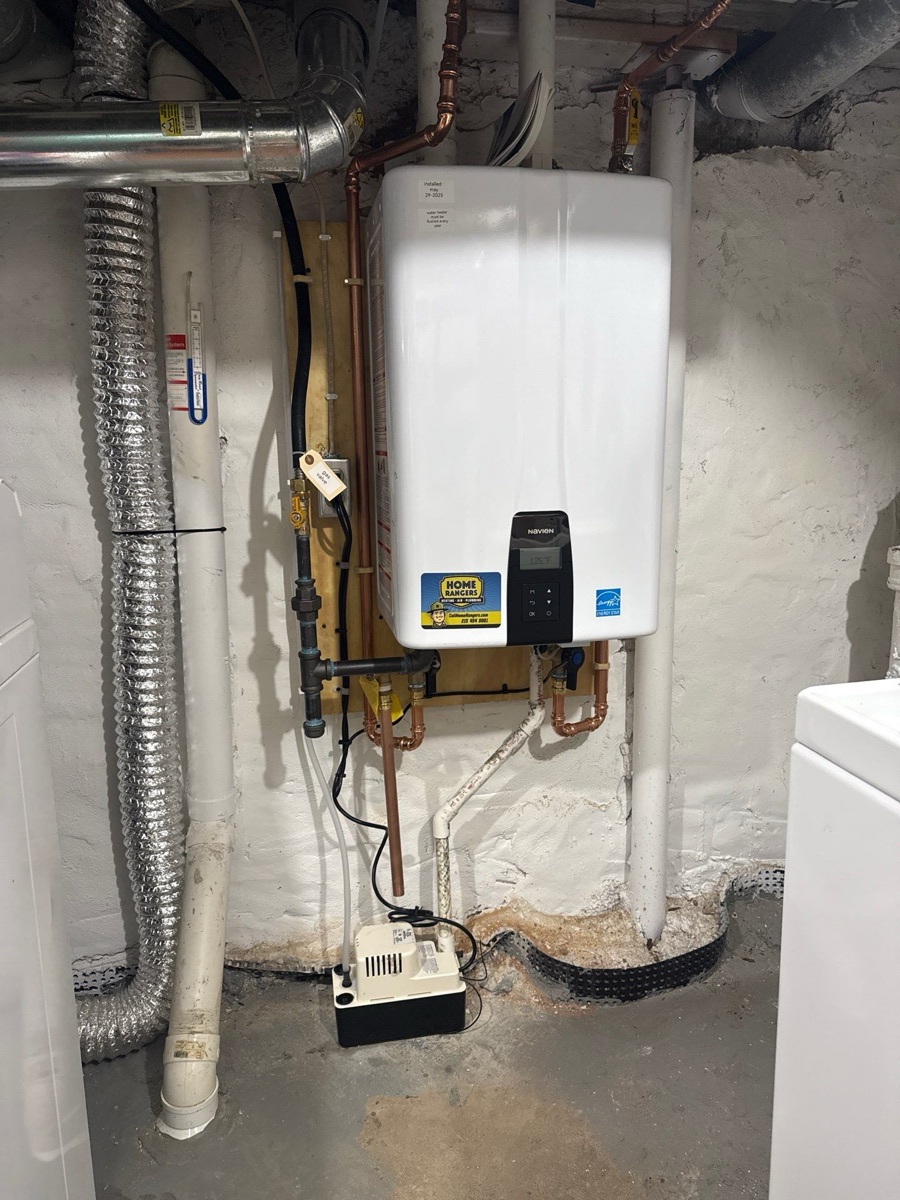
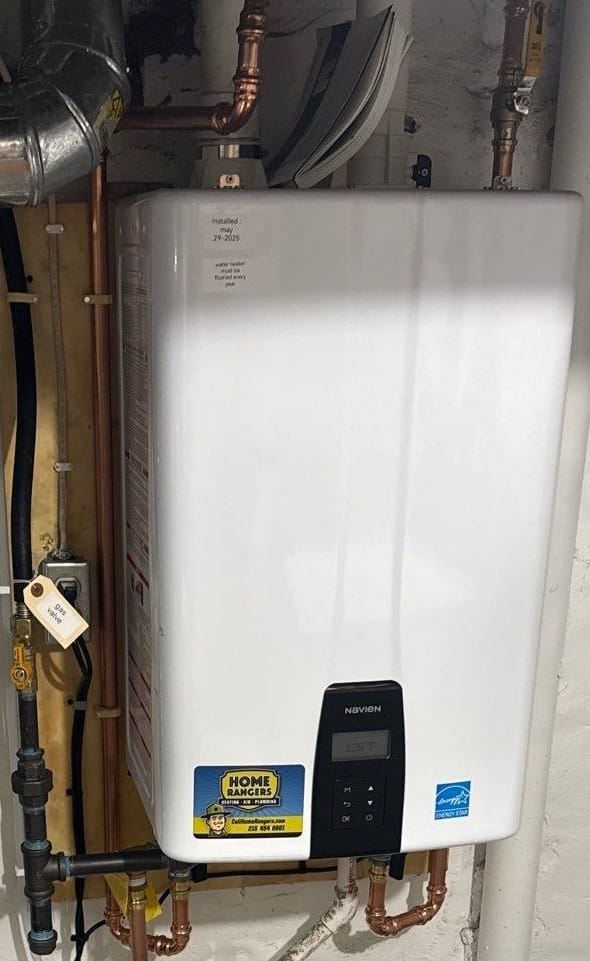
On installation day, we remove your old water heater and install your new tankless unit according to manufacturer specifications and local codes. This includes mounting the unit, connecting gas and water lines, installing proper venting, making electrical connections, and setting up condensate drainage if applicable.

Step 5: System Testing

We don’t consider installation complete until we’ve thoroughly tested the system. We verify gas connections are leak-free, confirm proper ignition and combustion, check venting for correct operation, test hot water delivery at multiple fixtures, and verify the unit is performing to specification. We adjust settings to your preferences.

Step 6: Homeowner Education

We walk you through your new tankless water heater—how it operates, what the display shows, how to adjust temperature, and what maintenance it needs. We explain the annual flushing requirement and answer any questions. You’ll understand how to get the most from your new system.

Step 7: Documentation and Warranty

We provide all warranty documentation, register your unit with the manufacturer, and give you our contact information for any future questions or service needs. Your investment is protected, and we’re here for ongoing support.

Recirculation: Instant Hot Water at Every Faucet

One common complaint about tankless water heaters is the delay before hot water arrives at distant fixtures. You turn on the faucet and wait… and wait… while cold water runs down the drain. Recirculation systems solve this problem.

How Recirculation Works

A recirculation system keeps hot water available near your fixtures by slowly circulating water through the pipes. When you turn on the tap, hot water is already there—no waiting, no wasted water.

Dedicated Return Line

The ideal setup uses a dedicated return pipe that brings water back to the heater in a continuous loop. This is easiest to install during new construction or major renovation. Provides the best performance and efficiency.

Crossover Valve System

For existing homes without a return line, a crossover valve at the furthest fixture uses the cold water line as the return path. Less invasive to install, though slightly less efficient. A good retrofit option for most homes.

Recirculation Control Options

Timer-Based

Circulates during programmed times—mornings and evenings when you typically need hot water. Saves energy by not running 24/7 while ensuring hot water when you need it most.

Demand-Based

Activated by a button or motion sensor at the fixture. Press the button, wait briefly, and hot water arrives. Uses the least energy but requires user action.

Temperature-Based

Circulates whenever pipe temperature drops below a set point, maintaining ready hot water continuously. Convenient but uses more energy than timer or demand systems.

Built-In Recirculation

Many modern tankless units (like certain Navien and Rinnai models) have built-in recirculation pumps. This simplifies installation and integrates seamlessly with the unit’s controls.

We can install recirculation as part of your new tankless system or add it later. If instant hot water at every fixture matters to you, let’s discuss the best recirculation option for your home.

Tankless Water Heater Maintenance Requirements

Tankless water heaters require regular maintenance to perform well and last. This isn’t optional—it’s essential. Understanding maintenance requirements upfront helps you budget for the true cost of tankless ownership.

Annual Descaling (Flushing)

The most important maintenance task is annual descaling. Hard water deposits mineral scale inside the heat exchanger over time. Without regular flushing, this scale reduces efficiency, restricts flow, and can cause component failure and costly repairs.

What’s Involved in Descaling

The unit is isolated, connected to a small pump, and circulated with a mild descaling solution (typically white vinegar or a commercial descaler) for 45-60 minutes. This dissolves mineral deposits and flushes them out. The process also includes cleaning inlet filters and checking overall system operation.

Additional Maintenance Tasks

Air Filter Cleaning

Gas tankless units have air intake filters that should be checked and cleaned periodically. Clogged filters restrict combustion air and affect performance.

Water Inlet Filter

A small filter on the water inlet traps debris before it enters the unit. This should be checked and cleaned during annual service.

Venting Inspection

Vent terminations should be checked periodically for blockages—bird nests, debris, or ice in winter. Blocked venting is a safety concern and causes shutdowns.

System Check

Annual maintenance should include checking for error codes, verifying proper operation, and inspecting connections for any developing issues.

Skipping Maintenance Voids Value

We see tankless water heaters fail prematurely because owners skipped annual maintenance. A unit designed to last 20+ years might fail at 8-10 years if scale is allowed to accumulate. The cost of annual maintenance is far less than premature replacement. Some manufacturer warranties require documented maintenance.

We offer tankless maintenance services and can establish an annual service schedule to protect your investment. Ask us about maintenance when we install your new unit.

Why Choose Home Rangers for Tankless Installation

Tankless water heater installation is a significant investment, and the quality of installation directly affects performance, efficiency, and lifespan. Here’s why homeowners throughout Bucks County and Montgomery County trust us with their tankless projects:

Proper Sizing—Guaranteed

We don’t guess or use generic recommendations. We calculate your actual hot water needs based on fixtures, usage patterns, and our local groundwater temperatures. Your tankless unit will be sized to perform in real-world conditions—including cold winter mornings.

Complete System Evaluation

We assess everything before quoting—gas line capacity, venting options, electrical requirements, and any challenges specific to your home. No surprises on installation day. The price we quote includes everything needed for proper installation.

Code-Compliant Installation

We follow manufacturer specifications and local building codes. Proper venting, correct gas line sizing, appropriate clearances, and safe electrical connections. Our installations pass inspection and protect your family.

Honest Recommendations

If tankless isn’t right for your situation, we’ll tell you. If a particular brand or model better fits your needs, we’ll recommend it—not the one with the highest margin. Our advice is based on what’s best for you.

Family-Owned Accountability

We’re not a franchise or call center. We’re your neighbors in Warminster, and our family reputation depends on every job we do. When we install your tankless water heater, we stand behind that work for years to come.

Ongoing Support

Our relationship doesn’t end at installation. We’re here for maintenance, repairs, and questions throughout your tankless water heater’s life. We service what we sell and support our customers long-term.

Licensed & Insured

Fully licensed Pennsylvania plumbing contractor with comprehensive liability coverage protecting you and your property.

Factory-Trained Technicians

Our plumbers are trained on the tankless brands we install. Proper installation according to manufacturer specifications protects your warranty.

Permit Compliance

We pull required permits and ensure installations meet local codes. Proper permitting protects your investment and your home’s resale value.

Family-Owned, Locally Operated

Not a franchise or national chain. A real local family business with roots in Bucks County and accountability to our neighbors.

Tankless Water Heater Installation Across Bucks County, Montgomery County & Philadelphia

From our home base in Warminster, we provide professional tankless water heater installation throughout the region. Whether you’re upgrading from an old tank unit or installing tankless in a new home, we have the expertise to do the job right.

Communities We Serve:

Recent Jobs and Reviews

Rated 5.0 out of 5 stars based on 46 customer reviews

Customers say: The reviews reflect an overwhelmingly positive sentiment toward the service provider. Customers consistently express high satisfaction with the company's responsiveness, professionalism, and technical expertise. The overall tone is decidedly positive, with recurring themes of prompt service, knowledgeability, and helpfulness. Clients particularly appreciate the clear communication, honesty, and thorough explanations provided during service visits. Many reviews highlight the technicians' willingness to take time explaining systems and offering helpful recommendations. The company appears to excel at customer service, with several reviewers indicating they plan to use the service again or establish ongoing maintenance contracts. The professional demeanor and problem-solving abilities of the staff are frequently praised, contributing to a strong reputation for reliability and quality workmanship.

Don’t see your town listed? We likely serve your area. Give us a call to discuss your tankless water heater installation project.

Frequently Asked Questions: Tankless Water Heater Installation

How much does tankless water heater installation cost?

Total installed cost varies significantly based on the unit selected, required gas line and venting work, and any other modifications needed for your home. Tankless installation typically costs more than tank water heater installation due to the additional infrastructure requirements. We provide detailed quotes after assessing your specific situation—no generic pricing that changes later.

How long does tankless installation take?

A straightforward replacement where gas and venting infrastructure is adequate typically takes 4-6 hours. If gas line upgrades or significant venting work is needed, installation may take a full day or require scheduling the gas work separately. We’ll give you a realistic timeline based on your project scope.

Will a tankless water heater work for my whole house?

A properly sized gas tankless water heater can supply hot water to an entire home, handling multiple simultaneous demands. The key is proper sizing. Electric tankless units have lower flow rates and are typically better suited for point-of-use applications rather than whole-house service in our climate.

What brands of tankless water heaters do you install?

We install quality brands including Navien, Rinnai, Rheem, and Noritz. We recommend the brand and model that best fits your specific needs rather than pushing one brand. All the manufacturers we work with have proven track records for reliability and performance.

Do I need to upgrade my gas line for a tankless water heater?

Possibly. Tankless water heaters require 3-4 times more gas than tank units. Many homes need gas line upgrades—either a larger line from the meter or a dedicated line to the unit. We evaluate your gas infrastructure during our assessment and include any necessary upgrades in our quote.

How much can I save with a tankless water heater?

Most households see 24-34% reduction in water heating energy costs. Actual savings depend on your usage patterns and current equipment efficiency. Households with spread-out hot water use see the biggest percentage savings. We can help you estimate realistic savings for your situation.

Is there a delay before hot water arrives with tankless?

Yes—the time it takes for hot water to travel from the heater to your fixture. This is the same delay you’d experience with any water heater, but it’s more noticeable because there’s no stored hot water in the pipes. Recirculation systems can provide instant hot water if this delay is a concern.

How long do tankless water heaters last?

With proper maintenance (especially annual descaling), tankless water heaters typically last 20+ years—significantly longer than the 10-15 year lifespan of tank units. This extended lifespan helps offset the higher upfront cost.

What maintenance does a tankless water heater need?

Annual descaling (flushing) is essential to remove mineral scale from the heat exchanger. This prevents efficiency loss, flow restriction, and premature component failure. Air and water inlet filters should also be cleaned periodically. Skipping maintenance significantly shortens lifespan.

Can you install a tankless water heater where my tank is now?

Often yes, but not always in the exact same location. Tankless units have different venting requirements and need adequate combustion air. We evaluate your current setup and recommend the best location—sometimes that’s where your current tank sits, sometimes a different location works better.

Whether your AC stopped cooling, your furnace won’t ignite, your water heater is leaking, or your drains are backing up — Home Rangers is here to help. As Warminster’s hometown HVAC and plumbing company, we treat every customer like a neighbor, because you are.

Ready for Home Service You Can Trust?

or call us at:

Scroll to Top