Water Filtration System Installation in Bucks County & Montgomery County, PA
The water flowing into your Bucks County home may meet federal safety standards, but that doesn’t mean it’s as clean, pure, or pleasant as it could be. Municipal water often contains chlorine, sediment, and minerals that affect taste and smell. Well water can carry iron, sulfur, bacteria, and other contaminants that make it unpleasant—or potentially unsafe—without proper treatment.
At Home Rangers LLC, we help homeowners throughout Bucks County, Montgomery County, and the Philadelphia area understand what’s actually in their water and choose filtration solutions that address their specific concerns. We’re not here to scare you into buying equipment you don’t need. We take a straightforward approach: test your water, identify what’s actually present, and recommend targeted filtration that solves real problems.
As a family-owned company based in Warminster, we’ve helped our neighbors improve their water quality for years. Whether you’re dealing with hard water, chlorine taste, sediment, iron staining, or concerns about contaminants, we can design and install a filtration system that delivers the clean, great-tasting water your family deserves.
Signs Your Water Quality Needs Attention
Water quality problems often reveal themselves through everyday experiences. If you’re noticing any of these issues, filtration may be the solution:
Unpleasant Taste or Odor
Water that tastes or smells like chlorine, rotten eggs (sulfur), metal, or just “off” indicates the presence of chemicals, gases, or minerals that filtration can remove. You shouldn’t have to hold your nose to drink a glass of water from your own tap.
Visible Particles or Cloudiness
Sediment, rust flakes, or general cloudiness means particulates are making it through to your fixtures. This can come from aging municipal pipes, well pump issues, or deteriorating plumbing in your home. Sediment filtration solves this problem.
Staining on Fixtures and Laundry
Orange or brown stains indicate iron. Blue-green stains suggest copper (often from acidic water corroding pipes). Black staining points to manganese. These minerals not only stain—they can affect water taste and potentially your health.
Dry Skin and Hair
Hard water and chlorine strip natural oils from your skin and hair, leaving them dry and irritated. If you’ve tried every lotion and shampoo without improvement, your water may be the culprit.
Soap Doesn’t Lather Well
Hard water interferes with soap’s ability to create suds. If you’re using excessive soap and shampoo but still feel like you can’t get clean, hard water is likely the issue. This also means you’re using more cleaning products than necessary.
Spots on Dishes and Glassware
White spots and film on dishes, glasses, and shower doors are mineral deposits from hard water. No amount of rinse aid fully solves this—the minerals are in the water itself.
Concerns You Can’t See or Smell
Some water quality issues have no obvious signs. Lead, nitrates, arsenic, and certain bacteria don’t announce themselves through taste or appearance. If you have concerns about what might be in your water—especially if you have a private well—professional water testing provides answers.
Water Quality in Bucks County and Montgomery County
Understanding local water conditions helps you make informed decisions about filtration. Here’s what we commonly encounter in our service area:
Municipal Water Supplies
Most Bucks County and Montgomery County residents receive water from public utilities like Aqua Pennsylvania, PWWA, Bucks County Water and Sewer Authority, or North Wales Water Authority. Municipal water is treated and tested to meet EPA standards, but that doesn’t mean it’s perfect:
Chlorine and Chloramines
Added to disinfect water during treatment. While safe at regulated levels, these chemicals cause the “pool water” taste and smell many people notice. They can also dry out skin and hair. Carbon filtration effectively removes chlorine and improves taste.
Hard Water
Much of our area has moderately hard to hard water, containing calcium and magnesium that cause scale buildup, soap scum, and spotted dishes. Water softening or conditioning addresses hardness.
Aging Infrastructure
Older water mains can contribute sediment, rust, and occasionally lead (from older service lines) to your water. Whole-house filtration provides a barrier between municipal pipes and your home.
Private Well Water
Many homes in Bucks County—particularly in areas like Doylestown, Newtown, and the surrounding townships—rely on private wells. Well water quality varies significantly by location and depth, with common concerns including:
Iron and Manganese
Very common in our area’s groundwater. These minerals cause staining, metallic taste, and can clog fixtures and appliances. Specialized iron filtration systems effectively remove these minerals.
Hardness
Well water in our region tends to be quite hard due to the limestone geology. Water softening is often essential for well water users to protect plumbing and appliances.
Sulfur (Hydrogen Sulfide)
That “rotten egg” smell indicates hydrogen sulfide gas, common in some well water. While usually not harmful, it makes water unpleasant to use. Aeration or specialized filtration eliminates the odor.
Bacteria and Nitrates
Wells can be vulnerable to bacterial contamination and elevated nitrates, especially in agricultural areas. Regular testing is important, and UV disinfection or other treatment may be needed.
Well Water Testing Is Essential
Unlike municipal water, private wells aren’t regularly tested by any authority. Annual testing for bacteria and nitrates is recommended, with broader testing every few years or when you notice changes in your water. We can help you understand test results and recommend appropriate treatment.
Types of Water Filtration Systems
Different water quality problems require different solutions. Here’s an overview of the filtration technologies we install and when each is appropriate:
Whole-House Filtration
Whole-house systems (also called point-of-entry systems) treat all water entering your home. Every tap, shower, and appliance receives filtered water.
Sediment Filtration
Removes particles like sand, silt, rust, and debris. Often the first stage in a multi-stage system, sediment filters protect downstream equipment and prevent particles from reaching fixtures. Essential for well water and older municipal systems.
Carbon Filtration
Activated carbon removes chlorine, chloramines, and organic compounds that affect taste and odor. This is the workhorse of municipal water treatment—if your water smells like chlorine or has an “off” taste, carbon filtration is usually the answer.
Iron and Manganese Filtration
Specialized media (like Birm, Greensand, or catalytic carbon) oxidizes and filters dissolved iron and manganese. Essential for well water with staining issues. Different media work best depending on iron levels and water chemistry.
Multi-Stage Systems
Combines multiple filtration technologies in sequence to address several water quality issues. For example: sediment filter → iron filter → carbon filter. We design systems based on your specific water analysis.
Point-of-Use Filtration
Point-of-use systems treat water at a specific location—typically the kitchen sink for drinking and cooking water.
Reverse Osmosis (RO)
The gold standard for drinking water purification. RO systems force water through a semi-permeable membrane that removes up to 99% of contaminants including lead, arsenic, nitrates, dissolved solids, and more. Produces exceptionally pure water for drinking and cooking.
Under-Sink Carbon Filters
Simpler than RO but effective for chlorine, taste, and odor improvement. Good choice when your main concern is better-tasting drinking water without the complexity of reverse osmosis.
Specialty Treatment
UV Disinfection
Ultraviolet light kills bacteria, viruses, and other microorganisms without adding chemicals. Essential for well water systems where bacterial contamination is a concern. Often installed as a final treatment stage.
Acid Neutralizers
Low pH (acidic) water corrodes pipes and fixtures, causing blue-green staining and potential lead leaching from older plumbing. Acid neutralizers raise pH to protect your plumbing system.
Whole-House vs. Point-of-Use: Which Do You Need?
One of the first decisions in water filtration is whether to treat all water entering your home or just the water at specific fixtures. Often, the best approach combines both.
Whole-House Filtration
Best For:
- Removing chlorine from all water (showers, laundry, etc.)
- Eliminating sediment throughout the home
- Treating iron and manganese that cause staining
- Protecting all fixtures and appliances
- Well water with multiple concerns
Considerations:
- Higher upfront cost
- Requires space for equipment
- Filter maintenance for entire system
Point-of-Use Filtration
Best For:
- Improving drinking water quality specifically
- Removing contaminants like lead, nitrates, arsenic
- Achieving the purest possible drinking water (RO)
- Supplementing whole-house treatment
- Budget-conscious improvement to drinking water
Considerations:
- Only treats water at one location
- Doesn’t address shower water, laundry, etc.
- RO produces waste water and requires storage tank
Our Recommendation
For most homes with water quality concerns, we recommend a two-part approach: whole-house filtration to address issues affecting all water use (chlorine, sediment, hardness, iron), plus a reverse osmosis system under the kitchen sink for the purest possible drinking water. This combination provides comprehensive protection while delivering exceptional drinking water quality.
Quality Water Filtration Brands We Install
We partner with manufacturers known for effective, reliable water treatment equipment. These brands have proven track records and stand behind their products:
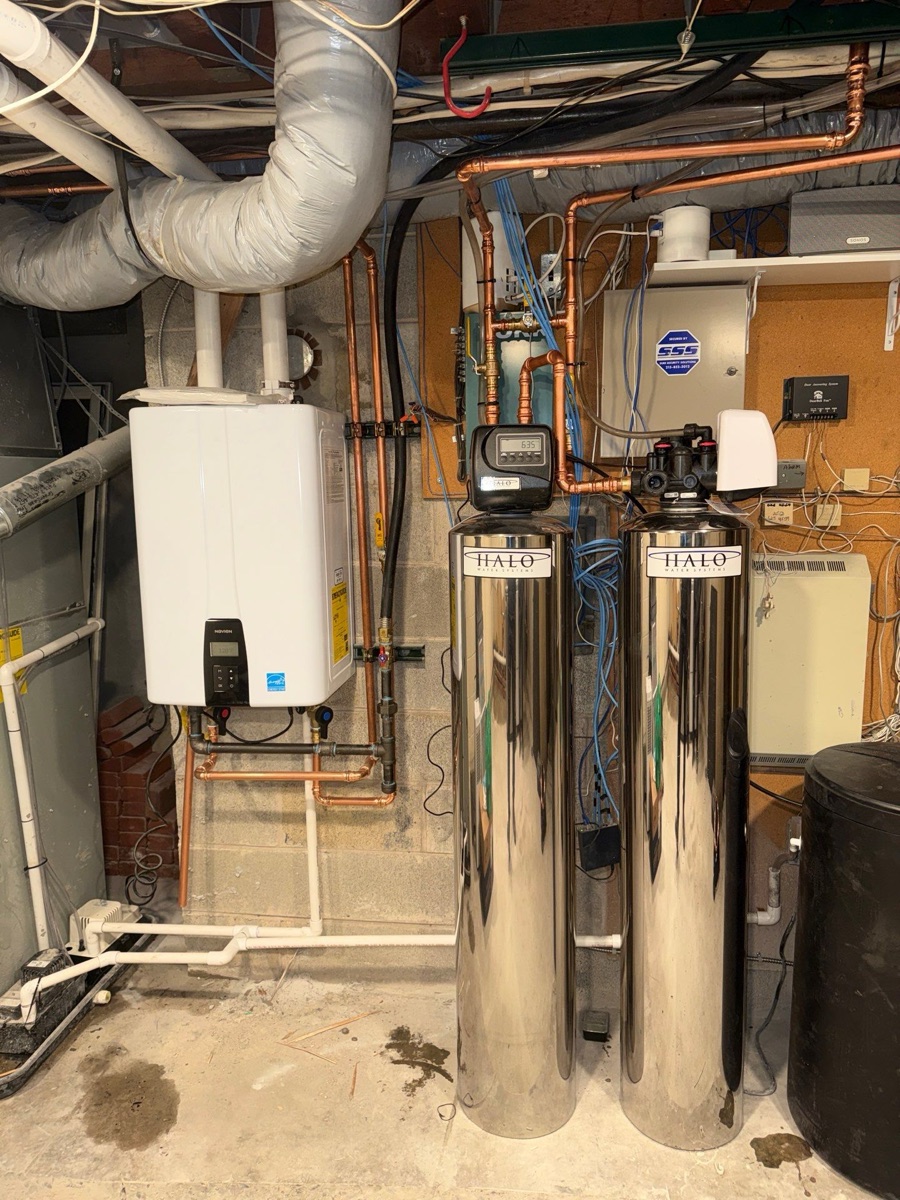
HALO Water Systems
HALO offers innovative whole-house filtration and conditioning systems, including their popular ION series that combines multiple treatment stages in one unit. Their systems are designed for low maintenance and long filter life, making them practical for homeowners who want effective treatment without constant attention. HALO’s American-made equipment is backed by strong warranties and excellent support.
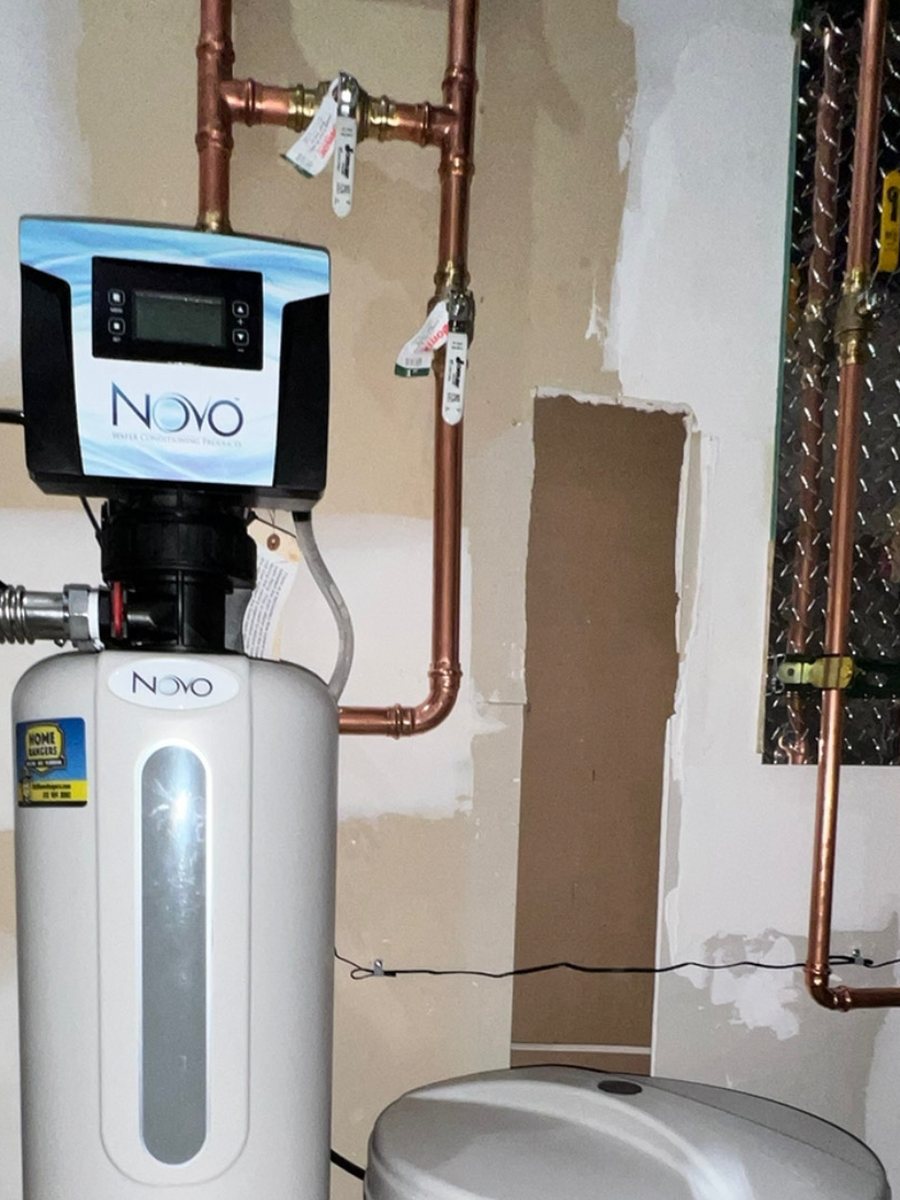
NOVO Water Conditioning
NOVO manufactures high-quality water treatment equipment designed for performance and reliability. Their filtration systems feature efficient designs, user-friendly controls, and durable construction built to last. NOVO products are known for consistent performance and straightforward serviceability—equipment that works well and is easy to maintain.
Solutions for Every Situation
While HALO and NOVO are our primary filtration partners, we understand that every home’s water quality challenges are unique. If your situation requires specialized equipment or a different approach, we’ll find the right solution for your specific needs. Our goal is solving your water quality problems—not pushing a particular brand. We’ll recommend what actually works best for your water and your household.
Our Water Filtration Installation Process
Effective water treatment starts with understanding what’s actually in your water. We don’t guess or make assumptions—we gather information and design solutions that address your specific concerns.
Step 1: Initial Consultation
We start by listening. What concerns do you have about your water? What problems have you noticed? Are you on municipal water or a private well? This conversation helps us understand what you’re dealing with and what you’re hoping to achieve.
Step 2: Water Testing
We test your water to identify what’s actually present. For municipal water, we typically test for hardness, chlorine, pH, and TDS (total dissolved solids). For well water, we recommend comprehensive testing including bacteria, nitrates, iron, manganese, pH, hardness, and other relevant parameters. Test results guide our recommendations.
Step 3: Site Evaluation
We inspect the location where equipment will be installed—typically near where water enters your home. We assess available space, drain access for backwashing systems, electrical availability, and plumbing configuration. This ensures the equipment we recommend will actually fit and function properly.
Step 4: Customized Recommendation
Based on your water test results, concerns, and site conditions, we design a filtration system that addresses your specific needs. We explain what each component does, why we’re recommending it, and what results you can expect. We provide clear pricing with no surprises.
Step 5: Professional Installation
Our plumbers install your system according to manufacturer specifications and plumbing codes. This includes proper mounting, secure plumbing connections, bypass valves for service access, and any electrical connections required. We program and configure equipment for your specific water conditions.
Step 6: Testing and Verification
After installation, we test the system and your water to verify everything is working correctly. We check for leaks, confirm proper flow rates, and test water quality to ensure the system is performing as expected.
Step 7: Education and Documentation
We show you how your new system works, explain maintenance requirements, and provide documentation including filter change schedules. You’ll know how to monitor your system and when to call for service.
Water Filtration System Maintenance
All water filtration systems require some maintenance to continue working effectively. Understanding these requirements helps you make an informed decision and budget for ongoing costs.
Sediment Filters
Cartridge-style sediment filters typically need replacement every 3-6 months depending on sediment levels in your water. Higher sediment means more frequent changes. These are relatively inexpensive and easy to replace.
Carbon Filters
Whole-house carbon filters may last 6-12 months or longer depending on water usage and chlorine levels. Some systems use large tanks with media that lasts several years before replacement. We match filter type to your needs and preferences.
Iron Filters
Iron filtration systems typically backwash automatically to clean the media. The media itself may last 5-10 years depending on iron levels and water chemistry. Some systems require periodic addition of regenerant solutions.
Reverse Osmosis
RO systems have multiple filter stages with different replacement schedules. Pre-filters typically need annual replacement, while the RO membrane may last 2-5 years. We provide a maintenance schedule specific to your system.
UV Disinfection
UV lamps should be replaced annually regardless of whether they’re still producing light—UV output diminishes over time. The quartz sleeve protecting the lamp should be cleaned periodically and inspected during lamp replacement.
Maintenance Support
We provide maintenance services for the filtration systems we install. Whether you want to handle filter changes yourself or prefer to have us maintain your system, we’re here to help. We can set up a maintenance schedule that keeps your system performing optimally.
Installation Considerations
Before installing a water filtration system, there are practical factors to consider that affect equipment selection and installation approach:
Available Space
Whole-house filtration equipment needs room for installation and service access. We evaluate your utility area, basement, or mechanical room to ensure equipment fits and can be maintained. If space is limited, we recommend compact systems designed for tighter installations.
Drain Access
Many filtration systems (especially iron filters and water softeners) require drain access for backwashing. We need either a floor drain or a way to route discharge to an appropriate drain. This affects equipment placement options.
Water Pressure
Filtration systems create some pressure drop as water passes through. If your incoming pressure is already low, we need to consider this in system design. Sometimes pressure boosting is needed, or we select equipment that minimizes pressure loss.
Electrical Requirements
UV systems, some electronic filter heads, and reverse osmosis systems require electrical connections. We ensure appropriate outlets are available or include electrical work in our installation plan.
Well System Integration
For well water systems, filtration equipment must be properly integrated with your pressure tank and pump system. Placement and sizing must account for your well’s flow rate and pressure settings.
Bypass Valves
We install bypass valves that allow water to flow around the filtration system during maintenance or in emergencies. This is a standard practice that ensures you’re never completely without water if the system needs service.
Why Choose Home Rangers for Water Filtration Installation
Water treatment is an unregulated industry where anyone can claim to be an expert. Here’s why Bucks County and Montgomery County homeowners trust us with their water quality:
Test First, Recommend Second
We don’t guess at what’s in your water or make assumptions based on your address. We test your water and base our recommendations on actual results. You’ll understand exactly what’s being treated and why.
Right-Sized Solutions
We don’t sell everyone the most expensive system. We recommend equipment that addresses your specific water quality issues without unnecessary features or capacity. Why pay for treatment you don’t need?
No Scare Tactics
Some water treatment salespeople use fear to sell expensive systems. We take a different approach—honest information about what’s in your water and straightforward recommendations. Your decision should be based on facts, not fear.
Licensed Plumbers
Water filtration systems must be properly integrated with your plumbing. Our licensed plumbers ensure correct installation with proper connections, adequate flow, and appropriate drainage. This isn’t just about the filtration equipment—it’s about your whole plumbing system.
Family-Owned Accountability
We’re not a water treatment franchise pushing proprietary equipment. We’re a local family business that selects the best products for your needs from quality manufacturers. Our recommendations are based on what works, not sales quotas.
Ongoing Support
We service what we sell. When your system needs maintenance, filter replacement, or troubleshooting, we’re here. You won’t be left searching for someone to work on equipment another company installed.
Licensed & Insured
Fully licensed Pennsylvania plumbing contractor. Water filtration installed by qualified plumbers, not just salespeople.
Water Quality Expertise
We understand local water conditions in Bucks County and Montgomery County—both municipal supplies and private wells.
Quality Equipment
We install proven products from reputable manufacturers with solid warranties and available parts and service.
Family-Owned, Locally Operated
Not a franchise. A real local family business with accountability to our neighbors and community.
Water Filtration Installation Across Bucks County, Montgomery County & Philadelphia
From our home base in Warminster, we provide water filtration system installation throughout the region. Whether you’re on municipal water looking to improve taste and quality, or on a private well needing comprehensive treatment, we can help.
Communities We Serve:
Recent Jobs and Reviews
Our Local Reviews by City
- Ambler, PA (1)
- Bensalem, PA (4)
- Delran, NJ (1)
- Doylestown, PA (2)
- Feasterville-Trevose, PA (1)
- Glen Mills, PA (1)
- King of Prussia, PA (1)
- Lansdale, PA (1)
- Lansdowne, PA (1)
- Levittown, PA (1)
- Morrisville, PA (3)
- Newtown, PA (2)
- Philadelphia, PA (19)
- Southampton, PA (4)
- Upper Southampton Township, PA (1)
- Warrington, PA (1)
- Wyndmoor, PA (1)
- Yardley, PA (1)
Don’t see your town listed? We likely serve your area. Give us a call to discuss your water quality concerns and filtration options.
Frequently Asked Questions: Water Filtration Systems
How do I know what’s in my water?
Water testing is the only way to know for certain. For municipal water, you can also request your utility’s annual water quality report (Consumer Confidence Report). For well water, professional testing is essential since no one else is testing your water. We can arrange comprehensive testing as part of our consultation.
Is a whole-house filter worth it?
It depends on your water quality issues. If you’re bothered by chlorine taste and smell in showers and throughout your home, or if you have sediment or iron affecting all fixtures, whole-house filtration addresses these issues comprehensively. For drinking water concerns only, a point-of-use system may be sufficient.
How much does a water filtration system cost?
Costs vary widely based on what you’re trying to achieve. A basic sediment filter is far less expensive than a comprehensive multi-stage system for well water with iron, hardness, and bacterial concerns. We provide detailed quotes based on your specific needs after water testing and site evaluation.
What’s the difference between a water filter and a water softener?
Water filters remove contaminants like chlorine, sediment, and certain chemicals. Water softeners specifically address hardness (calcium and magnesium) through ion exchange. They solve different problems and are often used together—a filter for sediment and chlorine, a softener for hardness.
Do I need a reverse osmosis system?
RO systems produce exceptionally pure drinking water by removing up to 99% of dissolved contaminants. They’re valuable if you have specific concerns like lead, nitrates, arsenic, or high TDS, or if you simply want the purest possible drinking water. For general chlorine and taste improvement, carbon filtration may be sufficient.
How often do water filters need to be changed?
It depends on the filter type and your water quality. Sediment pre-filters may need changing every 3-6 months. Carbon filters typically last 6-12 months for cartridge types, or several years for tank-based systems. RO membranes last 2-5 years. We provide a maintenance schedule specific to your system.
Will a water filter reduce my water pressure?
All filtration creates some pressure drop, but properly sized equipment minimizes this impact. If your incoming pressure is good, you shouldn’t notice significant reduction. If pressure is already marginal, we account for this in system design and may recommend larger filter housings or pressure boosting.
I have a private well. What filtration do I need?
Well water needs vary significantly by location. Common concerns in our area include iron, manganese, hardness, and sometimes bacteria or nitrates. We recommend comprehensive water testing first, then design treatment based on what’s actually in your water. Cookie-cutter solutions rarely address all well water issues.
Can you work on a filtration system installed by another company?
In most cases, yes. We can service, repair, and replace filters on most residential water treatment equipment. If you’re not satisfied with your current system’s performance or can’t get service from the original installer, give us a call.
Do water filters remove fluoride?
Standard carbon filters do not remove fluoride. If fluoride removal is your goal, reverse osmosis is effective. Some specialty filter media can also reduce fluoride. Let us know if this is a concern and we’ll recommend appropriate solutions.