Water Softener Installation in Bucks County & Montgomery County, PA

If you’ve noticed white scale buildup on your faucets, spots on your dishes that won’t wipe away, dry skin and hair despite trying every product on the shelf, or soap that just won’t lather properly—you’re living with hard water. It’s one of the most common water quality issues in Bucks County and Montgomery County, and it’s more than just an annoyance. Hard water damages your plumbing, shortens appliance lifespan, and costs you money in extra soap, detergent, and energy bills.

At Home Rangers LLC, we help homeowners solve hard water problems with properly sized, professionally installed water softening systems. We’re not here to sell you the most expensive equipment or push a one-size-fits-all solution. We test your water, evaluate your household’s needs, and recommend a softener that actually fits your situation—nothing more, nothing less.

As a family-owned company based in Warminster, we’ve been helping our neighbors deal with the hard water that’s so common in our region for years. Whether you’re on municipal water with moderate hardness or well water that’s off the charts, we can design and install a water softening solution that delivers noticeably softer water throughout your entire home.

Understanding Hard Water

Hard water contains high concentrations of dissolved minerals—primarily calcium and magnesium. These minerals are picked up as water travels through limestone, chalk, and other geological formations before reaching your home. The water is safe to drink, but those minerals cause problems throughout your plumbing system and daily life.

How Hard Water Affects Your Home

Scale Buildup

When hard water is heated or evaporates, it leaves behind mineral deposits called scale. This crusty white buildup forms on faucets, showerheads, inside pipes, and inside appliances. Over time, scale restricts water flow and reduces efficiency.

Appliance Damage

Scale accumulates inside water heaters, dishwashers, washing machines, and coffee makers. Your water heater works harder and uses more energy as scale insulates the heating elements. Appliances fail years earlier than they should.

Plumbing Deterioration

Scale gradually narrows pipes from the inside, reducing water pressure and flow. In severe cases, pipes can become so restricted they need replacement. This hidden damage is expensive to repair.

Soap Inefficiency

Hard water reacts with soap to form “soap scum” instead of lather. You use more soap, shampoo, and detergent trying to get clean, and you still end up with residue on your skin, hair, clothes, and dishes.

Skin and Hair Problems

The minerals in hard water and the soap scum they create dry out skin and hair. Many people with “sensitive skin” discover their problems disappear after installing a water softener—it wasn’t their skin, it was their water.

Laundry Issues

Hard water makes clothes feel stiff and scratchy, fades colors faster, and leaves whites looking dingy gray. Mineral deposits get trapped in fabric fibers, wearing out clothes prematurely.

Measuring Water Hardness

Hardness is measured in grains per gallon (gpg) or parts per million (ppm). Water under 3.5 gpg is considered soft. Water between 3.5-7 gpg is moderately hard. Above 7 gpg is hard, and above 10.5 gpg is very hard. Much of Bucks County and Montgomery County falls in the moderately hard to very hard range, with some well water exceeding 20 gpg.

Hard Water in Bucks County and Montgomery County

Our region sits on geological formations that contribute significant mineral content to both groundwater and surface water. Understanding local conditions helps explain why hard water is so common here.

Municipal Water Hardness

Most public water supplies in our area deliver moderately hard to hard water. The exact hardness depends on your water utility and their source water:

Aqua Pennsylvania

Serves many Bucks County communities. Hardness typically ranges from 7-12 gpg depending on the specific system and source. This is hard enough to cause noticeable scale buildup and soap performance issues.

North Wales Water Authority

Serves parts of Montgomery County with water that tends to be moderately hard. Hardness levels vary seasonally as source water blends change.

Other Municipal Suppliers

Smaller authorities and township systems throughout the region generally deliver water in the 6-15 gpg range. We test your water to determine exact hardness regardless of your supplier.

Private Well Water Hardness

Well water in Bucks County is often significantly harder than municipal supplies. Our area’s limestone geology means groundwater picks up substantial calcium and magnesium as it filters through rock formations.

Well Water Can Be Extremely Hard

We regularly test well water in the 15-25+ gpg range—sometimes even higher. At these levels, scale buildup is rapid and aggressive. Water heaters can fail in just a few years, faucets clog, and the problems described above become severe. If you’re on well water and haven’t tested hardness recently, you may be surprised how hard your water actually is.

Whether you’re on municipal water with moderate hardness or well water that’s extremely hard, a properly sized water softener can eliminate these problems and protect your home’s plumbing infrastructure.

How Water Softeners Work

Water softeners use a process called ion exchange to remove the calcium and magnesium that make water hard. Understanding this process helps you appreciate what the equipment does and why maintenance matters.

The Ion Exchange Process

Step 1: Water Enters the Mineral Tank

Hard water flows into a tank filled with thousands of tiny resin beads. These beads are charged with sodium ions (from softener salt).

Step 2: Mineral Exchange Occurs

As water passes through the resin bed, calcium and magnesium ions are attracted to the resin beads and stick to them. In exchange, sodium ions are released into the water. The hardness minerals are trapped; the water continues through now “soft.”

Step 3: Soft Water Flows to Your Home

The treated water—now free of hardness minerals—flows to your plumbing system. Every tap in your home receives soft water.

Step 4: Regeneration

Eventually, the resin beads become saturated with calcium and magnesium and can’t capture more. The softener automatically regenerates by flushing the resin with a strong salt solution (brine) from the salt tank. This strips the hardness minerals off the beads and sends them down the drain, recharging the resin with fresh sodium ions. The system is ready to soften again.

About the Sodium

The amount of sodium added to softened water is relatively small—typically 20-30 mg per 8 oz glass for moderately hard water. This is less than a slice of bread. However, if you’re on a sodium-restricted diet or prefer to avoid added sodium, potassium chloride can be used instead of sodium chloride (salt), or we can install a bypass to your kitchen cold water for drinking and cooking.

Types of Water Softening Systems

Not all water softeners are created equal. Different technologies suit different situations, and understanding your options helps you make an informed choice.

Salt-Based Water Softeners (Ion Exchange)

Traditional ion exchange softeners are the most effective way to remove hardness minerals. They produce truly soft water with zero hardness.

Timer-Based Regeneration

Regenerates on a set schedule regardless of water usage. Simple and reliable, but may regenerate when unnecessary (wasting salt and water) or not often enough during high-usage periods.

Metered (Demand-Initiated) Regeneration

Tracks actual water usage and regenerates only when needed. More efficient with salt and water. This is our preferred type for most installations—it adapts to your actual usage patterns.

Twin-Tank Systems

Two resin tanks alternate service so soft water is always available, even during regeneration. Ideal for households that need uninterrupted soft water 24/7 or have very high water demands.

Salt-Free Water Conditioners

These systems don’t actually remove hardness minerals—they alter the minerals so they’re less likely to form scale. Important distinction: conditioned water is not soft water.

How They Work

Salt-free conditioners (often called “descalers” or TAC systems) use various technologies to change the crystalline structure of calcium and magnesium so they don’t stick to surfaces as easily. The minerals remain in the water.

What They Do Well

Can reduce scale buildup in pipes and on fixtures. No salt to buy or brine discharge to deal with. Lower maintenance than traditional softeners.

Limitations

Don’t provide the soap-lathering benefits of soft water. You’ll still have spots on dishes and may still notice skin and hair effects. Not as effective with very hard water. Don’t solve laundry issues.

Our Honest Assessment

If your primary concern is protecting plumbing and appliances from scale and you don’t want to deal with salt, a conditioner may work for moderate hardness. If you want the full benefits of soft water—better soap lathering, softer skin and hair, spot-free dishes, softer laundry—a salt-based softener is the proven solution. We’ll help you understand the trade-offs for your specific situation.

Sizing Your Water Softener

A water softener that’s too small won’t keep up with demand and will regenerate constantly, wasting salt and wearing out prematurely. One that’s too large wastes money upfront and may not regenerate often enough, allowing bacteria to grow in stagnant resin. Proper sizing matters.

Factors That Determine Size

Water Hardness Level

The harder your water, the more work the softener does with each gallon processed. A home with 20 gpg hardness needs more capacity than one with 10 gpg, even with identical water usage.

Daily Water Usage

More people and more water-using activities mean more gallons to soften. We estimate based on household size and typical usage patterns—about 75 gallons per person per day is a standard planning figure.

Iron Content

If your water contains iron (common in well water), it uses up softener capacity. Each 1 ppm of iron is equivalent to about 4 gpg of additional hardness when calculating softener size.

Regeneration Frequency

Softeners should regenerate every few days for optimal performance and resin health. We size systems to regenerate roughly every 3-7 days under normal usage—frequent enough to stay fresh, not so frequent as to waste salt.

The Sizing Calculation

We calculate grain capacity needed between regenerations:

Daily Hardness Load = Water Usage (gallons) × Hardness (gpg) × Iron Adjustment

Required Capacity = Daily Hardness Load × Days Between Regeneration

For example: A family of 4 using 300 gallons daily with 12 gpg hardness has a daily load of 3,600 grains. For weekly regeneration, they need at least 25,000-grain capacity. We’d likely recommend a 32,000 or 40,000-grain unit to provide comfortable margin.

Beware of Overselling

Some companies push oversized softeners because they cost more. Others install undersized equipment to quote lower prices. Both approaches cost you money—either upfront or in operating costs and premature failure. We size appropriately for your actual needs.

Quality Water Softener Brands We Install

We install water softeners from manufacturers known for reliability, efficiency, and long-term value. These aren’t the cheap box-store units that fail in a few years—they’re professional-grade systems built to last.

HALO Water Systems

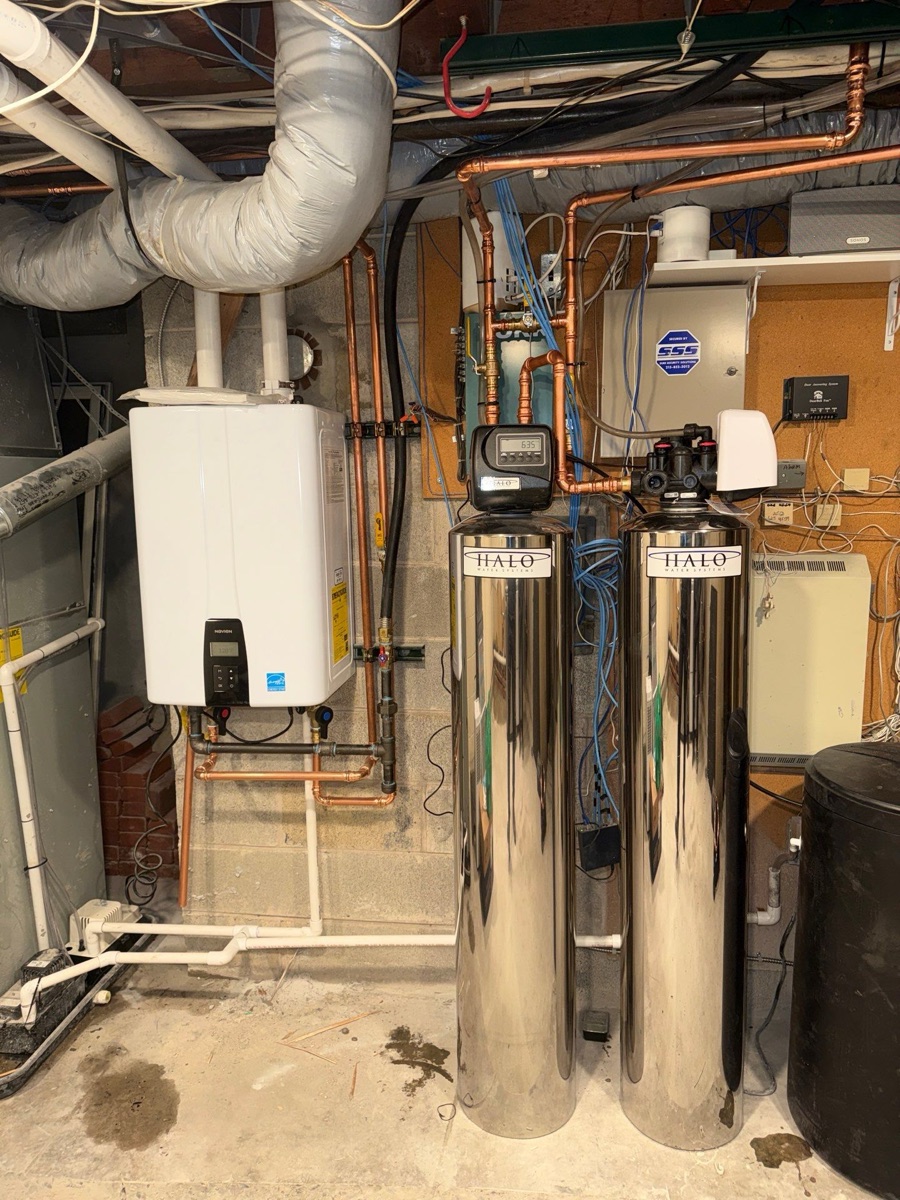
HALO offers innovative water softening and conditioning solutions, including systems that combine softening with additional filtration stages. Their equipment is designed for efficiency, low maintenance, and long service life. HALO’s American-made products are backed by strong warranties and excellent manufacturer support.

NOVO Water Conditioning

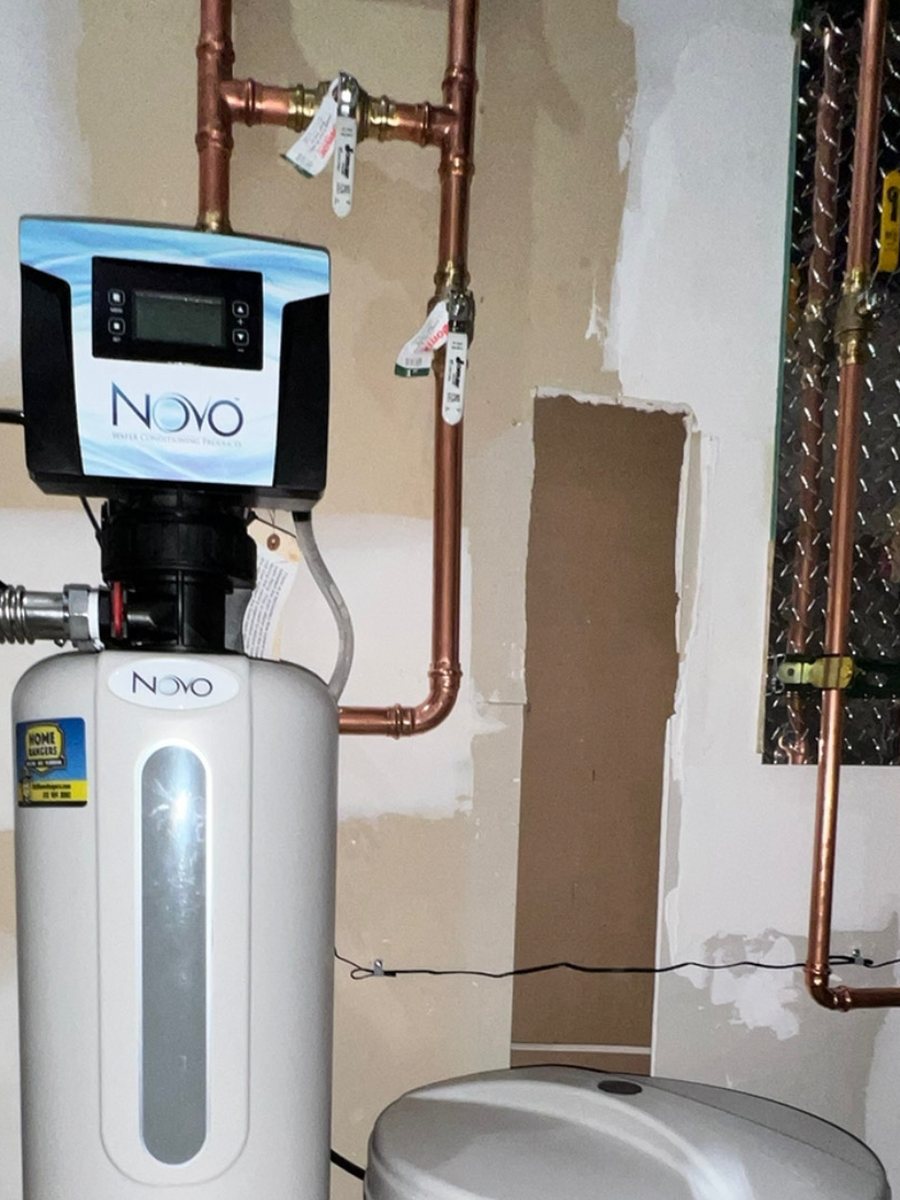
NOVO manufactures high-quality water softeners designed for performance and reliability. Their systems feature efficient regeneration cycles, user-friendly controls, and durable construction. NOVO products are known for consistent performance and straightforward serviceability—equipment that works well year after year.

Solutions for Every Situation

While HALO and NOVO are our primary water softening partners, we understand that every home’s water conditions are unique. If your situation requires specialized equipment, a different capacity, or an alternative approach, we’ll find the right solution for your specific needs. Our goal is solving your hard water problems—not pushing a particular brand. We’ll recommend what actually works best for your water hardness level and household.

Our Water Softener Installation Process

Professional installation ensures your water softener performs correctly from day one and continues working efficiently for years. Here’s what to expect when you work with us:

Step 1: Water Testing and Consultation

We test your water to determine exact hardness level, check for iron and other factors that affect softener sizing, and discuss your household’s water usage patterns. We listen to your concerns and goals for water quality improvement.

Step 2: Site Evaluation

We inspect the proposed installation location—typically near where water enters your home. We assess available space, proximity to drain for regeneration discharge, electrical access (for the control valve), and plumbing configuration. This ensures the equipment we recommend will fit and function properly.

Step 3: Detailed Recommendation and Quote

Based on your water test results, household size, and site conditions, we recommend a properly sized softener. We explain our recommendation, discuss options, and provide clear pricing that includes equipment, installation, and startup. No surprises.

Step 4: Professional Installation

Our plumbers install your water softener according to manufacturer specifications and plumbing codes. This includes mounting the equipment, connecting water supply lines with bypass valve for service access, routing drain lines for regeneration discharge, and making electrical connections for the control valve.

Step 5: Programming and Configuration

We program the control valve with your specific water hardness and household parameters. We set regeneration timing, adjust settings for optimal efficiency, and configure any advanced features your system includes.

Step 6: Testing and Verification

We test the installation for leaks, verify proper operation, run a manual regeneration cycle to confirm everything functions correctly, and test the softened water to confirm hardness removal. We don’t leave until the system is working perfectly.

Step 7: Homeowner Education

We show you how your new softener works, explain the control panel, demonstrate how to add salt, and review maintenance requirements. You’ll understand how to monitor your system and when to call for service. We provide all documentation and warranty information.

Installation Considerations

Before installing a water softener, there are practical factors to consider that affect equipment selection and installation approach:

Location Requirements

Water softeners need to be installed where water enters your home (after the pressure tank for well systems). They need floor space for the mineral tank and brine tank, access to a drain for regeneration discharge, and a standard electrical outlet. Temperature should stay above freezing.

Drain Access

During regeneration, softeners discharge several gallons of brine water. This needs to go to an appropriate drain—floor drain, laundry standpipe, or utility sink. If no drain is nearby, we can often route discharge to an acceptable location.

Bypass Valve

We install a bypass valve that allows water to flow around the softener during maintenance or if the system needs service. This ensures you’re never completely without water if something needs attention.

Outdoor Faucets

Most homeowners prefer to exclude outdoor faucets from softening—you don’t need soft water for watering plants or washing cars, and softened water can actually be hard on some plants. We can configure your installation with outdoor faucets bypassing the softener.

Drinking Water Considerations

Some people prefer unsoftened water for drinking due to the small amount of sodium added. We can install a bypass to your kitchen cold water, or you can add a reverse osmosis system for purified drinking water (RO removes the sodium along with other contaminants).

Well Water Integration

For well systems, the softener installs after the pressure tank. If you have iron or other issues requiring additional treatment, we design a complete system with proper sequencing—typically sediment filter, then iron treatment if needed, then softener.

Water Softener Maintenance

Water softeners are relatively low-maintenance, but they do require some attention to continue performing well. Here’s what’s involved in keeping your system running efficiently:

Regular Tasks (Homeowner)

Adding Salt

Check the brine tank monthly and add salt when the level drops below about one-third full. Most households go through a 40-pound bag every 1-2 months depending on water usage and hardness. Use the salt type recommended for your system—typically solar salt, pellets, or potassium chloride.

Checking for Salt Bridges

Sometimes salt forms a hard crust (bridge) in the brine tank with empty space below. The system thinks there’s salt, but brine can’t form properly. If your water seems hard despite having salt visible, push a broom handle into the salt to check for and break up any bridge.

Monitoring Performance

Pay attention to how your water feels. If you start noticing hardness symptoms returning—spots on dishes, dry skin, poor soap lather—something may need attention. Catch issues early before they become bigger problems.

Periodic Service (Professional)

System Checkup

Every few years, a professional inspection verifies everything is working correctly. We check valve operation, test water hardness, inspect resin condition, verify settings, and make any necessary adjustments.

Resin Cleaning or Replacement

Over time, resin can become fouled with iron, organic matter, or bacterial growth. Cleaning solutions can restore performance in many cases. Eventually (typically 10-15+ years), resin may need replacement to maintain effectiveness.

Brine Tank Cleaning

Salt impurities accumulate in the bottom of the brine tank over time. Periodic cleaning (every few years) removes this sludge and keeps the system operating efficiently.

Ongoing Support

We service the systems we install. Whether you need advice on salt selection, help with a performance issue, or periodic maintenance, we’re here to support you throughout your softener’s life.

What You’ll Notice With Soft Water

The difference soft water makes is noticeable almost immediately. Here’s what our customers tell us they experience after installation:

In the Shower

Soap lathers richly with much less product. Hair feels softer and more manageable. Skin feels smooth, not dry or tight. Many customers say they feel “cleaner” than ever before—because they actually are, without soap scum residue left behind.

In the Kitchen

Dishes come out of the dishwasher sparkling without spots or film. Glasses are crystal clear. You’ll use less dish soap and detergent. Pots and pans are easier to clean without mineral buildup.

In the Laundry Room

Clothes come out softer and brighter. Colors stay vibrant longer. Towels are fluffy, not stiff and scratchy. You’ll use less detergent—often 50% less—and clothes may last longer without mineral deposits wearing out fibers.

Throughout Your Home

Faucets and fixtures stay cleaner longer without constant white buildup. Shower doors remain clear instead of spotted. Cleaning requires less scrubbing and fewer harsh chemicals. Everything just stays cleaner.

Behind the Scenes

Your water heater operates more efficiently without scale buildup. Pipes stay clear and maintain full flow. Appliances last longer and perform better. You’re saving money on repairs, energy, and premature replacements.

In Your Budget

Less soap, shampoo, and detergent. Lower water heating costs. Fewer appliance repairs and replacements. Less time spent cleaning scale buildup. The softener pays for itself over time through reduced expenses.

Why Choose Home Rangers for Water Softener Installation

Water treatment is an industry with its share of high-pressure salespeople and overpriced equipment. Here’s why Bucks County and Montgomery County homeowners trust us for their water softener needs:

Proper Sizing, Not Overselling

We calculate the right size softener for your actual water hardness and usage—not the biggest unit we can sell you. A properly sized system costs less upfront, uses less salt, and lasts longer.

Quality Over Gimmicks

We install proven equipment from reputable manufacturers with solid warranties and available service support. No proprietary systems that only one company can work on. No overpriced “special” equipment.

Licensed Plumber Installation

Your water softener is installed by licensed plumbers who understand your entire plumbing system—not just the softener equipment. Proper integration with your plumbing ensures reliable performance.

Honest Recommendations

If your hardness is borderline and you might not benefit much from softening, we’ll tell you. If a salt-free conditioner might work for your situation, we’ll discuss the trade-offs. Our advice is based on what’s actually best for you.

Family-Owned Accountability

We’re not a traveling water treatment sales company. We’re your neighbors in Warminster, and our reputation depends on every installation we do. We’ll be here for service and support for years to come.

Clear, Honest Pricing

No “free water testing” that’s really a high-pressure sales pitch. No bait-and-switch pricing. We tell you what things cost upfront and explain exactly what you’re getting. The price we quote is the price you pay.

Licensed & Insured

Fully licensed Pennsylvania plumbing contractor. Water softeners installed by qualified plumbers who understand your complete plumbing system.

Local Water Expertise

We understand water hardness conditions throughout Bucks County and Montgomery County—both municipal supplies and private wells.

Quality Equipment

We install professional-grade softeners from reputable manufacturers—not cheap box-store equipment that fails in a few years.

Family-Owned, Locally Operated

Not a franchise or traveling sales company. A real local family business with accountability to our neighbors and community.

Water Softener Installation Across Bucks County, Montgomery County & Philadelphia

From our home base in Warminster, we provide water softener installation throughout the region. Whether you’re dealing with moderately hard municipal water or extremely hard well water, we can help you enjoy the benefits of soft water throughout your home.

Communities We Serve:

Recent Jobs and Reviews

Rated 5.0 out of 5 stars based on 46 customer reviews

Customers say: The reviews reflect an overwhelmingly positive sentiment toward the service provider. Customers consistently express high satisfaction with the company's responsiveness, professionalism, and technical expertise. The overall tone is decidedly positive, with recurring themes of prompt service, knowledgeability, and helpfulness. Clients particularly appreciate the clear communication, honesty, and thorough explanations provided during service visits. Many reviews highlight the technicians' willingness to take time explaining systems and offering helpful recommendations. The company appears to excel at customer service, with several reviewers indicating they plan to use the service again or establish ongoing maintenance contracts. The professional demeanor and problem-solving abilities of the staff are frequently praised, contributing to a strong reputation for reliability and quality workmanship.

Don’t see your town listed? We likely serve your area. Give us a call to discuss your hard water concerns and softening options.

Frequently Asked Questions: Water Softeners

How do I know if I need a water softener?

Signs of hard water include white scale buildup on faucets and fixtures, spots on dishes and shower doors, dry skin and hair, soap that doesn’t lather well, and stiff laundry. We can test your water to measure exact hardness. Generally, water above 7 grains per gallon benefits noticeably from softening.

How much does a water softener cost?

Installed cost depends on the size needed for your household, the features you want, and installation complexity. Professional-grade softeners cost more than box-store units but last significantly longer and perform better. We provide detailed quotes based on your specific water hardness and household size.

How much salt does a water softener use?

Salt usage depends on water hardness, water usage, and softener efficiency. A typical household might use one 40-pound bag of salt every 4-8 weeks. High-efficiency systems use less. We can estimate salt usage based on your specific situation.

Is softened water safe to drink?

Yes, softened water is safe to drink for most people. The amount of sodium added is relatively small—typically 20-30 mg per 8 oz glass for moderately hard water. If you’re on a sodium-restricted diet, you can use potassium chloride instead of salt, or we can bypass your kitchen cold water for drinking.

What’s the difference between a water softener and a water conditioner?

Water softeners remove hardness minerals (calcium and magnesium) through ion exchange, producing truly soft water. Salt-free conditioners alter the minerals so they’re less likely to form scale, but the minerals remain in the water. Softeners provide all the benefits of soft water; conditioners primarily reduce scale buildup.

How long do water softeners last?

Quality water softeners typically last 15-20+ years with proper maintenance. The resin may need replacement after 10-15 years depending on water conditions. Control valves occasionally need service. Cheap units may fail in 5-7 years. We install equipment designed for long service life.

Can I install a water softener myself?

While DIY installation is possible for handy homeowners, professional installation ensures proper sizing, correct plumbing connections, appropriate drain routing, and correct programming. Mistakes can lead to poor performance, leaks, or damage. Professional installation also typically includes warranty support.

Will soft water make my skin feel slimy?

Some people notice a “slippery” feeling with soft water—this is actually your natural skin oils that hard water and soap scum normally strip away. You’re feeling clean skin, not residue. Most people quickly prefer this feeling once they adjust, but if it bothers you, settings can sometimes be adjusted.

Do I need a water softener if I have municipal water?

Municipal water in Bucks County and Montgomery County is often moderately hard to hard. While not as extreme as some well water, it’s usually hard enough to cause scale buildup, affect soap performance, and impact skin and hair. Testing confirms whether softening would benefit your situation.

Can you service a water softener installed by another company?

In most cases, yes. We can service, repair, and maintain most water softener brands. If you’re having issues with an existing system or the original installer is no longer available, give us a call. We may be able to help or recommend appropriate next steps.

Whether your AC stopped cooling, your furnace won’t ignite, your water heater is leaking, or your drains are backing up — Home Rangers is here to help. As Warminster’s hometown HVAC and plumbing company, we treat every customer like a neighbor, because you are.

Ready for Home Service You Can Trust?

or call us at:

Scroll to Top