
Furnace short cycling means your heating system repeatedly starts and stops without completing a normal heating cycle. If your furnace keeps turning on and off before reaching the thermostat setting, possible causes include restricted airflow, overheating, thermostat problems, or an ignition or venting fault. Check the filter, open registers, and thermostat settings first. If the pattern continues, stop heating and arrange a professional diagnosis.
This guide focuses on forced-air furnaces, especially gas models. Flame-sensing and combustion-vent checks do not apply to electric furnaces.
How to Tell If Your Furnace Is Short Cycling
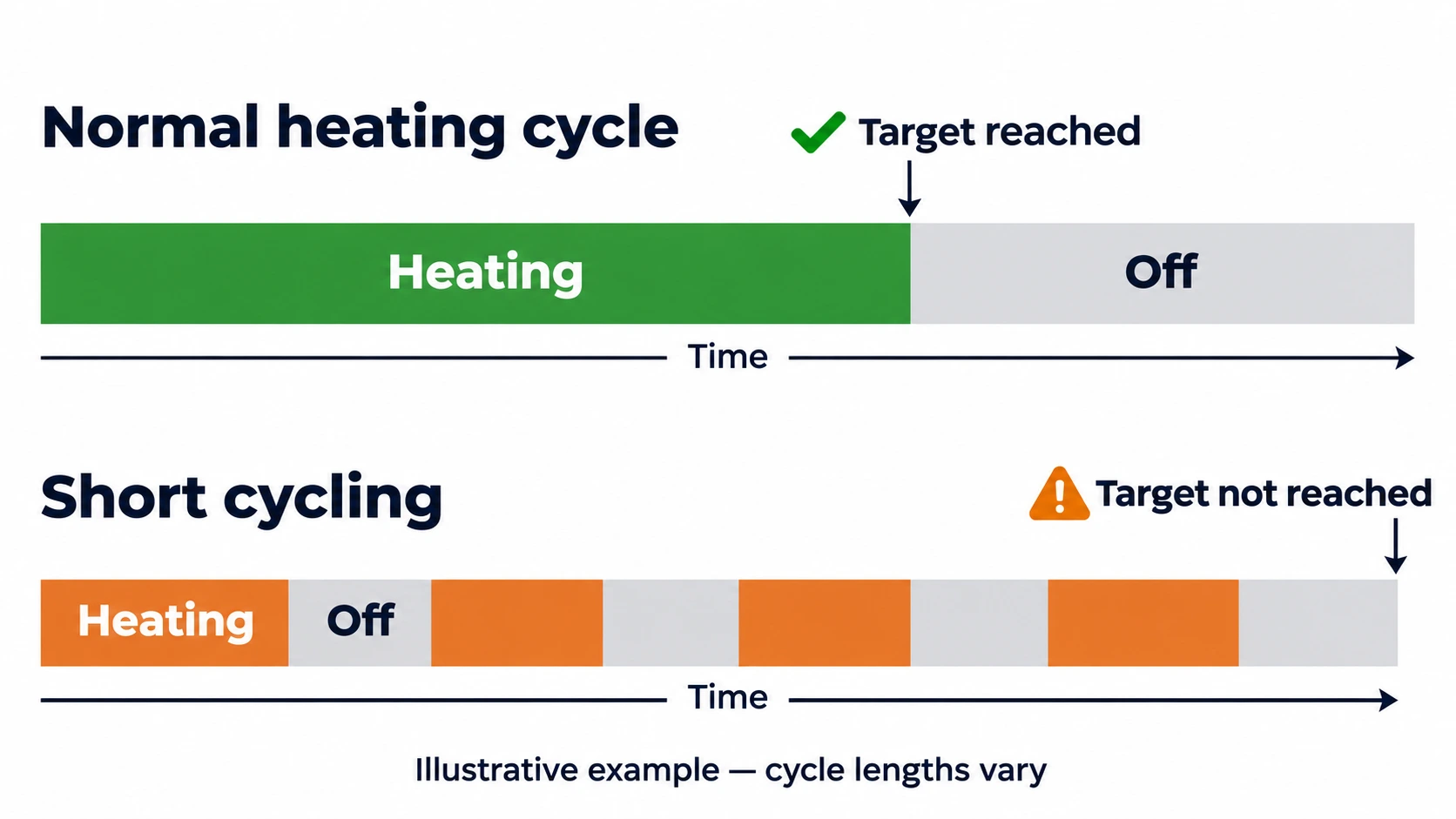
Repeated shutdowns after seconds or a few minutes, uneven room temperatures, and failure to reach the set temperature are warning signs. However, there is no universal number of minutes that proves a furnace is malfunctioning: outdoor temperature, equipment capacity, staging, and thermostat controls affect runtime.
Watch what stops: the burners, the circulating blower, or the entire system. A blower briefly continuing after the burners shut off can be normal. Repeated burner interruptions while the thermostat still calls for heat need investigation.
| What you notice | What it may indicate | Next step |
|---|---|---|
| Burners light, then go out within seconds | Failed flame proving or another ignition fault | Request combustion and ignition testing. |
| Heat stops after several minutes; blower continues | Possible overheating and high-limit shutdown | Check filter and vents; schedule service if repeated. |
| Frequent short runs, but thermostat reaches its setting | Control settings, thermostat location, or oversized equipment | Have control operation and sizing evaluated. |
| Furnace shuts off after 15 minutes | May be normal if the temperature target was reached | Check whether heat demand ended or heating failed prematurely. |
These patterns help describe the problem; they do not identify a failed part by themselves.
Is Furnace Short Cycling Dangerous?
Short cycling does not automatically mean a gas leak or carbon monoxide exposure. It can, however, reflect overheating or a combustion problem. Repeated restarts also add wear and can reduce efficiency. Do not bypass safety controls or keep resetting a furnace that shuts itself down.
- Gas odor: leave immediately without operating switches, thermostats, or phones indoors. Call your gas utility or 911 from outside.
- CO alarm or suspected CO exposure: get everyone outside and call 911. Do not reenter until emergency responders permit it. Follow the CPSC carbon monoxide guidance.
- Repeated shutdowns without those emergency signs: set heating to OFF and arrange service if the basic checks below do not resolve the problem.
Why Is My Furnace Short Cycling? Causes and Fixes
1. A Dirty Filter or Restricted Airflow
A clogged filter, obstructed return grille, or closed supply registers can reduce airflow across the heat exchanger. If the furnace overheats, its high-limit control can interrupt the burners. After cooling, the system may try heating again.
Fix: replace a dirty filter with the specified size and type, clear return grilles, and open supply registers. A dirty blower, restrictive ductwork, or incorrect blower settings requires professional testing. A limit fault does not automatically mean the limit switch needs replacement.
2. Thermostat Settings, Location, or Power Problems
A thermostat near a supply register, fireplace, or other heat source may register warmth before the rest of the house. Battery problems, interrupted power, or control faults can also create erratic calls for heat.
Fix: confirm HEAT mode, review schedules, and replace batteries if applicable. Move portable heat sources away. If cycling began after installing a Nest thermostat, ask about compatibility and stable power. Google’s C-wire guidance lists repeated on/off operation among possible power-related symptoms. A C wire or Nest Power Connector may help compatible systems, but it is not a universal cure. Professional smart thermostat installation includes checking the equipment connection.
3. Flame-Sensing or Ignition Trouble
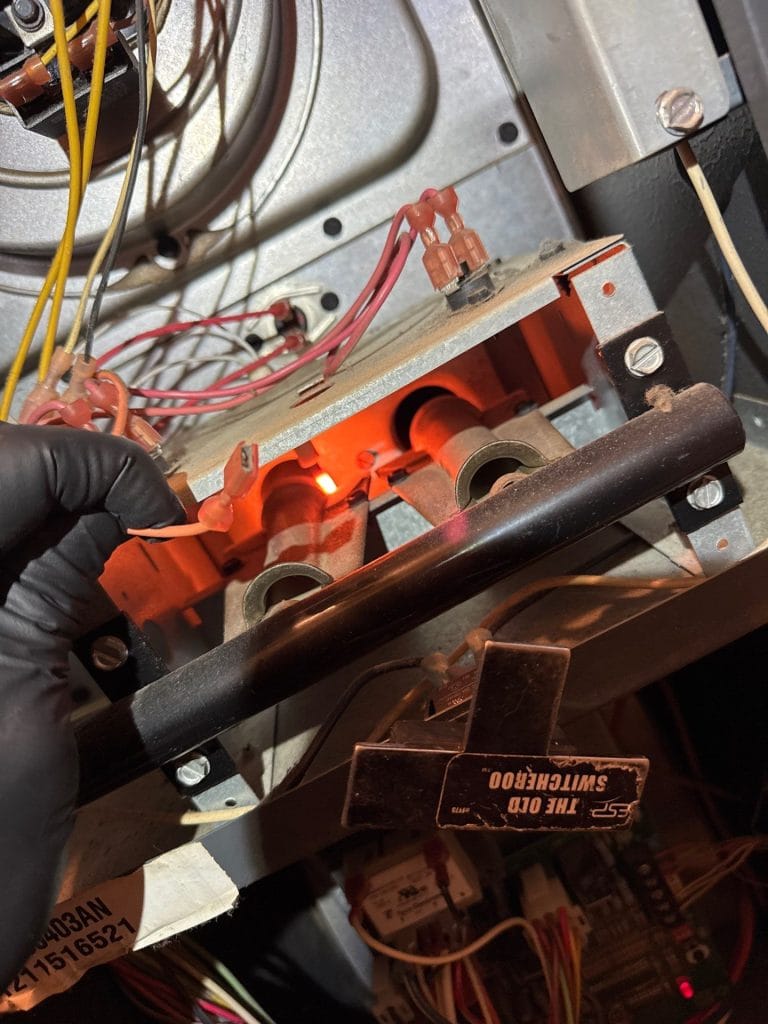
If a gas furnace flame keeps turning on and off within seconds, the control may not be proving a stable flame. Possible issues include a contaminated sensor, grounding problems, ignition trouble, or fuel delivery faults.
Fix: a technician should test the ignition sequence and flame signal before cleaning or replacing components. Do not assume every quick shutdown needs a new flame sensor, and do not adjust the gas valve yourself.
Furnace still stopping before your home warms up? Share the cycle timing and any visible fault code with Home Rangers. A diagnostic visit can identify whether airflow, ignition, or controls are interrupting your heat.
4. Blocked Venting or Condensate Drainage
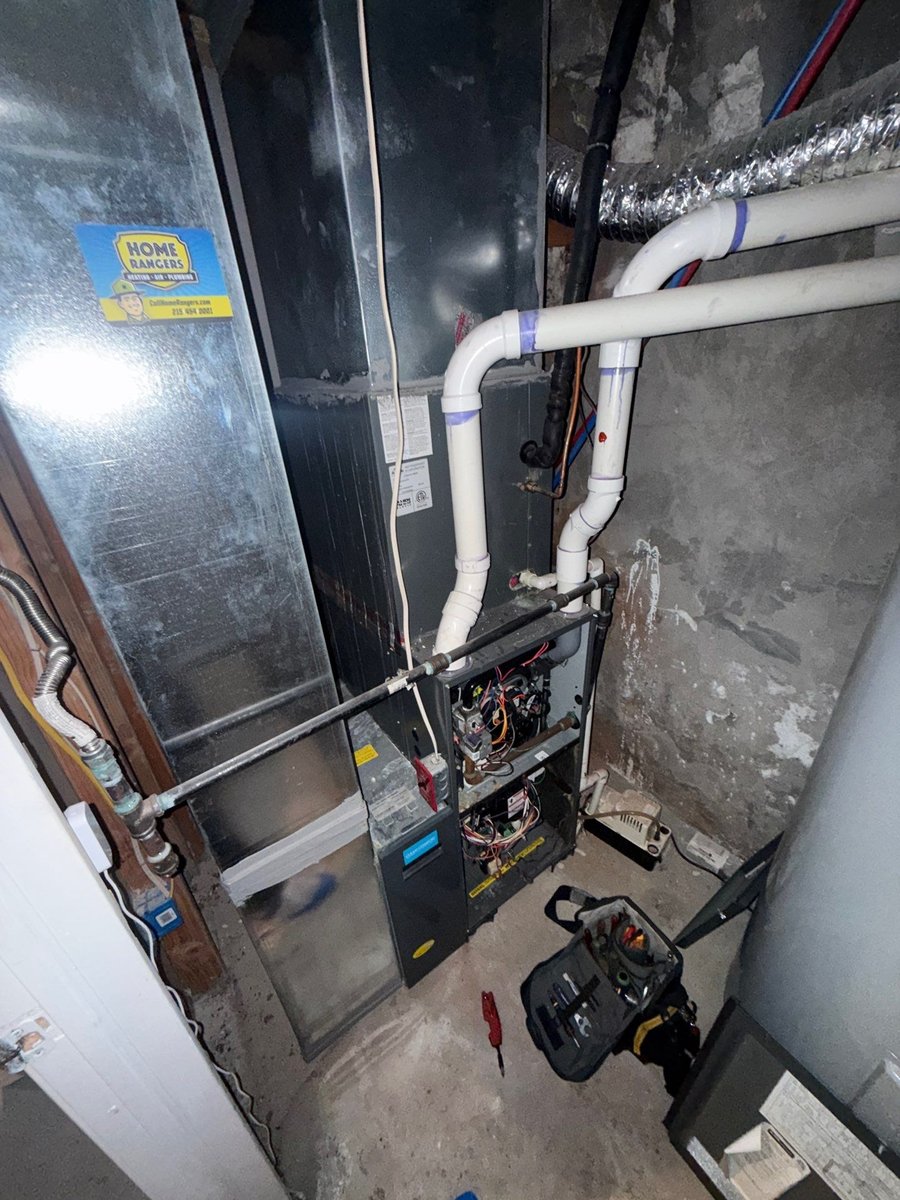
Gas furnaces depend on safe combustion venting. The combustion intake and exhaust are different from the indoor supply registers and return grilles; a clear return grille does not rule out a venting problem. On condensing models, drainage problems can also interfere with operation. Snow, ice, debris, or a backed-up drain may cause safety-related interruptions or prevent ignition.
Fix: inspect accessible outdoor intake and exhaust openings from ground level. Keep surrounding snow clear without altering pipes. Leave internal venting, drain traps, pressure switches, and tubing to a technician. Never bypass a pressure switch to make the furnace run.
5. An Oversized Furnace or Installation Problem
An oversized furnace can satisfy the thermostat quickly and repeatedly, even while other rooms remain uncomfortable. A brand-new furnace that short cycles may instead have incorrect airflow settings, control configuration, duct restrictions, or installation defects.
Fix: ask the installer to verify commissioning measurements and equipment sizing. For persistent capacity problems, a furnace installation assessment should evaluate the home’s heating load rather than simply duplicate the existing unit’s rating.
How to Fix a Short Cycling Furnace: Safe Checks
- Check for emergency signs first. Gas odor or a CO alarm means leave the building, not continue troubleshooting.
- Record the pattern. Note room temperature, setpoint, approximate burner runtime, and whether the blower keeps running. Photograph a visible code through the viewing window; do not remove operating panels.
- Inspect the filter safely. Turn the system off and follow the owner’s replacement instructions. Fit the approved filter with its airflow arrow pointing in the specified direction. Reinstall the cover before restarting.
- Restore clear airflow. Move furniture away from returns and open supply registers. Do not close rooms’ vents to force more heat elsewhere.
- Review thermostat operation. Use HEAT and a steady setpoint above room temperature. AUTO fan mode helps distinguish heating operation from continuous fan circulation; it does not repair burner cycling.
- Stop if shutdowns repeat. After correcting an obvious filter or vent issue, observe operation only if no hazard signs are present. If cycling returns, turn heating off and request service. Avoid repeated power resets.
Prepare the furnace model number, filter details, recent thermostat changes, and your observations for the service visit. These details are more useful than guessing which part has failed.
Losing heat while indoor temperatures keep falling? Contact Home Rangers to discuss emergency heating service availability. Explain that the furnace repeatedly shuts down and whether you have already checked the filter and thermostat.
Why Your Furnace Keeps Turning On and Off and Blowing Cold Air
Air may feel cool briefly before the furnace warms up or after the burners stop. With the fan set to ON, the blower can circulate unheated air between heating calls. Neither observation alone proves a burner problem.
Repeated cool-air periods while the home remains below the setpoint deserve attention. The burners may be failing to ignite, losing flame, or shutting off on a safety limit while the blower continues. Tell the technician whether warm air ever appears and when it turns cool.
What a Technician Should Check—and What Repairs Cost
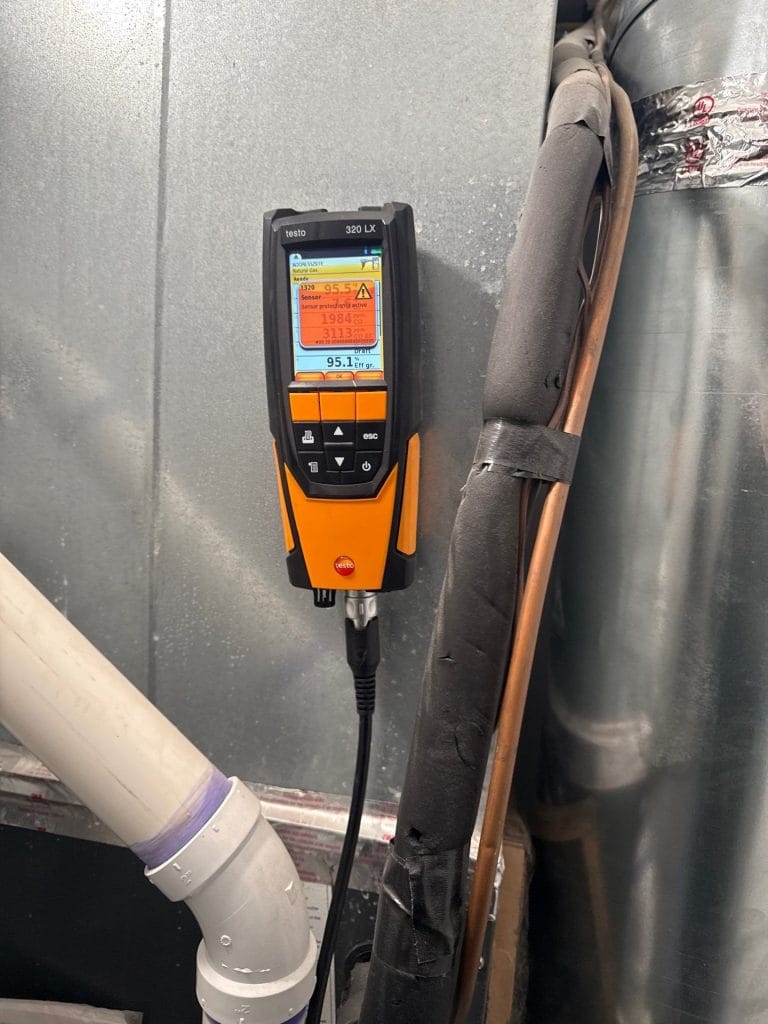
A diagnosis should establish whether the thermostat ended the heat call or the furnace interrupted it. Depending on the symptoms, testing may include:
- Temperature rise against the furnace’s rated range, airflow, and duct static pressure.
- Blower performance, limit operation, fault history, and electrical connections.
- Flame signal, ignition, gas pressure, combustion, and heat exchanger condition.
- Venting, condensate drainage, thermostat compatibility, and equipment sizing.
There is no single furnace short cycling repair cost: a filter correction, wiring repair, blower replacement, and installation correction are different jobs. Request a diagnosis and itemized estimate before authorizing work. For a new installation, ask the original installer about applicable labor and manufacturer warranty coverage.
How to Help Prevent Repeat Shutdowns
Inspect the filter monthly and clean or replace it according to its instructions and your system’s requirements. Keep returns and registers clear, and arrange a heating check before winter. The ENERGY STAR maintenance checklist calls for checking controls, electrical connections, combustion, and the heat exchanger.
Home Rangers Heating, Air & Plumbing serves homeowners in Bucks County, Montgomery County, and Philadelphia. When booking, describe repeated shutdowns specifically so the visit can focus on the interrupted heating cycle.
Frequently Asked Questions About Furnace Short Cycling
Why is my furnace short cycling with a new filter?
A clean filter does not rule out airflow trouble. Check the specified size, type, and installation direction. Restricted ducts, a dirty blower, control faults, or combustion problems may remain. Do not operate without a filter as a workaround.
What is the most common cause of furnace short cycling?
Restricted airflow from a dirty filter is a common, easily checked cause. However, symptoms alone cannot establish which cause is most common for your equipment. If the filter is clean and approved for the system, investigate controls, airflow, ignition, and venting rather than repeatedly changing filters.
Why does my furnace turn on and off every few seconds?
First distinguish burner shutdowns from fan or relay cycling. Burners that light and quickly extinguish may indicate failed flame proving. Repeated clicking or chattering can also involve controls or power. Stop repeated restart attempts and arrange testing.
Why is my furnace short cycling at night or in extreme cold?
Colder weather increases heating demand, often producing longer runs. Repeated premature shutdowns are still a concern. Note nighttime schedule or zoning changes and any snow or ice near outdoor vents; do not assume cold weather alone explains the fault.
Can a furnace short cycle with no error code?
Yes. A thermostat can end a heat call without a furnace fault, and available codes vary by model. Record what you observe before resetting power and have the technician check control operation and any stored history.
Should I turn off a noisy, short cycling furnace?
Turn heating off and request service if repeated shutdowns accompany grinding, severe rattling, or ignition bangs. If you smell gas or a CO alarm sounds, leave immediately and call for emergency assistance from outside.
Get reliable heat back with a furnace diagnosis.
If your furnace keeps turning on and off, ask Home Rangers to identify the cause and explain the repair options. Schedule a diagnostic visit for your Bucks County, Montgomery County, or Philadelphia home.
Book My Furnace Diagnostic Visit →
Or call us directly at (215) 454-0001