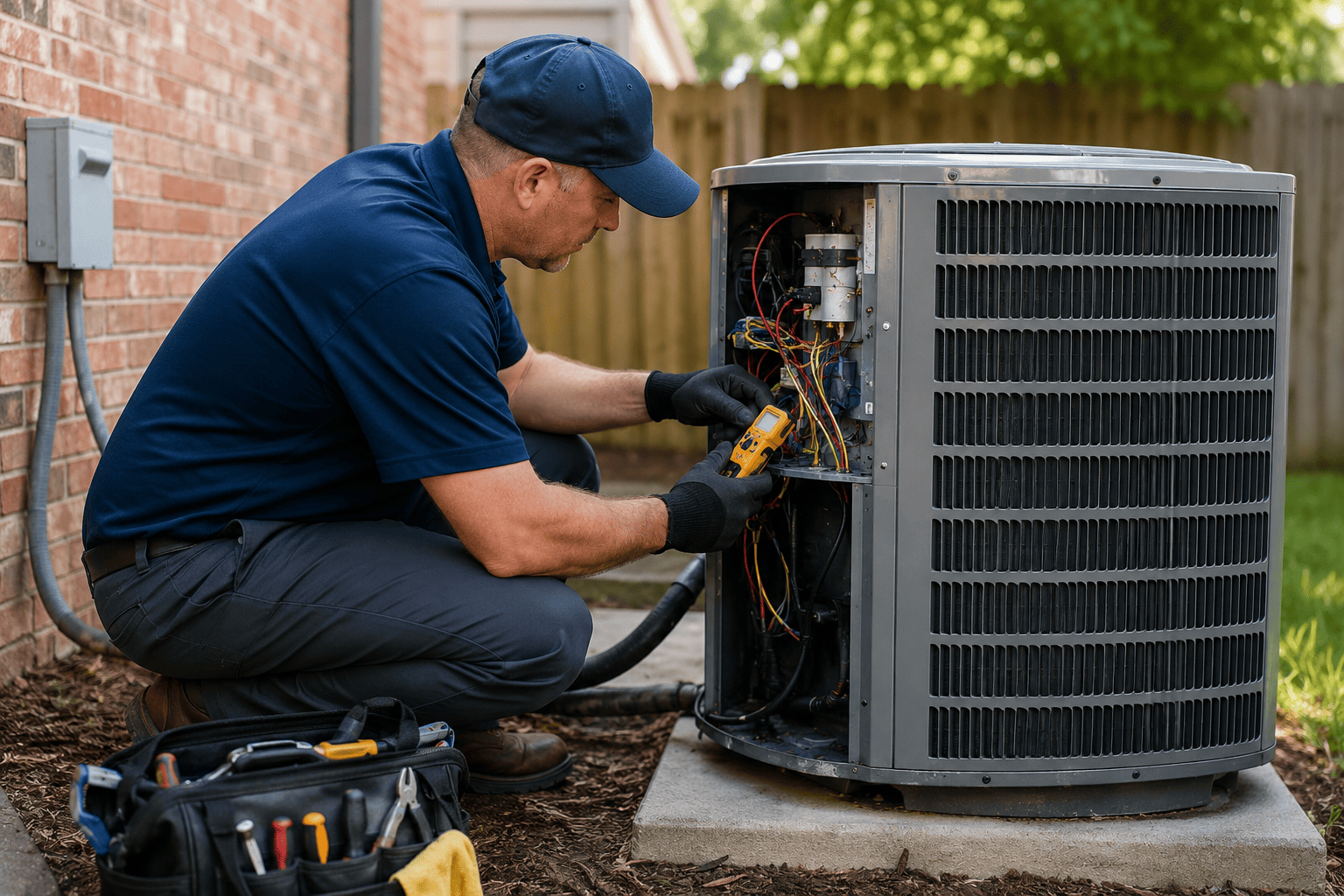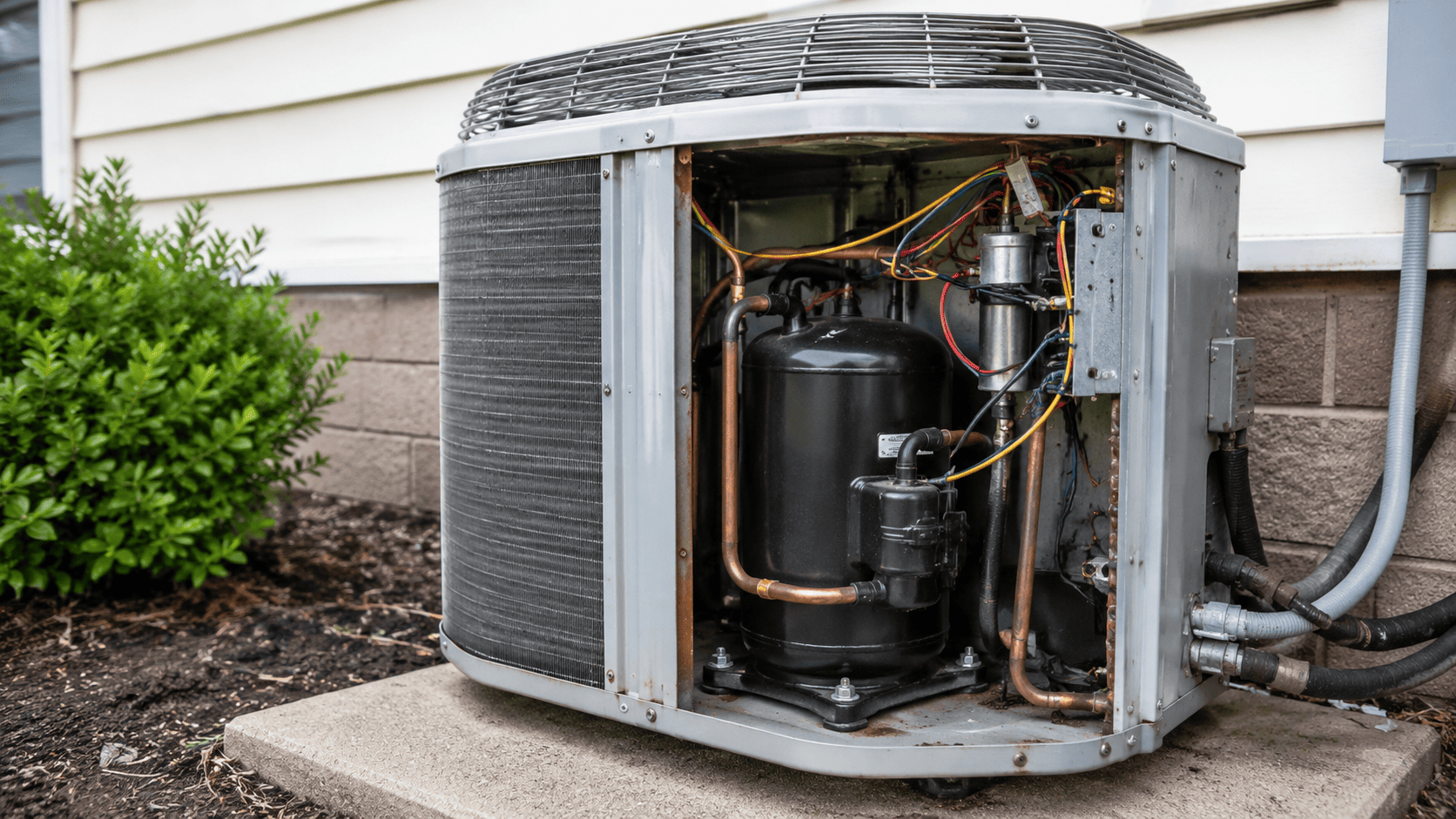

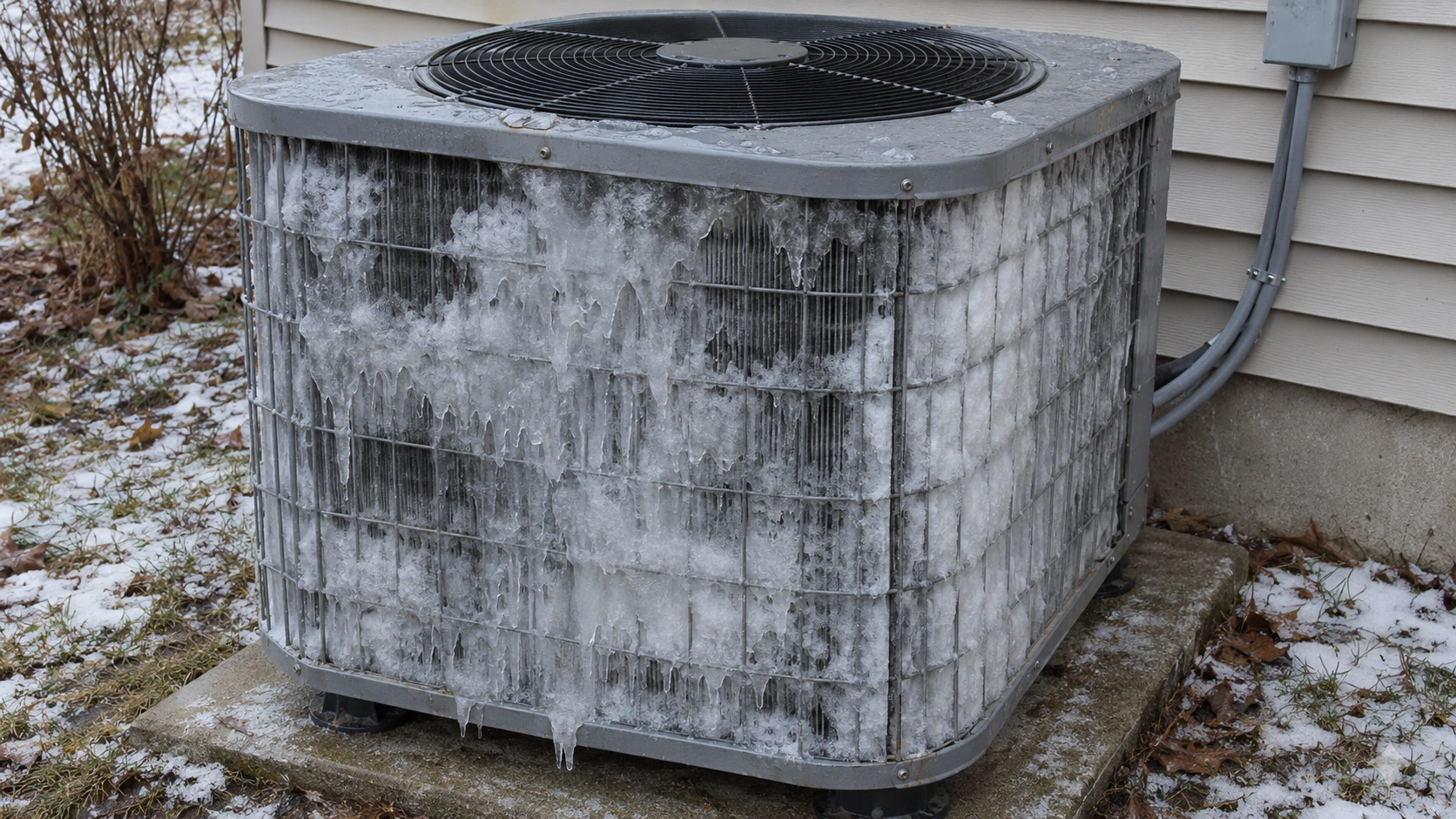
A heat pump freezing up in winter is not always malfunctioning. Light frost on the outdoor coil is normal if the system clears it through automatic defrost. Thick ice that remains, blocks airflow, or reaches the fan needs attention. Possible causes include a defrost fault, restricted outdoor airflow, freezing rain, poor drainage, or a refrigerant problem.
This guide focuses on ice on the outdoor unit. If your equipment is not visibly iced but the house stays cold, use our guide to a heat pump not heating or blowing cold air for broader troubleshooting.
Normal Frost vs. a Frozen Heat Pump: What to Look For
In heat mode, the outdoor coil absorbs heat and can become colder than the surrounding air. Moisture freezes on that surface, sometimes even when the outdoor temperature is above 32°F. Automatic defrost temporarily warms the outdoor coil to remove this frost.
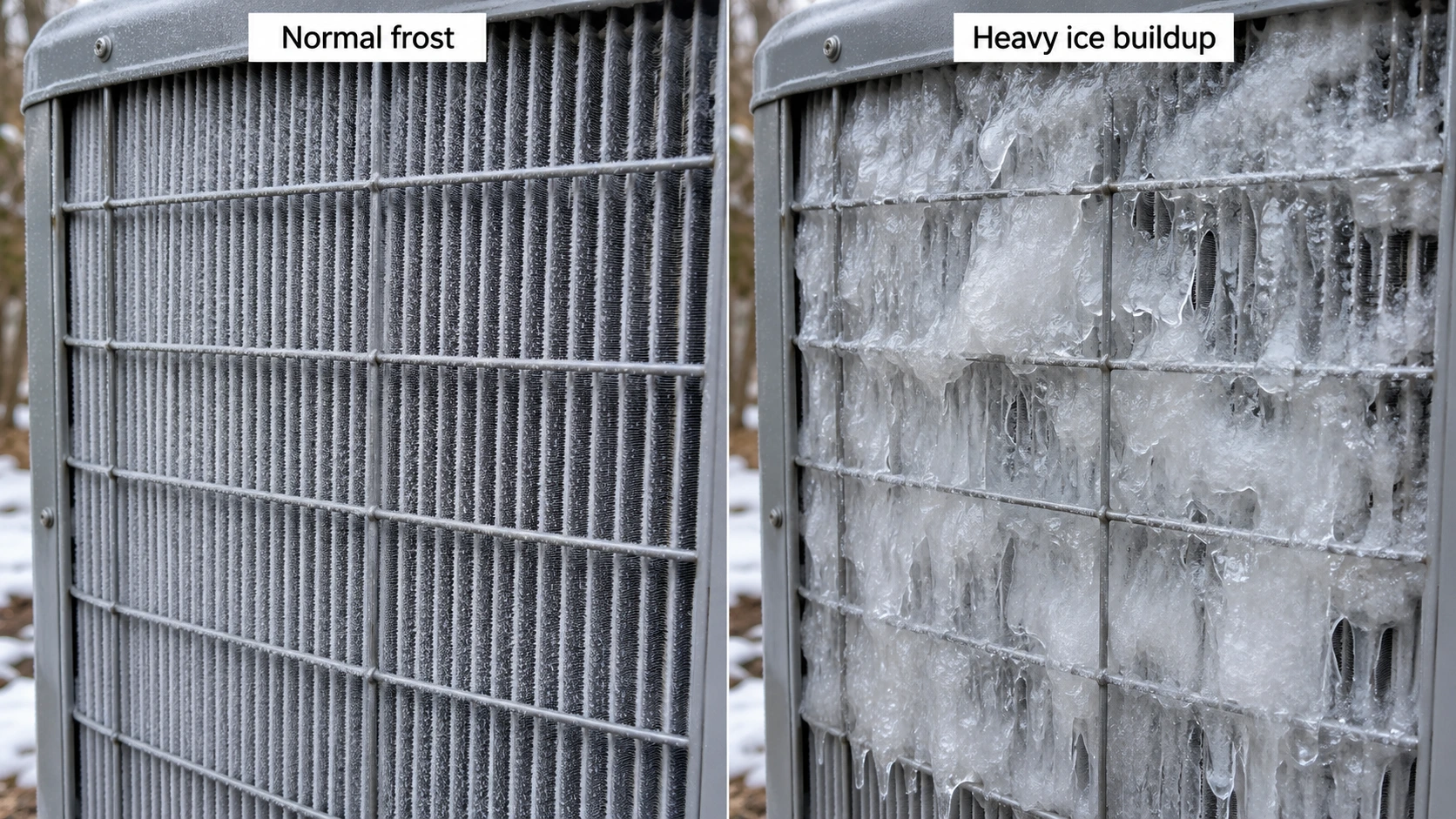
| What you see | What it means | What to do |
|---|---|---|
| Light frost that clears during defrost | Usually normal winter operation | Let the cycle finish and confirm heating resumes. |
| Brief steam, a change in sound, or a paused outdoor fan | Can be normal during defrost | Observe from a safe distance. |
| Solid ice remaining after defrost | Abnormal buildup | Arrange diagnosis; stop operation if airflow is blocked. |
| Ice touching the fan or loud scraping | Risk of equipment damage | Stop the system and request service. |
Trane explains these normal defrost signs, including steam and temporary fan changes. Defrost timing varies by equipment and conditions; one stopped fan or a single snapshot of frost does not prove a failure.
Why Is My Heat Pump Freezing Up in Heat Mode?
The defrost system is not clearing the coil
A faulty coil sensor, defrost control, wiring connection, or reversing valve can prevent effective defrost. Ice may keep building across successive heating cycles. Testing should establish whether defrost starts, warms the coil, and ends correctly before anyone replaces parts.
Outdoor airflow is restricted
Snowdrifts, leaves, vegetation, and a dirty outdoor coil can interfere with heat transfer. A failed outdoor fan can also contribute to icing, although the fan may intentionally stop during defrost. A fan that remains stopped during ordinary heating requires inspection.
Freezing rain or roof runoff is adding ice
Freezing rain can coat the grille and fan area directly. A leaking gutter or roof drip can concentrate water on one part of the unit. This external ice load is different from the frost that forms naturally on the coil.
Defrost water is pooling and refreezing
Meltwater needs a clear path away. Blocked base openings, inadequate elevation, or poor site drainage can allow ice to build upward from beneath the unit. Lennox identifies drainage and severe winter weather among the factors behind persistent freeze-ups.
A refrigerant problem is affecting operation
Low charge or another refrigerant-side fault can disrupt heat transfer and contribute to icing. Ice alone cannot confirm a leak. A technician must evaluate operating conditions and measurements. Carrier’s troubleshooting guidance also distinguishes ordinary frost from ice that fails to clear.
Does the ice keep coming back? Repeated freeze-ups need a diagnosis of defrost operation, airflow, drainage, and refrigerant performance. Home Rangers can inspect your heat pump and explain the repair options before you decide how to proceed.
How to Fix a Heat Pump Freezing Up in Winter: Safe First Steps
- Decide whether this is frost or heavy ice. If light frost is clearing normally, allow automatic defrost to work. Do not interrupt it simply because you see steam.
- Stop operation when ice blocks airflow or threatens the fan. Set the thermostat to Off. If equipped, Emergency Heat may provide temporary backup without running the outdoor unit; follow your equipment instructions.
- Clear loose obstructions around the cabinet. With the system stopped, remove nearby loose snow and leaves without reaching into the unit or scraping its fins. Leave attached ice alone.
- Look for a water source. Note dripping gutters, roof runoff, or ice rising from the base. Photograph the pattern for the technician; do not dismantle the cabinet or alter its support.
- Check accessible indoor filters. Replace or clean them as the manual directs and keep registers unobstructed. This supports performance, but a new filter does not repair a failed outdoor defrost system.
- Arrange service if substantial ice remains or returns. Record fault codes, weather conditions, and whether the unit ever clears itself. Do not repeatedly restart a heavily iced system.
Do not chip ice, use a torch or heat gun, pour boiling water on the unit, or bypass defrost controls. Grant’s frozen heat pump guidance specifically warns against boiling water. Avoid improvised thawing methods; follow your model’s instructions or have a technician handle removal.
If a breaker repeatedly trips, leave it off and request electrical diagnosis. Do not keep resetting it to force a frozen unit to run.
Setting the indoor fan to On circulates indoor air; it does not directly thaw the outdoor coil. Likewise, manually switching to cooling in winter is not a substitute for diagnosing failed automatic defrost. For recurring icing, schedule professional heat pump repair.
How to Protect a Heat Pump from Freezing Rain
Protection starts with controlling water and preserving airflow. You cannot prevent every trace of frost, but you can reduce avoidable ice accumulation:
- Have leaking gutters and downspouts repaired so water does not discharge onto the equipment.
- Keep snow piles and shoveled snow away from the intake and discharge areas.
- Have an installer check elevation, meltwater drainage, and manufacturer-required clearances.
- If a canopy or snow shield is appropriate, use a manufacturer-approved arrangement that preserves airflow and service access.
Do not wrap an operating heat pump in a tarp or place a board over its discharge. Goodman’s winter guidance warns that covering the unit can interfere with airflow and damage the system. Ask an installer about model-specific protection rather than fitting a generic cover.
Heavy ice, a scraping fan, or a home losing heat? Stop operating a unit whose fan is striking ice. Contact Home Rangers to describe the symptoms, discuss available service, and get help determining the next step for your heating system.
How to Keep Your Heat Pump from Freezing Up Again
Follow the owner’s maintenance schedule, keep the outdoor area clear, and address drainage problems before the next storm. Ask your technician to verify defrost sensors and controls, outdoor fan operation, coil condition, refrigerant performance, and any model-specific base-pan heater.
For ongoing care, explore our HVAC maintenance plans. If the equipment becomes unusable during severe weather, our emergency heating and cooling service page explains the available support.
Frequently Asked Questions About Heat Pump Freezing
Why does my heat pump keep freezing up after it thaws?
Thawing removes the symptom without necessarily correcting its cause. If ice returns, check whether runoff, blocked drainage, or snow is still present. Repeated icing in ordinary weather calls for professional testing rather than repeated manual thawing.
Can freezing rain damage a heat pump?
Yes. Heavy ice can obstruct airflow or interfere with the fan. If you hear scraping or see ice contacting the blades, stop operation and request service. Normal defrost does not guarantee removal of ice covering the entire cabinet.
Should I use Emergency Heat when my heat pump freezes?
If your system has a configured backup heat source, Emergency Heat can temporarily heat the home while keeping the outdoor unit off. Follow the manual. Automatic AUX heat is different and may operate normally during defrost.
Why is my Trane, Goodman, or Carrier heat pump freezing up in winter?
Start by checking whether frost clears during automatic defrost. Persistent ice needs model-specific testing of airflow, defrost, drainage, and refrigerant operation. Brand name alone does not identify the fault; record the model and any error code.
What if my mini-split heat pump is freezing up in winter?
Its outdoor coil also needs defrost and clear drainage. Check for snow blockage and ice beneath the unit. Mini-splits may lack a separate backup heat source or Emergency Heat setting; do not assume thermostat advice for ducted systems applies.
Is a frozen outdoor unit the same as a frozen compressor?
No. The visible ice usually covers the coil, cabinet, or base, rather than the compressor itself. People often call the outdoor unit a condenser, but its coil functions as an evaporator during normal heating. Describe where the ice appears.
Home Rangers Heating, Air & Plumbing serves homeowners in Warminster, Bucks County, Montgomery County, and Philadelphia.
Get help with a heat pump that keeps freezing up.
Persistent ice needs more than another restart. Schedule a diagnostic visit with Home Rangers to identify the cause, review your repair options, and restore reliable heating.
Book My Heat Pump Diagnostic Visit →
Or call us directly at (215) 454-0001