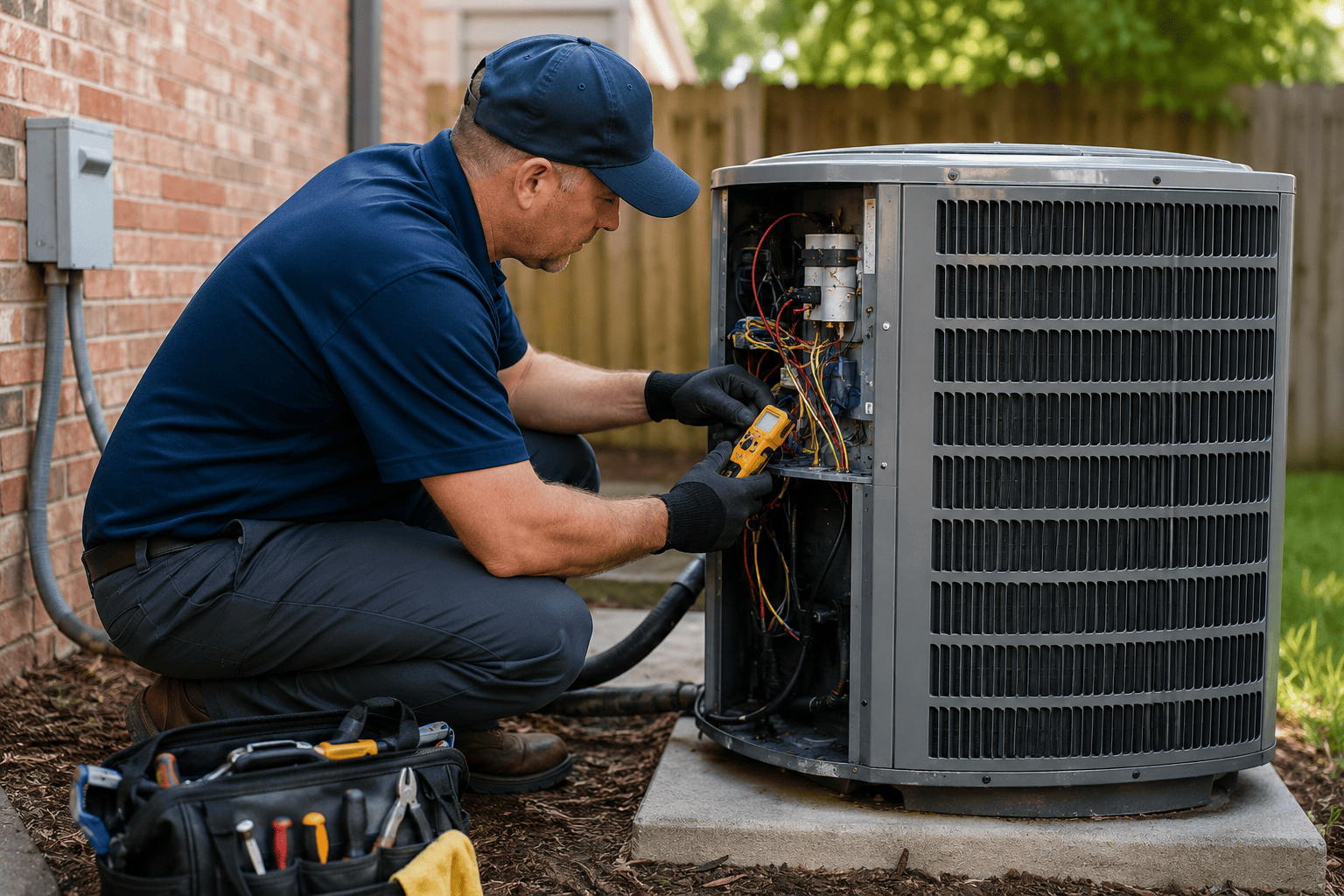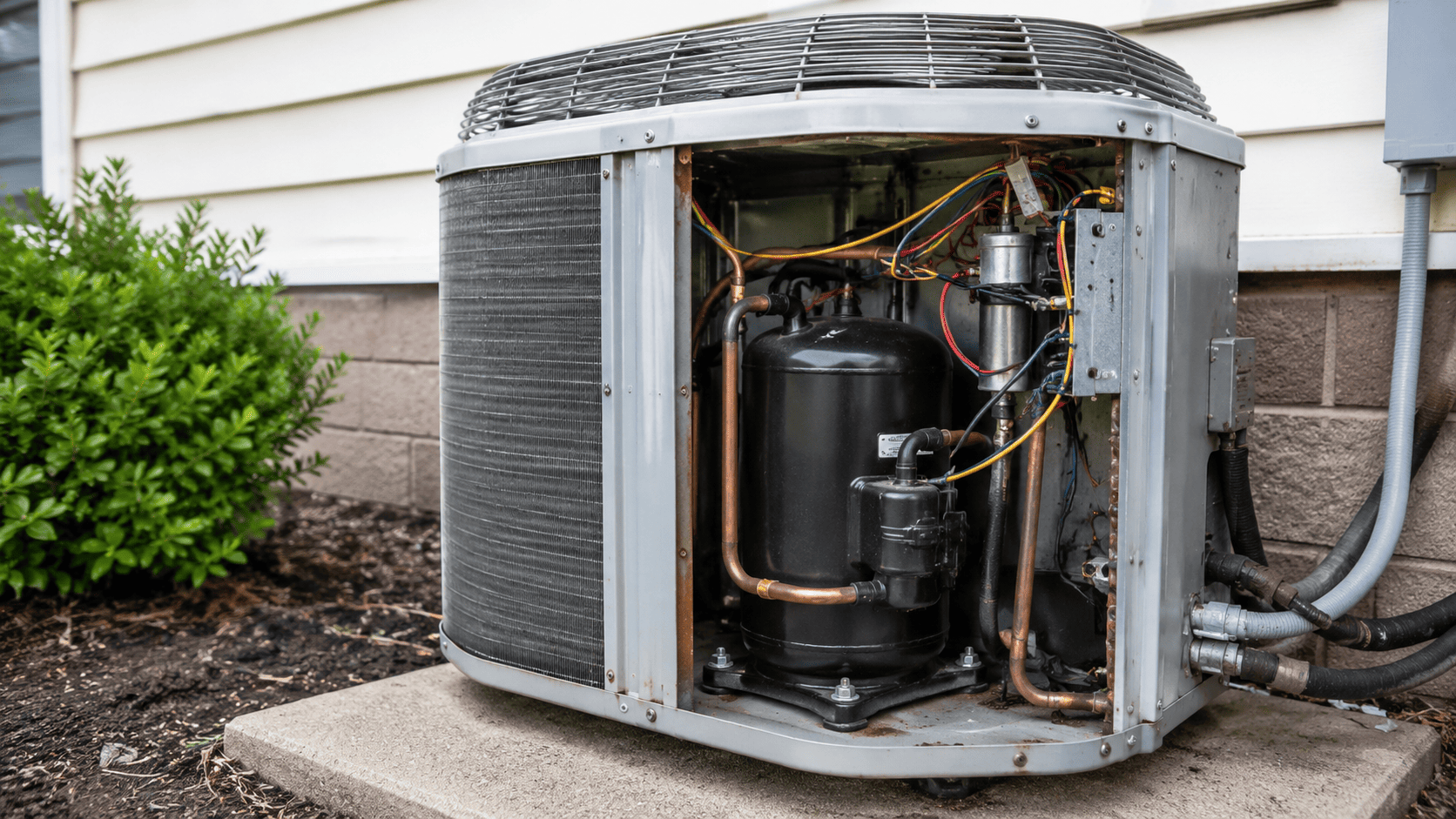

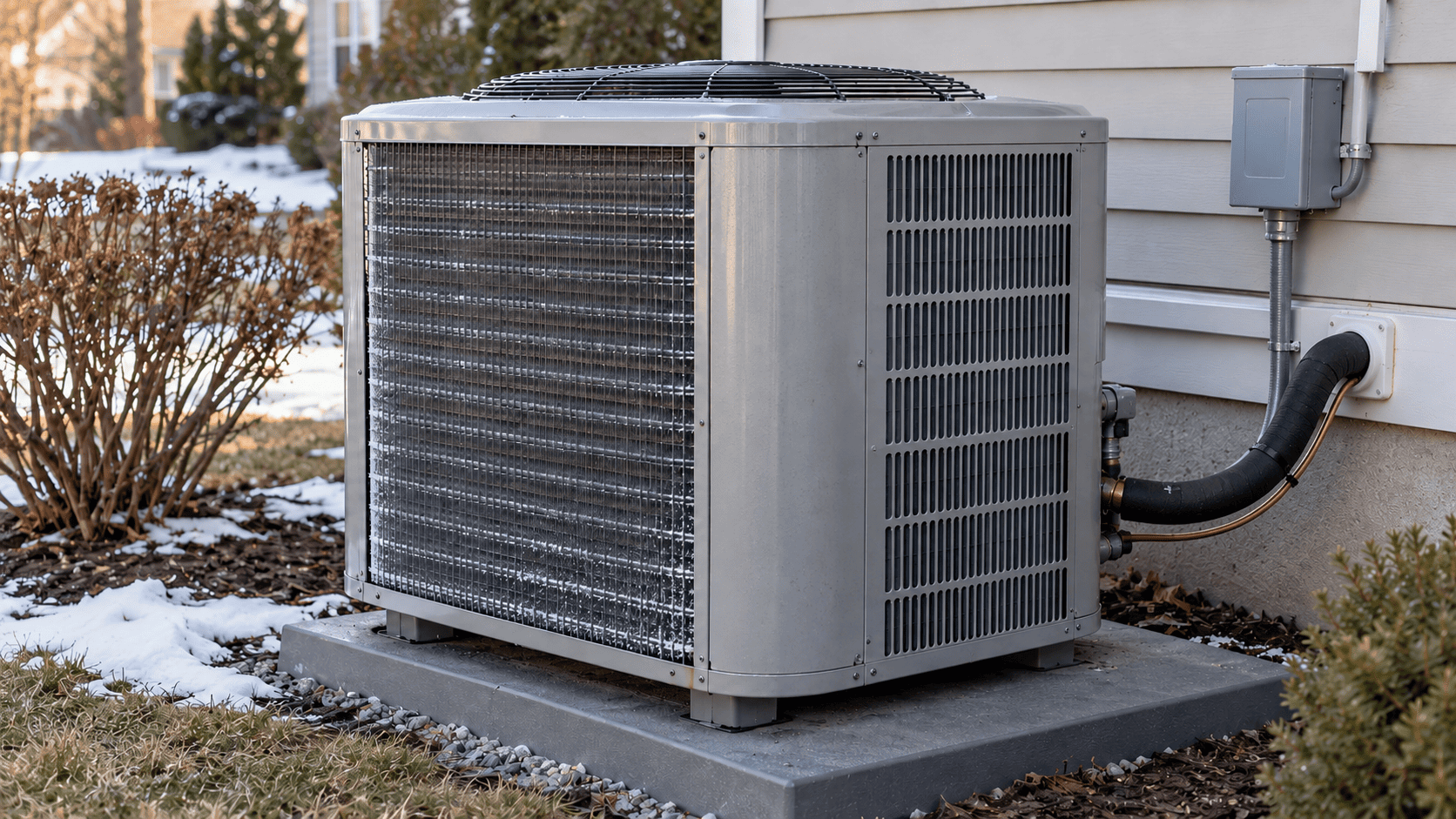
If your heat pump is running but not heating the house, or the air coming from the vents feels cold while the thermostat is set to heat, it does not always mean the system has failed. Heat pumps operate differently from furnaces, and the air they deliver can feel cooler even while the system is actively warming your home.
Quick answer: First, check that the thermostat is set to Heat and the fan is set to Auto. Brief periods of cooler air can also occur during a normal defrost cycle. If the indoor temperature continues to rise toward the thermostat setting, the heat pump may be working normally. If the house is getting colder, the system runs continuously without reaching the set temperature, or it keeps blowing genuinely cold air, further troubleshooting is needed.
Is It Normal for a Heat Pump to Blow Cool Air in Heat Mode?
Sometimes, yes. Unlike a furnace, which creates heat through combustion or electric resistance, a heat pump moves heat from outside the home to the inside. Because of the way it operates, supply air from a heat pump may feel warm or lukewarm rather than noticeably hot.
The more important question is whether the system is actually heating the house. If the room temperature gradually increases and reaches the thermostat setting, cooler-feeling air at the vents is not necessarily a problem.
A heat pump may also temporarily blow cooler air while the outdoor unit goes through a defrost cycle. In cold weather, frost can form on the outdoor coil. The system periodically enters defrost mode to remove that frost, and indoor air may feel cooler for a short time before normal heating resumes.
Signs the Heat Pump May Actually Have a Heating Problem
- The indoor temperature keeps falling even though the heat pump is running.
- The system runs for long periods but never reaches the thermostat setting.
- Cold air continues blowing well beyond a brief defrost cycle.
- The outdoor unit is covered with heavy ice that does not clear.
- The heat pump cools normally but does not produce heat.
- The system repeatedly trips a breaker, shuts down, or displays a fault code.
If these symptoms continue, the issue may involve airflow, thermostat controls, the defrost system, refrigerant, electrical components, or the reversing valve. Homeowners in Bucks County, Montgomery County, Philadelphia, and surrounding communities can schedule professional heat pump repair with Home Rangers if basic checks do not restore normal heating.
Common Reasons a Heat Pump Is Not Heating
If your heat pump is running but not heating the house, the cause can range from a simple thermostat or airflow issue to a problem that requires professional diagnosis. Start with the conditions you can safely check before assuming a major component has failed.
1. Incorrect Thermostat Settings
Make sure the thermostat is set to Heat and the temperature setting is above the current indoor temperature. The fan should normally be set to Auto. If it is set to On, the blower may continue circulating room-temperature air between heating cycles, making it seem like the heat pump is blowing cold air.
If the problem started after installing or reconfiguring a smart thermostat, incorrect heat pump, auxiliary heat, or reversing-valve settings may also affect heating operation.
2. A Dirty Air Filter or Restricted Airflow
A heavily clogged filter can restrict airflow through the system and reduce heating performance. Check the filter and replace it if it is visibly dirty. Also make sure supply vents and return-air grilles are open and not blocked by furniture, rugs, or other objects.
If airflow remains weak after these basic checks, the problem may involve the indoor coil, blower, ductwork, or another part of the HVAC system.
3. The Outdoor Unit Is Iced Over
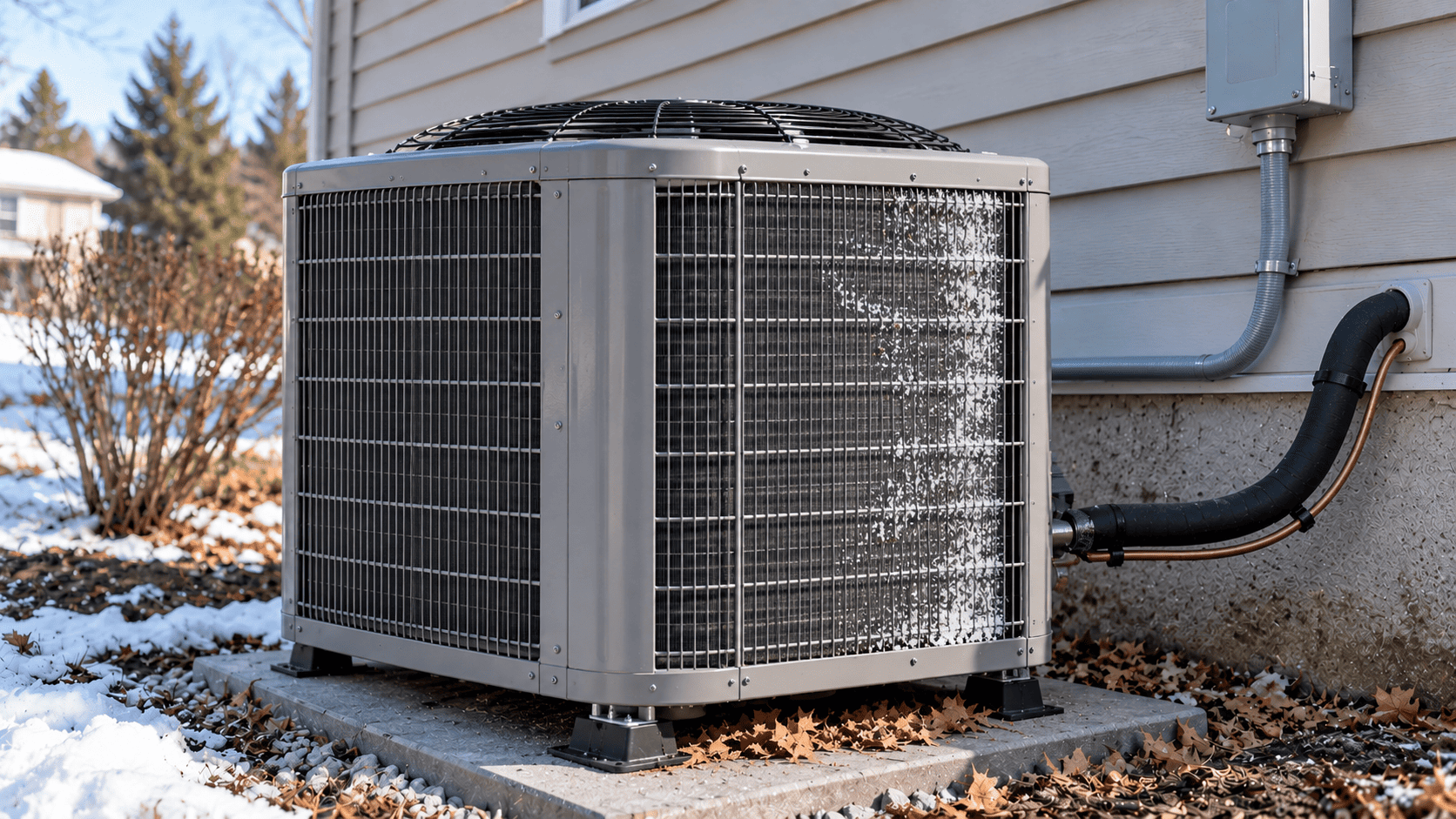
A light coating of frost on the outdoor coil can be normal during cold-weather operation. The heat pump should periodically enter a defrost cycle to remove it. However, a unit that becomes heavily covered in ice or repeatedly freezes without clearing may have a defrost, airflow, sensor, fan, or refrigerant-related problem.
Do not chip or break ice off the coil with tools, as this can damage the coil and refrigerant tubing.
4. The Outdoor Unit Is Not Running
If the indoor blower is running but the outdoor heat pump is not, the system may circulate air without providing normal heat. Check whether the outdoor unit is operating and whether a circuit breaker has tripped. If a breaker trips again after being reset, leave it off and have the system inspected rather than repeatedly resetting it.
5. Low Refrigerant or a Refrigerant-Side Problem
A heat pump depends on refrigerant to transfer heat. A leak or another refrigerant-side problem can reduce its ability to heat the home and may contribute to icing or extended run times. Refrigerant problems require proper diagnostic equipment and should be handled by an HVAC technician.
6. Reversing Valve or Control Problems
The reversing valve allows a heat pump to switch between cooling and heating modes. If the system cools normally but does not heat, a reversing-valve, thermostat, wiring, control-board, or related control problem may be involved. These symptoms generally require professional testing to identify the failed component rather than replacing parts based on symptoms alone.
7. Defrost, Electrical, or Component Failure
Heat pumps rely on sensors, relays, capacitors, contactors, control boards, fans, and other electrical components to complete the heating sequence. A failure in any of these areas can result in a heat pump that runs without heating properly, cycles incorrectly, or stops operating altogether.
If the cause is not obvious after basic homeowner checks, a professional HVAC diagnosis can determine whether the problem is related to airflow, controls, refrigeration, defrost operation, or another system component. You can also review Home Rangers’ complete HVAC services for heating and cooling repair options.
Heat pump running but your home still isn’t getting warm? If basic thermostat, filter, and airflow checks do not solve the problem, continuing to run a malfunctioning system may not address the underlying issue. Home Rangers can diagnose heating, defrost, airflow, refrigerant, electrical, and control problems and explain the appropriate repair options for your system.
How to Troubleshoot a Heat Pump That Is Not Heating
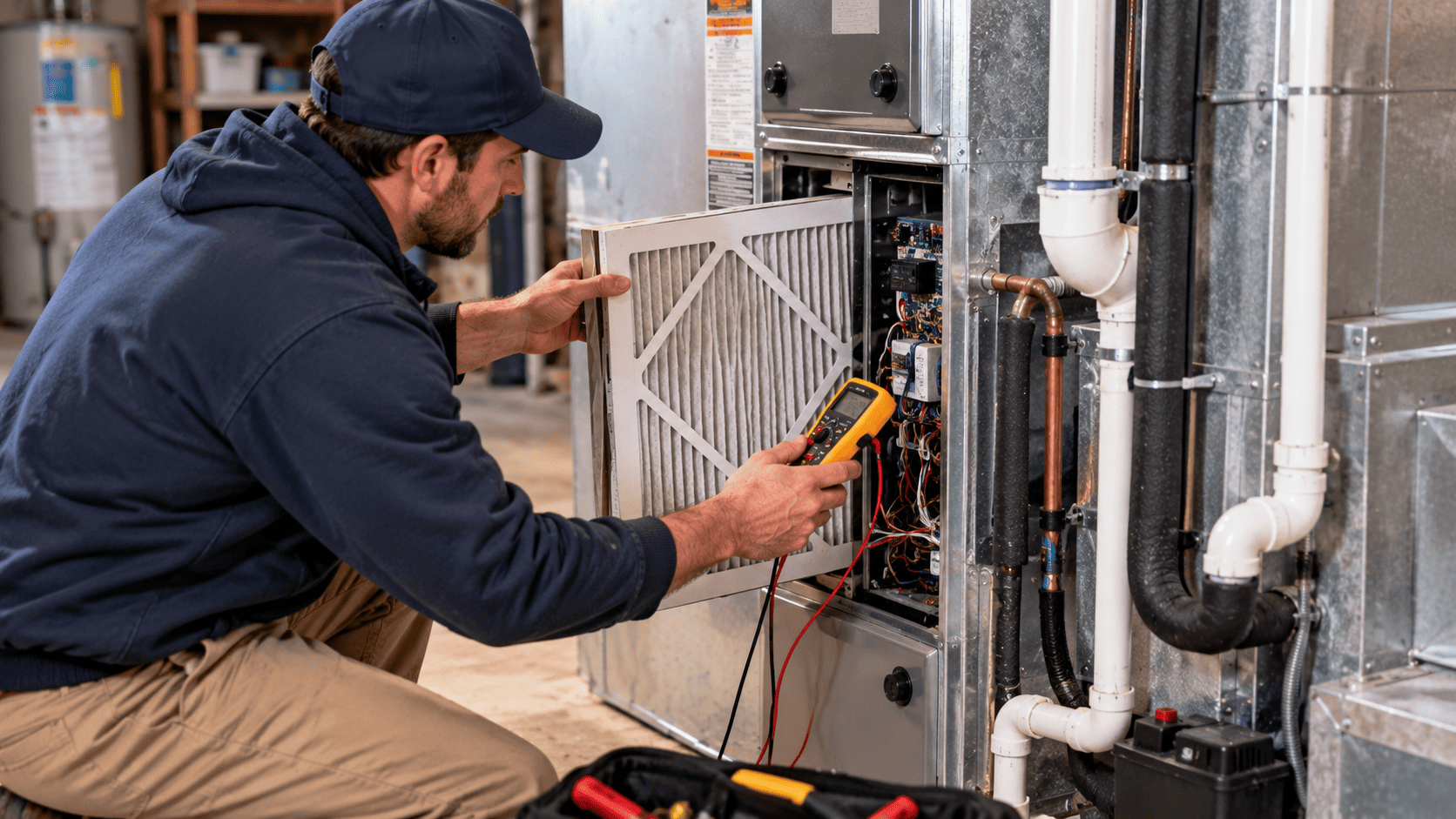
If your heat pump is blowing cold air or running without warming the house, work through a few basic checks before scheduling a repair. These steps can help rule out common thermostat, airflow, and power issues without opening the equipment or working with electrical components.
1. Check the Thermostat
Confirm that the thermostat is set to Heat and that the set temperature is higher than the current room temperature. Set the fan to Auto rather than On, then give the system several minutes to respond.
If you recently changed the thermostat, experienced a power outage, or adjusted advanced settings, make sure the thermostat is still configured for a heat pump system.
2. Inspect the Air Filter
Check the return-air filter and replace it if it is visibly dirty or clogged. Restricted airflow can reduce heating performance and may contribute to longer run times or other operating problems.
Also check that return grilles and supply registers throughout the home are open and unobstructed.
3. Look at the Outdoor Heat Pump
During a heating call, the outdoor unit will normally operate much of the time. Look for obvious problems such as heavy ice buildup, debris restricting airflow, or a unit that is not running at all.
A thin layer of frost can be normal in cold weather, especially before or during a defrost cycle. A solid layer of ice that remains on the coil is different and should be professionally diagnosed.
4. Check the Circuit Breaker Once
If the system is not operating, check the electrical panel for a tripped HVAC or heat pump breaker. A breaker that has tripped can be reset once. If it trips again, do not repeatedly reset it. Repeated tripping can indicate an electrical or equipment fault that needs professional inspection.
5. Give the System Time to Recover
Heat pumps generally warm a home more gradually than a furnace. Raising the thermostat several degrees at once does not necessarily make the heat pump produce heat faster and may activate auxiliary heat on some systems.
After making basic thermostat or airflow corrections, allow the system time to operate and watch the indoor temperature. If the temperature begins moving steadily toward the set point, the heat pump may be functioning normally.
6. Know When to Stop Troubleshooting
Basic homeowner troubleshooting should stop if the heat pump remains cold, the outdoor unit is heavily iced, a breaker keeps tripping, the system makes unusual electrical or mechanical noises, or the home continues losing temperature.
Do not attempt to add refrigerant, test live electrical components, bypass safety controls, or force a frozen outdoor coil to defrost. Problems involving refrigerant, controls, electrical components, compressors, or reversing valves require proper HVAC diagnostic equipment.
Heat pump still blowing cold air after the basic checks? If the thermostat, filter, airflow, and outdoor unit all appear normal but your home is still losing heat, the system may have a defrost, refrigerant, electrical, control, or mechanical problem. Home Rangers provides local heat pump diagnostics and repair for homeowners who need the cause identified before the problem becomes more serious.
Why Is My Heat Pump Not Heating Enough in Cold Weather?
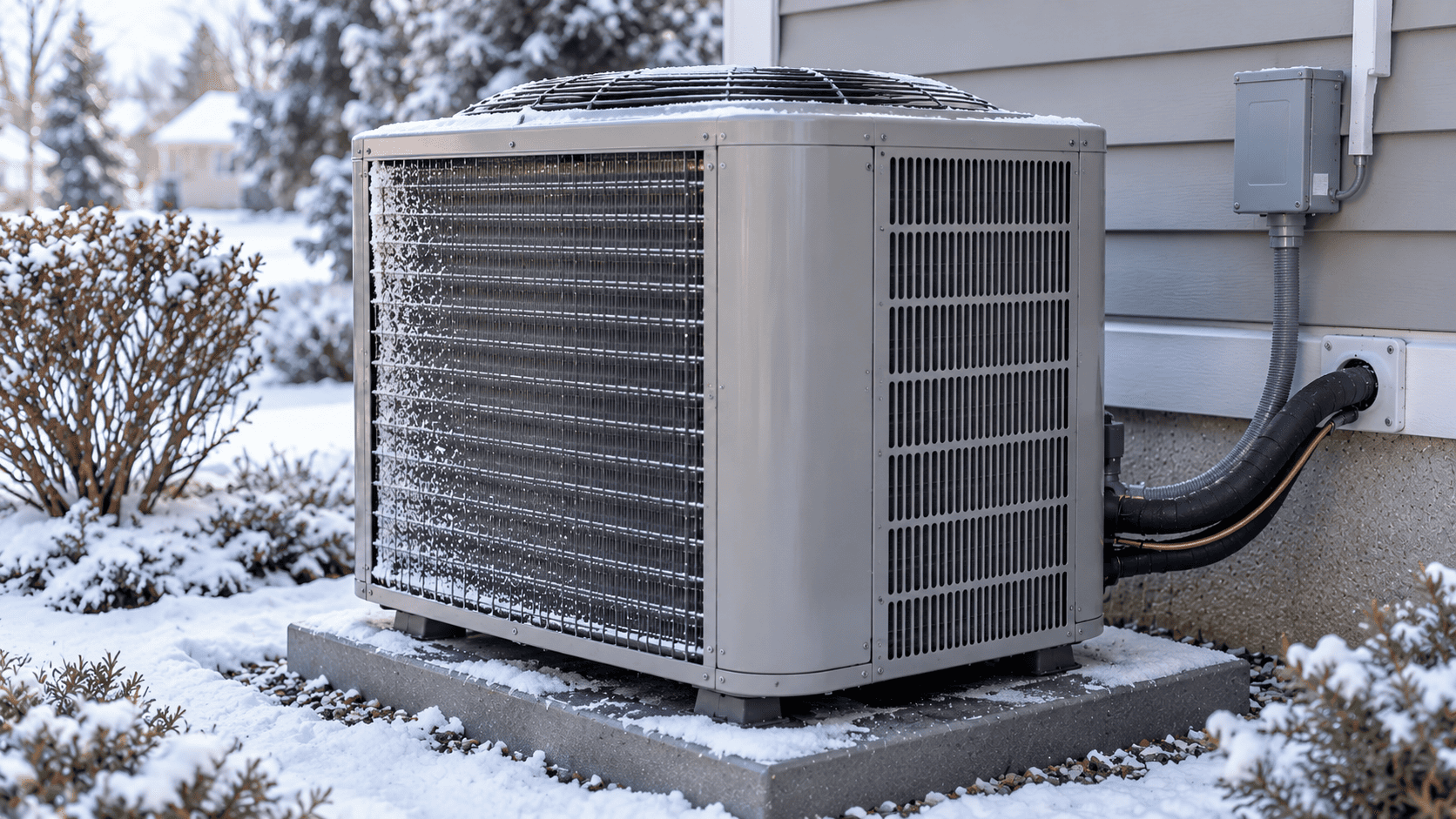
A heat pump can continue heating a home in cold weather, but its available heating capacity generally decreases as outdoor temperatures fall. This can result in longer run times, air that feels less hot than furnace air, or the system needing supplemental heat to maintain the thermostat setting.
The key distinction is whether the heat pump is still maintaining the home near the set temperature. Long run times during cold weather are not automatically a sign of failure. If the indoor temperature keeps dropping or the system cannot get close to the thermostat setting, there may be a problem that needs attention.
Cold Weather Can Reduce Heat Pump Output
A heat pump extracts heat from outdoor air and transfers it indoors. As outdoor temperatures fall, less heat is available to move into the home, so the system may need to operate longer to provide the same amount of heating.
This is especially noticeable during sudden temperature drops, when the home is losing heat faster than usual. A properly operating system may run for extended periods during these conditions without necessarily being malfunctioning.
Defrost Mode Can Temporarily Make the Air Feel Cooler
Frost can develop on the outdoor coil during cold, humid weather. To remove it, the heat pump periodically enters a defrost cycle. During this process, heating may be temporarily interrupted and the air from the vents can feel cooler.
A normal defrost cycle should be temporary. If the outdoor unit remains heavily iced, repeatedly freezes over, or does not return to normal heating, the defrost system or another component may need professional diagnosis.
Auxiliary Heat May Turn On Automatically
Many heat pump systems include auxiliary heat to supplement the heat pump when additional heating is needed. Depending on the system and thermostat, auxiliary heat may activate during very cold conditions, during recovery from a large thermostat adjustment, or while the heat pump is defrosting.
Seeing Aux Heat on the thermostat for a limited period does not necessarily indicate a problem. However, if auxiliary heat runs almost continuously or the home still cannot reach the thermostat setting, the heat pump or supplemental heating system may not be operating correctly.
Emergency Heat Is Different From Auxiliary Heat
Emergency Heat is typically a manual thermostat setting that relies on the backup heating source instead of normal heat pump operation. It is intended for situations where the heat pump itself cannot provide normal heating, not as the standard setting whenever outdoor temperatures are low.
If your heat pump is not heating but Emergency Heat does work, that can indicate that the backup heat source is available while the heat pump side of the system has a problem. The underlying heat pump issue should still be diagnosed rather than leaving the system on Emergency Heat indefinitely.
When Cold-Weather Performance May Indicate a Problem
- The indoor temperature continues falling while the heat pump runs.
- The system cannot reach or stay reasonably close to the thermostat setting.
- The outdoor coil becomes heavily iced and does not clear during defrost.
- The heat pump blows consistently cold air rather than briefly cooler air.
- Auxiliary heat runs for unusually long periods without restoring comfort.
- The heat pump stops heating while cooling mode still works normally.
If these symptoms appear during cold weather, the issue may be more than normal winter heat pump operation. A technician can test system temperatures, airflow, defrost operation, refrigerant performance, electrical components, and controls to determine why the heat pump is not producing enough heat.
What If the Heat Pump Cools but Does Not Heat?
If your heat pump works normally in cooling mode but does not heat the house when you switch the thermostat to Heat, the problem is more specific than a complete system failure. A heat pump uses many of the same components for both heating and cooling, but it must reverse the refrigerant flow to change operating modes.
One possible cause is a problem with the reversing valve, which allows the system to switch between heating and cooling. If the valve does not shift correctly, the heat pump may remain in cooling mode or fail to provide normal heating. Thermostat settings, wiring, controls, or other system components can produce similar symptoms, so the reversing valve should not be replaced based on symptoms alone.
If basic thermostat and airflow checks have already been completed and the heat pump consistently cools but will not heat, professional testing is the safest way to determine whether the issue is with the reversing valve, thermostat controls, refrigerant circuit, or another component.
Why Is a New Heat Pump Not Heating?
A brand-new heat pump that is blowing cold air or failing to heat the house should not automatically be assumed to have a defective major component. Problems that appear immediately after installation can involve thermostat configuration, wiring, system setup, airflow, or commissioning.
If a new smart thermostat such as a Nest or ecobee was recently installed, it must be configured correctly for the type of heat pump and backup heat system in the home. Incorrect configuration can affect how the equipment switches between heating, cooling, and auxiliary heat.
If the problem began immediately after a new heat pump or thermostat installation, contact the installer rather than changing advanced thermostat settings, wiring, or equipment controls yourself. The installer can verify that the system was configured and commissioned correctly.
Heat Pump Not Heating After a Power Outage?
A power interruption can also leave a thermostat without its previous settings or trip a breaker serving part of the HVAC system. Check the thermostat mode and the electrical panel once. If the heat pump does not resume normal heating, or a breaker trips again, stop troubleshooting and have the system inspected.
Whether the problem involves an older system or a recently installed unit, the goal is to identify the actual failure rather than replace components based only on symptoms. Home Rangers provides heating and cooling service throughout its local service area for homeowners whose heat pumps are no longer maintaining comfortable indoor temperatures.
When Should You Call an HVAC Technician for a Heat Pump That Is Not Heating?
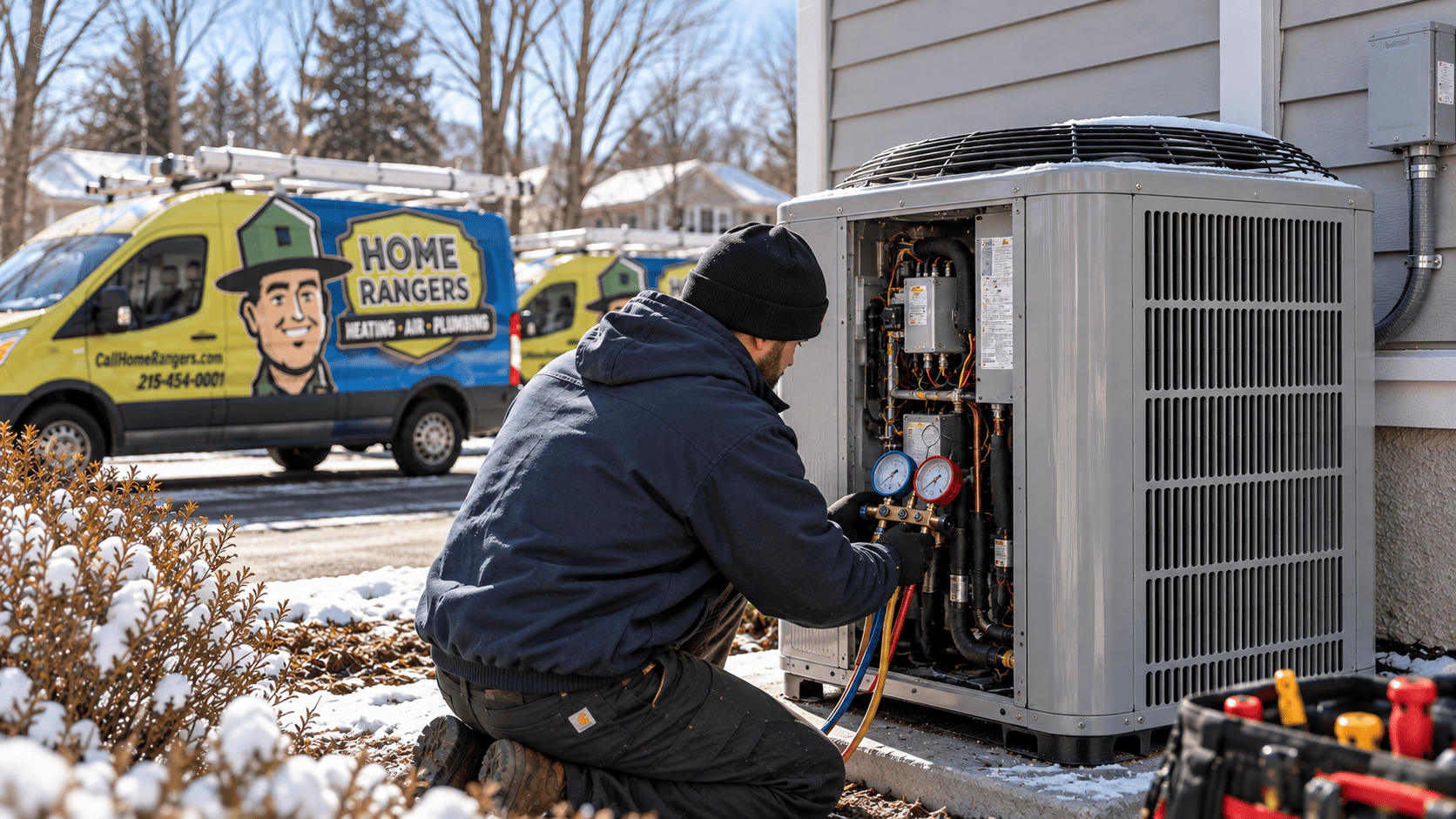
If the thermostat is set correctly, the filter is clean, airflow is unobstructed, and the heat pump still is not heating the house, the problem may require professional diagnosis. Continuing to adjust controls or repeatedly reset the system is unlikely to solve a refrigerant, electrical, defrost, or mechanical fault.
Schedule HVAC service if you notice any of the following:
- The heat pump runs continuously but the indoor temperature keeps falling.
- The system consistently blows cold air while set to Heat.
- The outdoor unit is heavily iced and does not clear during a normal defrost cycle.
- The heat pump works in cooling mode but not in heating mode.
- A circuit breaker trips again after being reset once.
- Auxiliary or Emergency Heat is the only way the home stays warm.
- The system makes unusual buzzing, grinding, rattling, or other abnormal noises.
- The heat pump frequently starts and stops without reaching the thermostat setting.
An HVAC technician can measure temperatures and airflow, test electrical and control components, evaluate defrost operation, check the refrigerant circuit, and determine which part of the system is preventing normal heating.
If your heat pump has become unreliable during cold weather, professional diagnosis can also help determine whether a repair is appropriate or whether an older system should be evaluated for replacement. Home Rangers serves homeowners across Bucks County, Montgomery County, Philadelphia, and surrounding communities.
Frequently Asked Questions About Heat Pump Heating Problems
Why is my heat pump blowing cold air in heat mode?
A heat pump can briefly blow cooler air during a defrost cycle or between heating cycles. If the air remains cold and the indoor temperature continues to fall, check the thermostat, filter, airflow, and outdoor unit. Persistent cold air may indicate a defrost, control, refrigerant, or mechanical problem.
Why is my heat pump running but not heating the house?
If the system runs continuously without raising the indoor temperature, possible causes include restricted airflow, an iced outdoor coil, thermostat or control problems, refrigerant issues, or a component failure. Start with basic thermostat and filter checks before scheduling professional diagnosis.
Why is my heat pump not heating enough when it is cold outside?
Heat pump heating capacity generally decreases as outdoor temperatures fall, so longer run times can be normal. However, if the home keeps losing temperature, the outdoor unit stays heavily iced, or auxiliary heat cannot maintain comfort, the system should be inspected.
Should I switch to Emergency Heat if my heat pump is not heating?
Emergency Heat is generally intended as a temporary backup when normal heat pump operation is unavailable. If Emergency Heat works but the heat pump does not, the underlying heat pump problem should still be diagnosed rather than leaving the system in Emergency Heat as a permanent solution.
Why did my heat pump stop heating after a power outage?
A power outage can affect thermostat settings or trip a breaker serving the HVAC system. Confirm that the thermostat is set to Heat and check the breaker once. If the breaker trips again or heating does not return, the system should be professionally inspected.
Get Your Heat Pump Heating Properly Again
If your heat pump is running but not warming the house, blowing cold air, or struggling to maintain the thermostat setting, Home Rangers can identify the cause and recommend the appropriate repair. Schedule professional heat pump service for your home in Bucks County, Montgomery County, Philadelphia, and surrounding communities.
Or call us directly at (215) 454-0001