

If your air conditioner blowing warm air problem started suddenly, begin with the basics before assuming the equipment failed. The fix may be thermostat settings, a dirty air filter, a tripped breaker, or debris around the outdoor unit.
An air conditioner can also stop blowing cool air when low refrigerant levels, a refrigerant leak, ice buildup, electrical problems, or compressor trouble interrupt the cooling process.
When an air conditioner loses cool air, the air conditioning system should be checked as a full path: thermostat, return, air filter, indoor coil, outdoor unit, and supply vents.
This guide gives practical troubleshooting tips and explains when to stop and call for AC repair, so the root cause is handled without guessing.
Air Conditioner Blowing Warm Air: First Checks
Double check the thermostat first. Set it to cool, lower the temperature below the room temperature, replace weak batteries, and make sure the fan switch is not set to on if you expect steady cold supply air.
If the AC is blowing warm air after that, check the electrical panel for a tripped breaker. Do not keep resetting a breaker that trips again; repeated power trouble can point to electrical components that need inspection.
Look at the vents too. Closed registers, blocked returns, and ductwork problems can make an AC unit seem broken even when the cooling system is running.
Air Filter And Airflow Problems
A dirty air filter is one of the common causes of warm air. A clogged filter can restrict airflow, reduce air flow across the evaporator coil, and lead to ice buildup.
Replace the air filter if it is packed with dust or dirt. Dirty filters can make the air handler struggle and can keep the AC system from functioning correctly.
To maintain proper airflow, keep return grilles open, keep furniture away from vents, and note whether the air filter gets dirty again quickly.
Low Refrigerant And Refrigerant Leak Signs
Low refrigerant is not used up like fuel. Low refrigerant levels usually mean a refrigerant leak, a previous service issue, or a problem in the refrigerant lines.
Signs may include an AC blowing hot air, a frozen evaporator coil, hissing near refrigerant lines, longer run times, higher energy costs, or condensation where it does not belong.
A professional HVAC technician should check refrigerant levels, find the leak, and decide whether a recharge is appropriate after the repair. Adding refrigerant without fixing the leak can bring the same warm air back.
Outdoor Unit, Condenser Coils, And Compressor
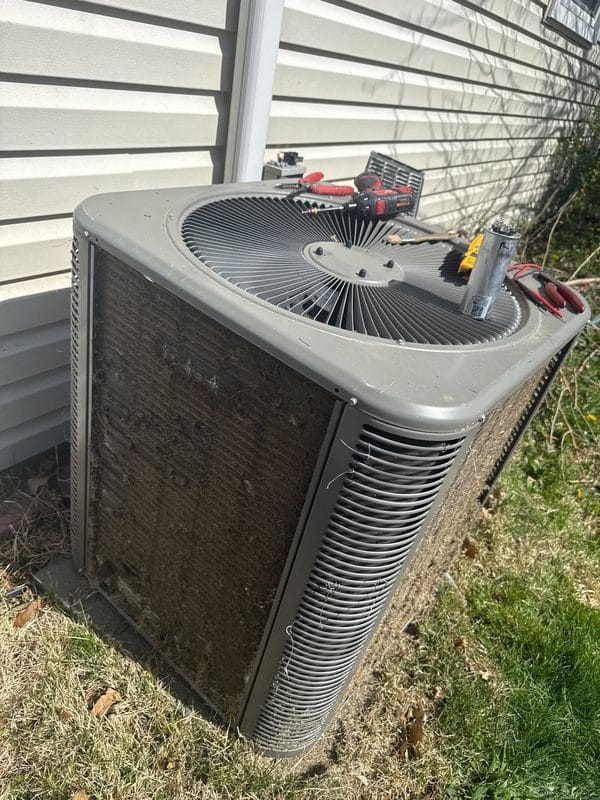
The outdoor unit has to remove heat. If leaves, cottonwood, grass, or debris buildup block condenser coils, the AC may keep running while blowing hot air indoors.
Keep space around the condenser clear and do not wash electrical parts. Dirty condenser coils, a weak fan, a bad capacitor, or a compressor problem can stop the unit from absorbing heat and releasing it outdoors.
If the outdoor unit is silent, buzzing, short cycling, or running while the house stays hot, several issues can be involved. The process should inspect the compressor, capacitor, contactor, and other components.
Drain Line, Evaporator Coil, And Safety Switches
A clogged drain line can trigger a float switch and shut down the system. Water near the air handler, a full secondary pan, or recurring drain line backups are signs to take seriously.
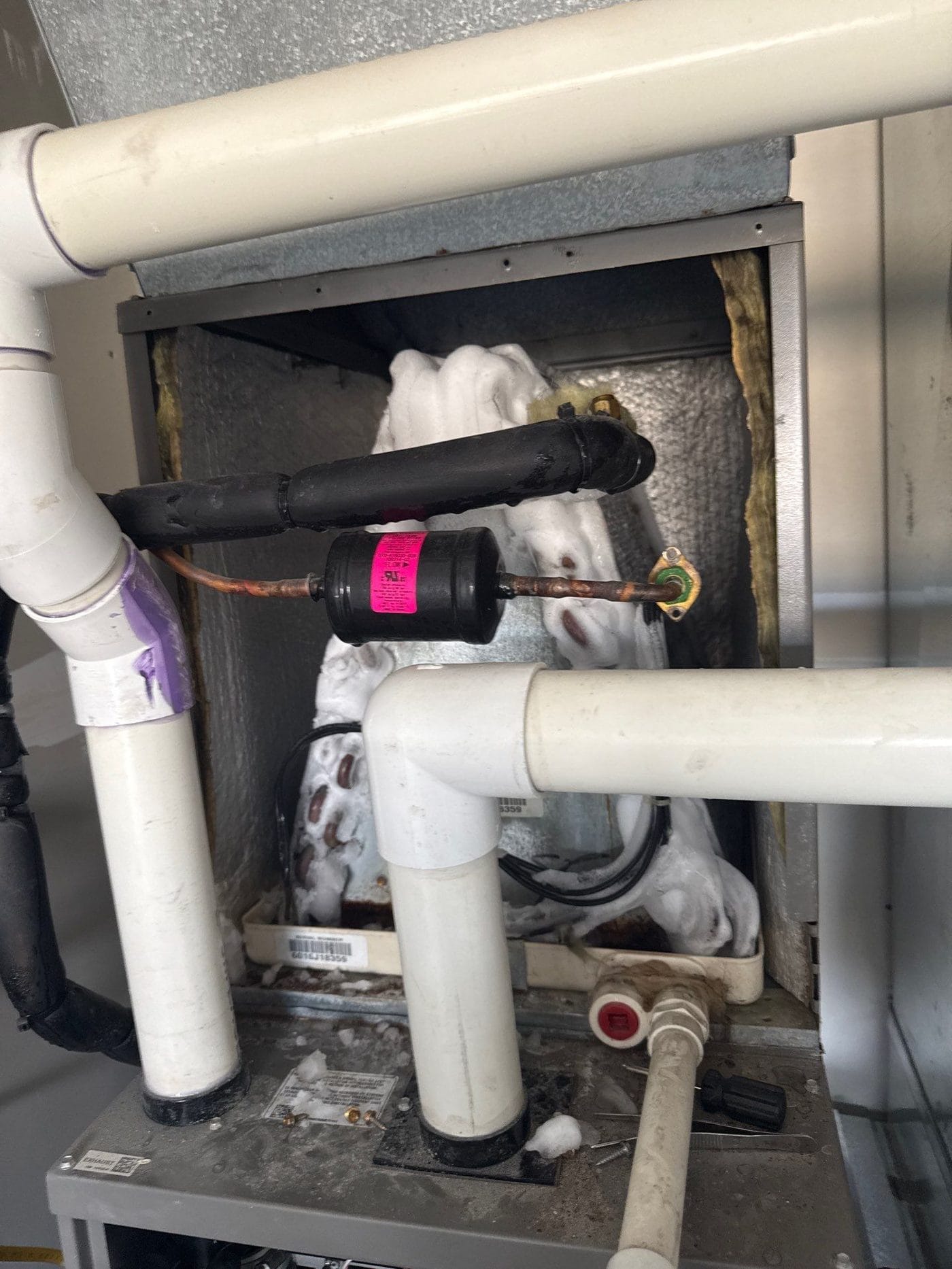
A dirty evaporator coil can also interfere with heat transfer. When the evaporator coil gets too cold, freezing can spread and the system may stop blowing cool air.
Several reasons can overlap: thermostat malfunction, dirty air filter, blocked condenser, low refrigerant, and mechanical wear. Good troubleshooting steps separate the first symptom from the root cause.
When Warm Air Needs A Technician
If the AC is blowing hot air after the basic checks, there is a good chance the problem is beyond a quick homeowner fix. A technician can inspect the indoor and outdoor sections as one connected system.
The visit may include temperature readings, refrigerant pressure readings, coil temperature, blower operation, capacitor testing, drain safety, and signs of a leak. Those details lead to a repair plan instead of a parts guess.
Warm air during a summer heat wave can feel urgent, but the safest step is still diagnosis. If the compressor is short cycling, the breaker trips, or the evaporator coil is frozen, shut the system off and let the equipment thaw before deeper testing.
Some AC blowing hot air problems are simple. Others involve components that are expensive to replace, so it is crucial to know whether the issue is a dirty filter, low refrigerant, a bad capacitor, or a mechanical failure.
What The Repair Process Should Confirm
A clear repair process should explain what was checked, what failed, and what can wait. It should also explain whether the AC’s performance is being limited by airflow, refrigerant, electrical power, or the cooling system itself.
That process can include checking for sweat on refrigerant lines, condensation near the air handler, cold suction line behavior, clogged drain line issues, debris around the condenser, and whether the fan is moving air correctly.
Ask whether the issue can lead to repeat warm air. For example, a refrigerant recharge without leak repair may restore cool air briefly but leave the root cause unresolved.
Good notes make future troubleshooting faster for the homeowner later too.
AC Blowing Warm Air Or AC Blowing Hot Air Checklist
| Safe check | What it may mean |
|---|---|
| Thermostat mode, batteries, and setpoint | Thermostat issues or a simple settings problem. |
| Filter, vents, and returns | Airflow restriction, clogged filter, or blocked vents. |
| Outdoor unit and coils | Debris, dirt, fan trouble, or condenser problems. |
| Ice, sweat, or water near the air handler | Frozen coil, drain line issue, or low refrigerant. |
Photos From AC Warm Air Troubleshooting
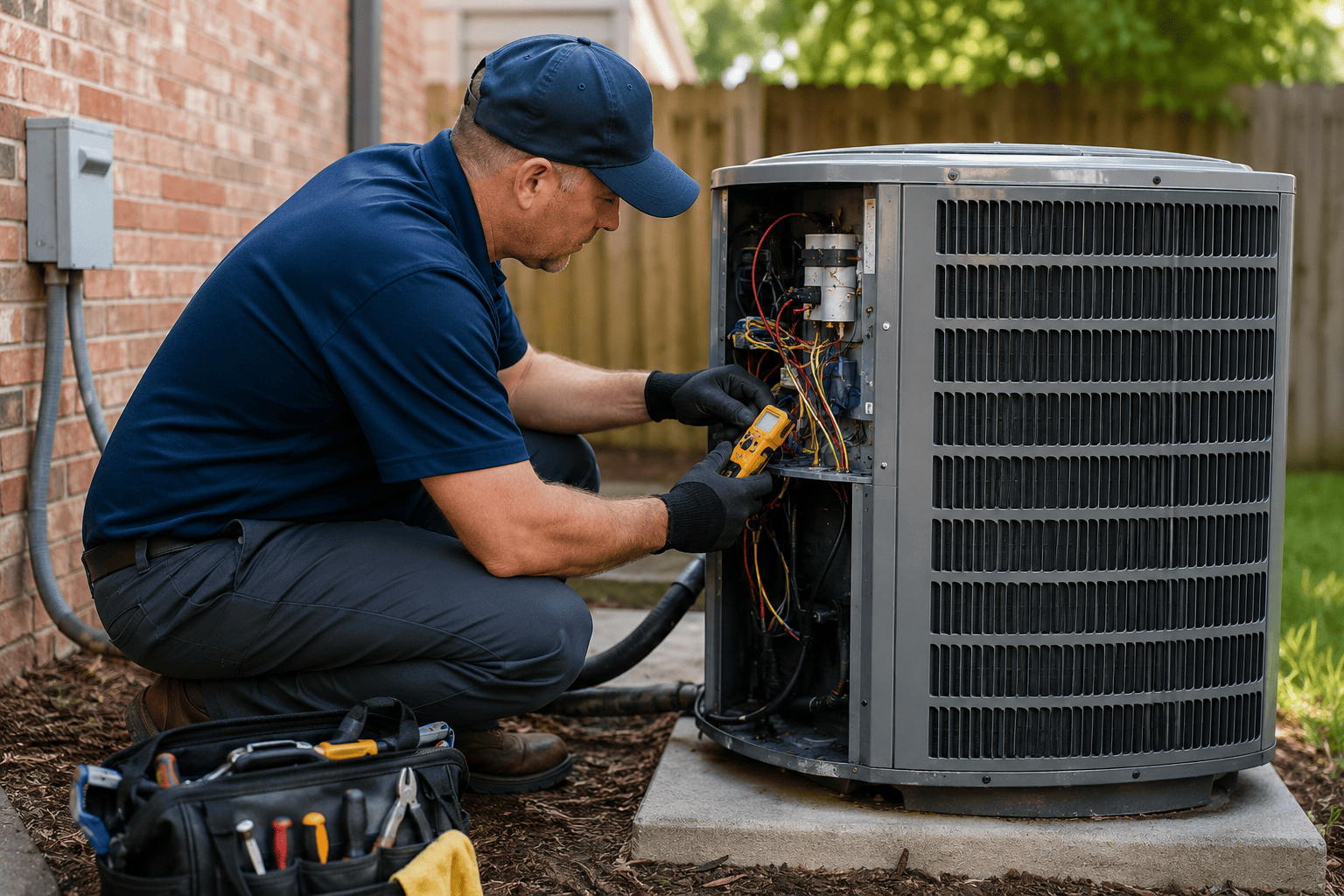
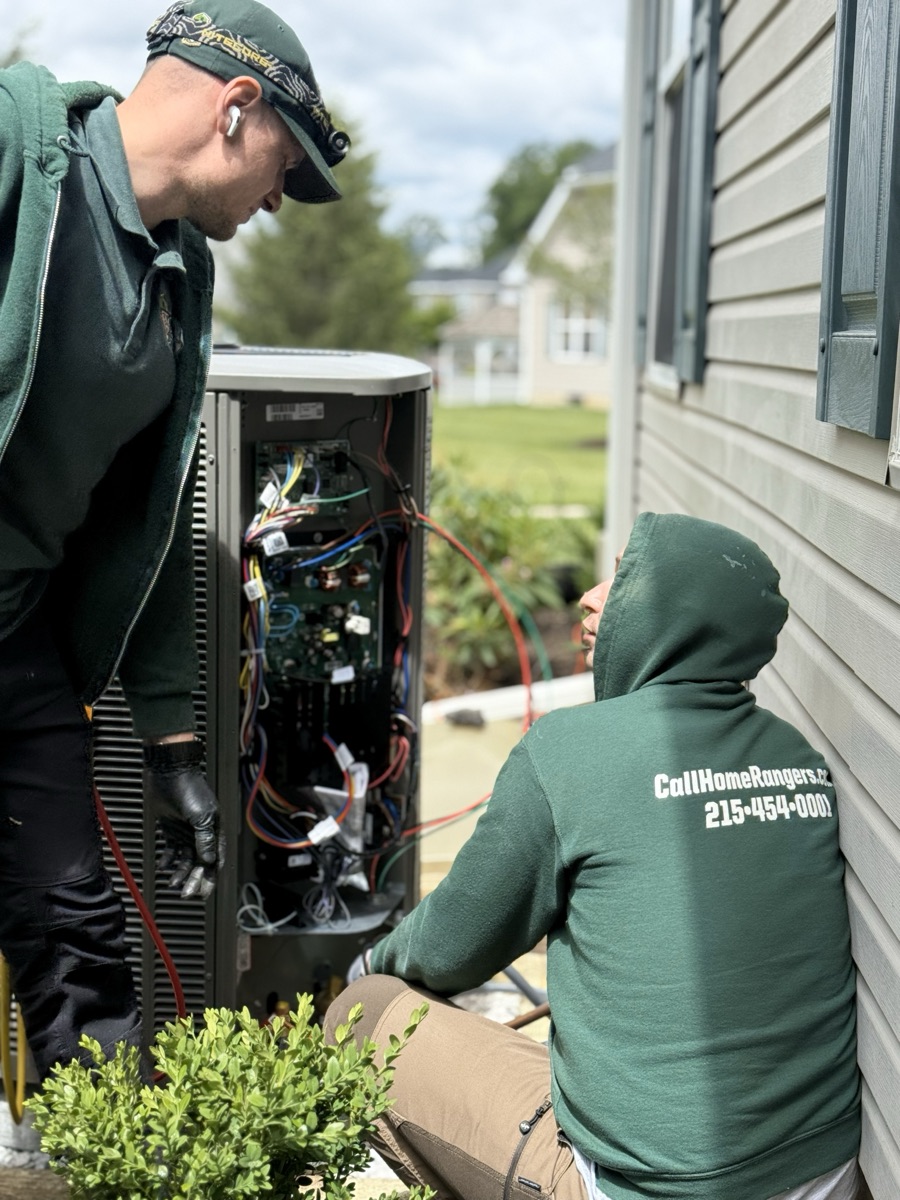
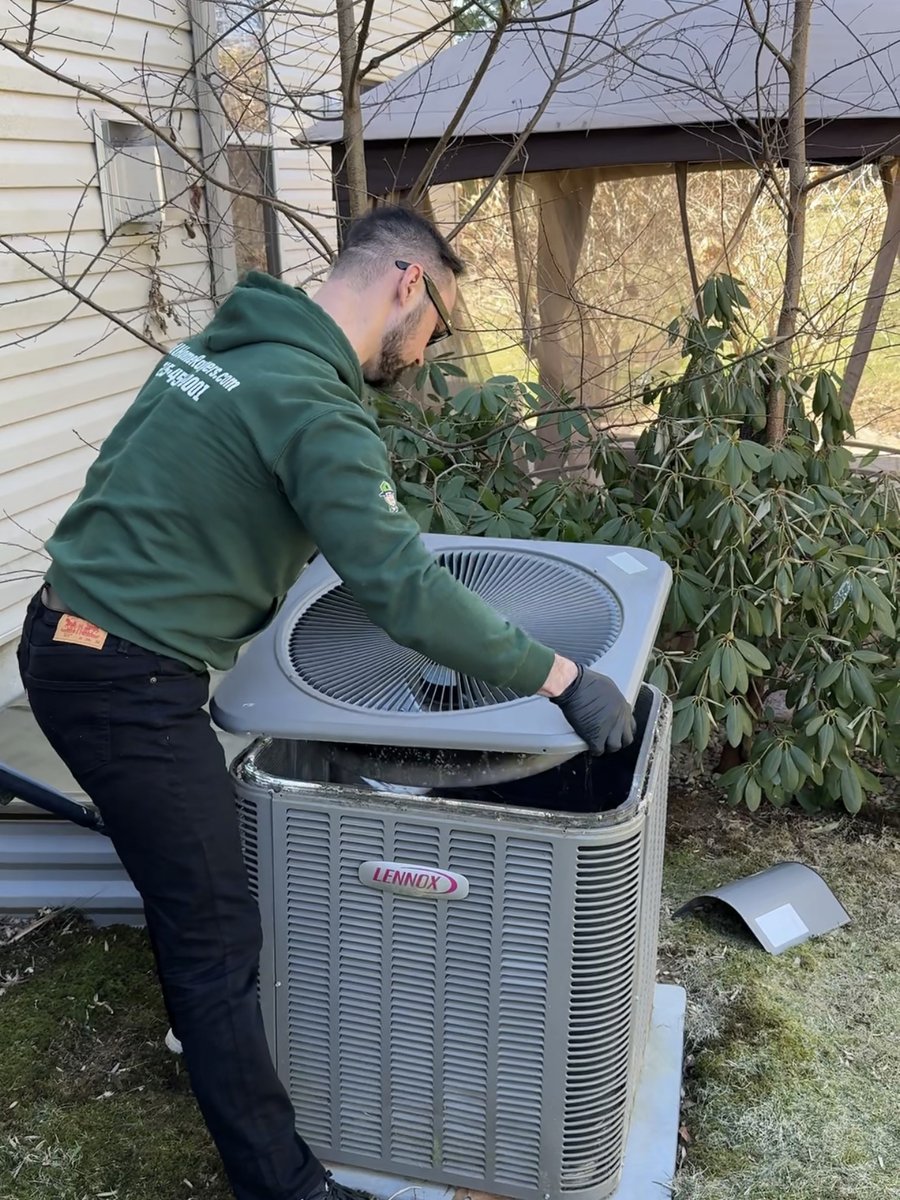
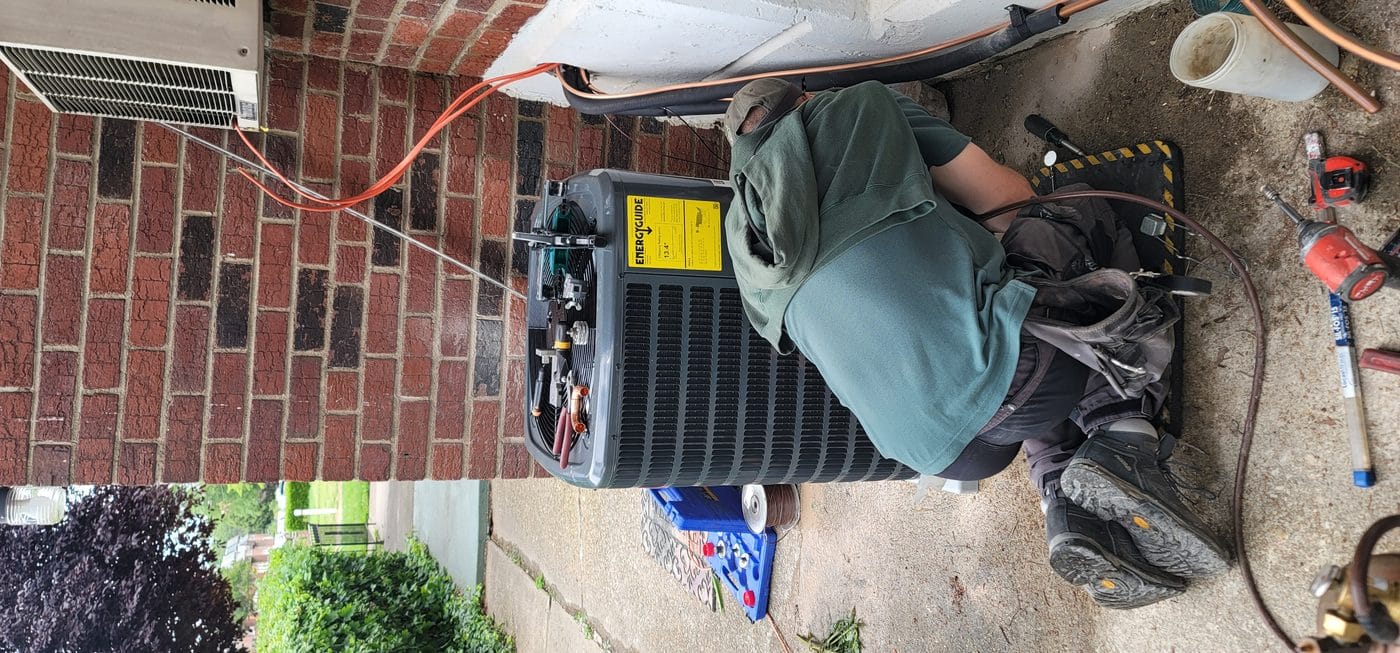
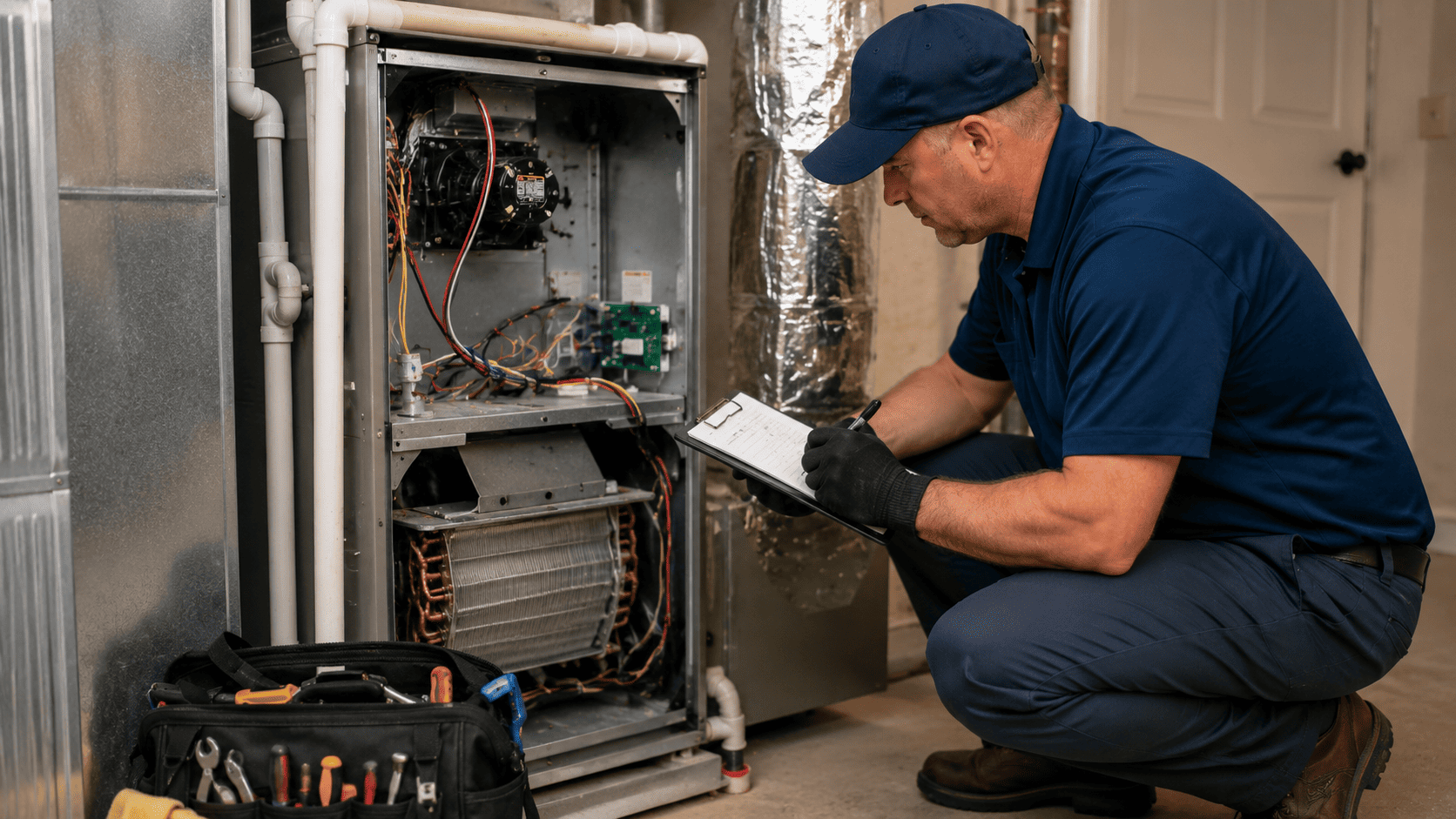
These photos show AC unit diagnostics, condenser coils, capacitor testing, compressor inspection, evaporator coil freezing, and repair cost factors tied to an AC blowing warm air call.


Frequently Asked Questions
Why Is My AC Blowing Hot Air?
Common reasons include thermostat settings, a dirty air filter, low refrigerant, a refrigerant leak, dirty condenser coils, a tripped breaker, or a compressor issue.
Can I Fix An AC Blowing Warm Air Myself?
You can replace the air filter, open vents, check thermostat settings, clear debris around the outdoor unit, and confirm power. Refrigerant, compressor, and electrical problems should be handled by a technician.
Should I Turn The AC Off If It Is Blowing Hot Air?
Yes, if you see ice buildup, a repeated tripped breaker, water at the air handler, or the system cannot cool. Letting it run can lead to more damage.
How Do I Know If It Is A Refrigerant Leak?
Low refrigerant levels, ice on the evaporator coil, hissing, weak cooling, and longer run times can point to a refrigerant leak, but testing is needed to confirm it.
Warm air is a symptom, not a diagnosis. The useful repair is the one that explains why the AC is blowing warm air and what should be fixed first.
Need Help With An AC Unit Blowing Hot Air?
Home Rangers can review an AC blowing warm air problem, thermostat malfunction, air filter restriction, refrigerant leak concerns, drain line problems, compressor symptoms, and air conditioning repair options in Bucks County, Montgomery County, Philadelphia, and nearby areas. License records include PA HIC #PA163523, Philadelphia Contractor #057677, NJ Master HVACR #19HC00033500, and DE Master HVACR #HM-0011370.
Review AC Repair Options