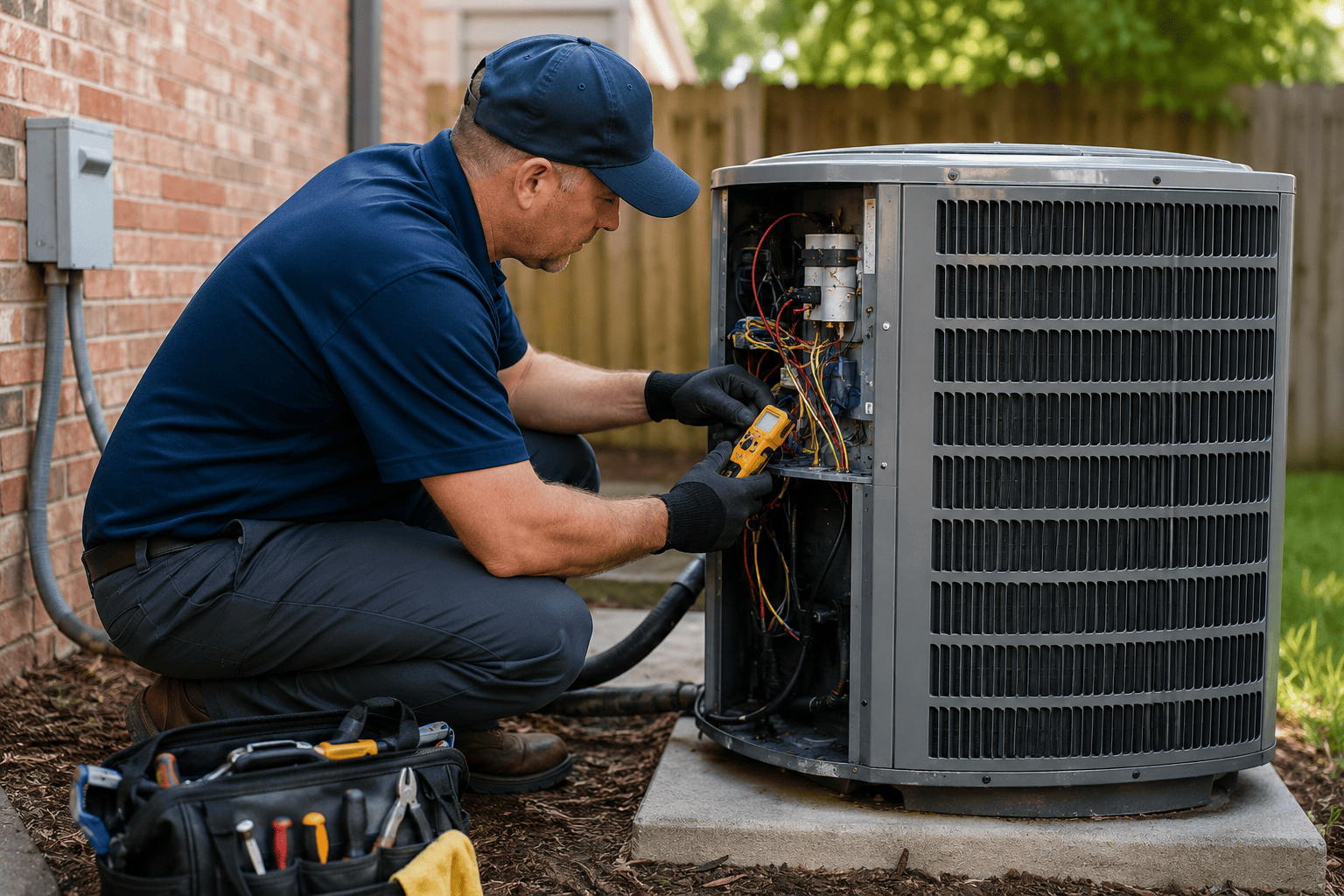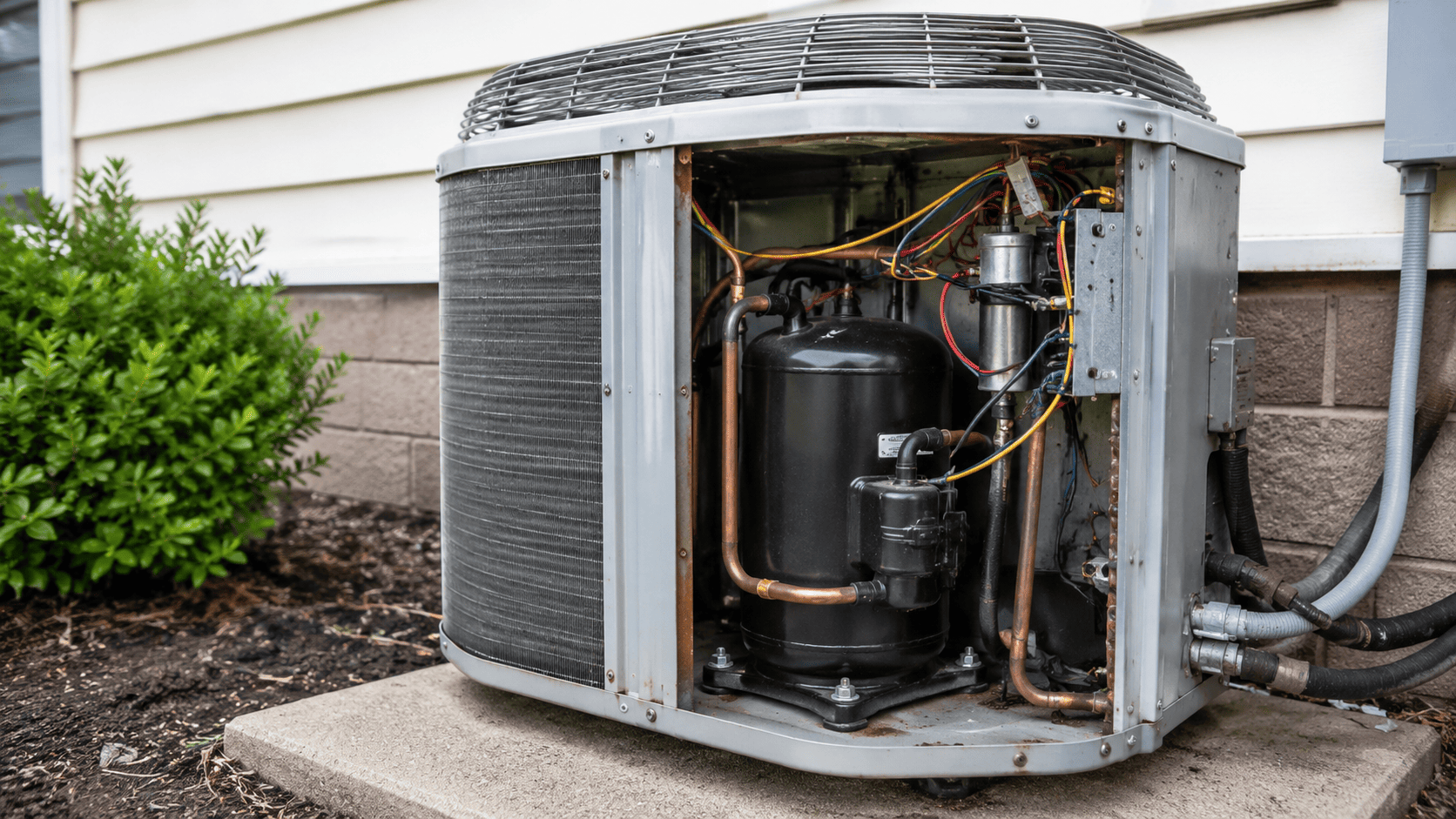

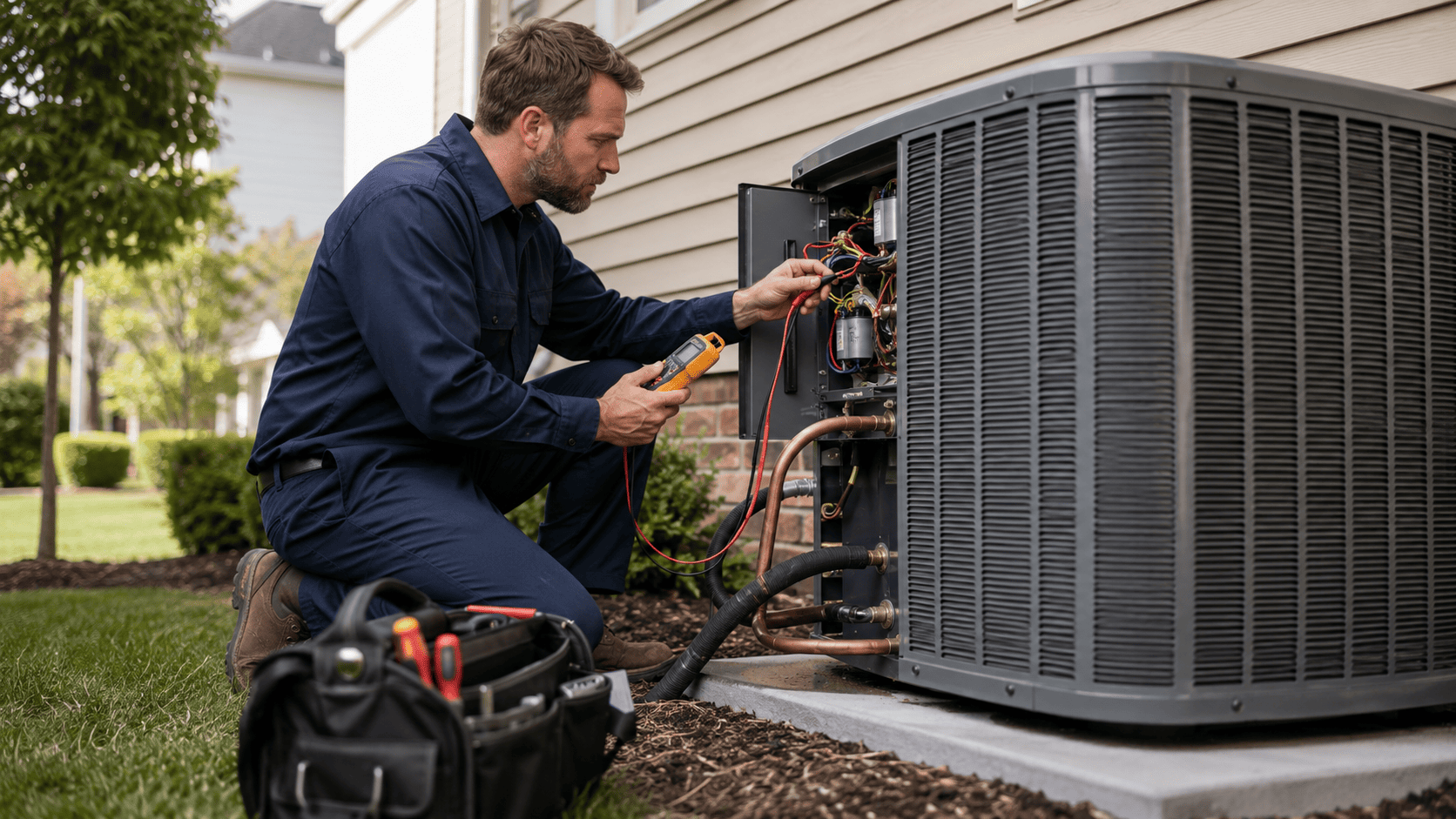
AC maintenance is the routine inspection, cleaning, testing, and care of an air conditioning system. It includes simple tasks homeowners can perform between service visits, as well as technical checks that should be completed by a qualified HVAC professional. The goal is to maintain proper airflow and cooling performance, identify developing problems, and prepare the system for periods of heavy use.
A complete AC maintenance routine covers the indoor equipment, outdoor condenser, thermostat, air filter, electrical components, refrigerant system, coils, blower, condensate drain, and the way the system starts, runs, and shuts down. Most residential air conditioners should receive professional maintenance once a year, preferably in spring before the main cooling season.
Routine maintenance is intended for an air conditioner that is generally operating. If the system is already blowing warm air, leaking water, repeatedly turning on and off, tripping a breaker, making loud new noises, or failing to start, it usually needs an AC repair diagnostic rather than a standard maintenance visit.
What Is AC Maintenance?
Air conditioning maintenance is preventive care performed before a major problem develops. Instead of waiting for the AC to stop cooling, the homeowner and HVAC technician regularly check the parts that affect comfort, airflow, drainage, electrical operation, and heat transfer.
AC maintenance is more than changing an air filter or looking at the outdoor unit. A thorough maintenance visit tests how the system is actually operating. The technician may inspect electrical connections, evaluate cooling performance, check the thermostat, review refrigerant performance, examine the coils and blower, clear the condensate drainage system, and look for wear that could affect future operation.
The exact checklist can vary depending on the type of equipment, its age, its condition, the manufacturer’s instructions, and how accessible the indoor and outdoor units are. However, a useful maintenance visit should leave the homeowner with a clear understanding of:
- How the air conditioner is currently performing
- Whether airflow and cooling appear normal
- Whether any components need cleaning or adjustment
- Whether the technician found an active problem or developing concern
- Which recommended repairs are urgent and which can be monitored
AC Maintenance vs. an AC Tune-Up
The terms AC maintenance and AC tune-up are often used interchangeably, but they can describe slightly different scopes of work.
AC maintenance is the broader process of caring for the system throughout the year. It includes homeowner tasks such as checking the filter, keeping supply and return vents clear, monitoring thermostat operation, and removing debris from around the outdoor unit.
An AC tune-up is usually the scheduled professional portion of that maintenance. During an AC tune-up and maintenance visit, a technician inspects, tests, cleans, and evaluates components that require HVAC training, tools, and safe access to the equipment.
Both are part of the same preventive approach: maintain the system while it is still operating instead of waiting for a breakdown.
What Does AC Maintenance Include?
AC maintenance generally consists of two categories of work:
- Homeowner maintenance: checking or replacing the air filter, keeping vents unobstructed, reviewing thermostat settings, clearing leaves and vegetation from around the condenser, and watching for changes in cooling, noise, drainage, or operating cycles.
- Professional maintenance: inspecting electrical parts and connections, checking the evaporator and condenser coils, evaluating refrigerant performance, testing the blower and system airflow, inspecting the condensate drain, confirming thermostat operation, and checking the complete operating cycle.
Homeowners can safely handle basic cleaning and observation, but refrigerant work, electrical testing, internal component access, and technical adjustments should be left to a qualified HVAC technician. Attempting these tasks without the correct equipment can damage the system or create an electrical or refrigerant safety risk.
Why Regular AC Maintenance Matters
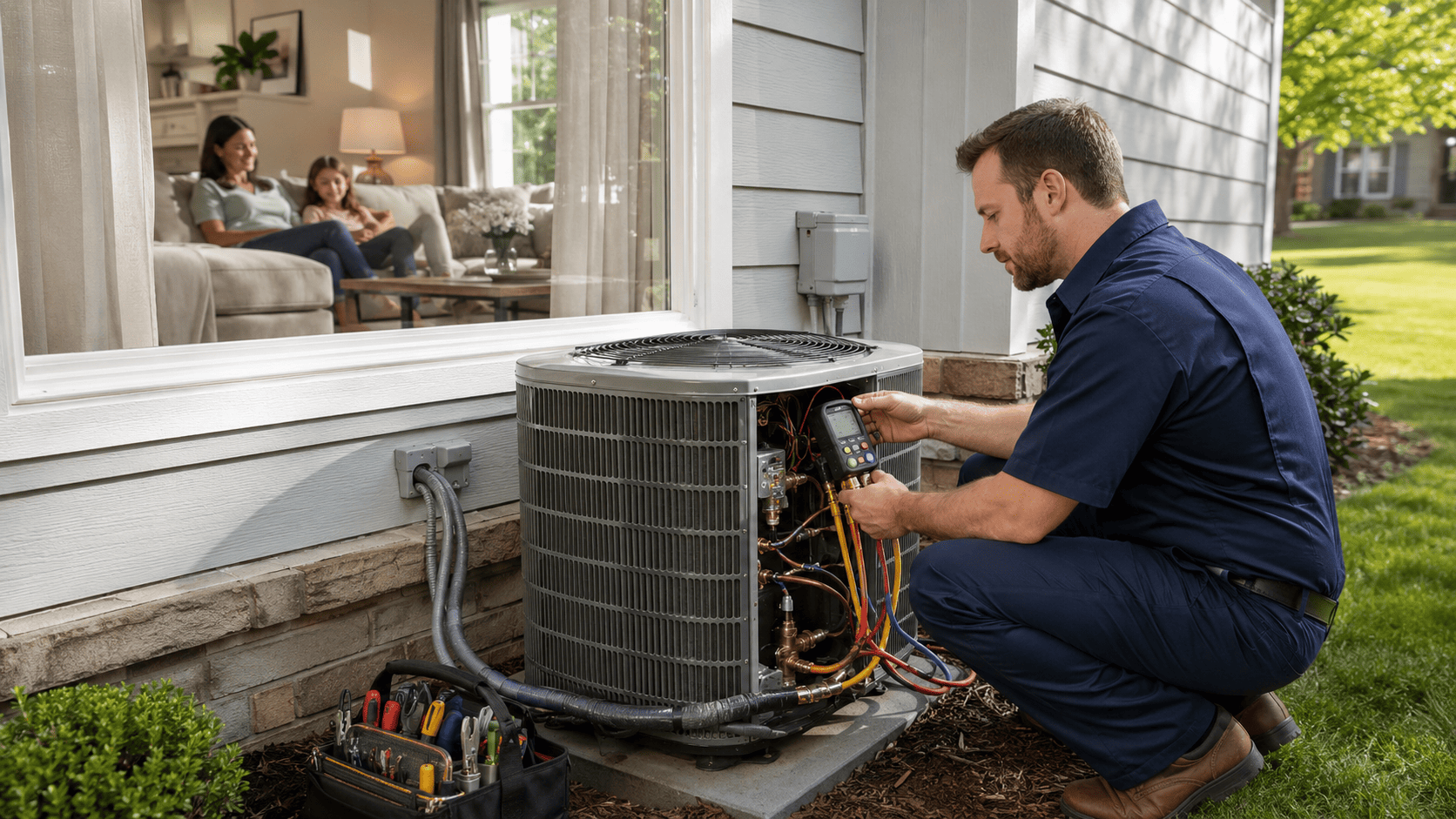
Preventive maintenance cannot guarantee that an air conditioner will never break down. Parts can still fail unexpectedly. However, routine checks can reveal common concerns such as restricted airflow, dirty coils, blocked drainage, loose electrical connections, abnormal system behavior, and worn components before they cause a complete loss of cooling.
Regular AC maintenance can help homeowners:
- Prepare for hot weather: Spring maintenance gives the system an opportunity to be inspected before long summer run times begin.
- Maintain airflow: Clean filters, unobstructed vents, and properly operating blower components help conditioned air move through the home.
- Support efficient cooling: Clean coils and proper airflow allow the system to transfer heat without working harder than necessary.
- Reduce water-related risks: Inspecting the condensate drain and drain pan can help identify blockages that may cause leaks or safety-switch shutdowns.
- Plan repairs: Finding a weak or worn component during scheduled maintenance gives the homeowner time to review options before an emergency occurs.
- Understand system condition: A professional inspection can provide a clearer picture of the equipment’s age, performance, maintenance needs, and likely repair risks.
The most useful maintenance visit is not the one with the longest checklist. It is the one that combines careful inspection with clear explanations, documented findings, and practical recommendations based on the actual condition of the system.
Not sure whether your AC needs maintenance or repair? If your system is still cooling but is overdue for seasonal service, an AC tune-up can help identify airflow, electrical, drainage, and performance concerns before peak summer use. If it is blowing warm air, leaking water, short-cycling, or making loud new noises, Home Rangers can diagnose the active problem and explain the appropriate next step before any repair begins.
Complete AC Maintenance Checklist for 2026
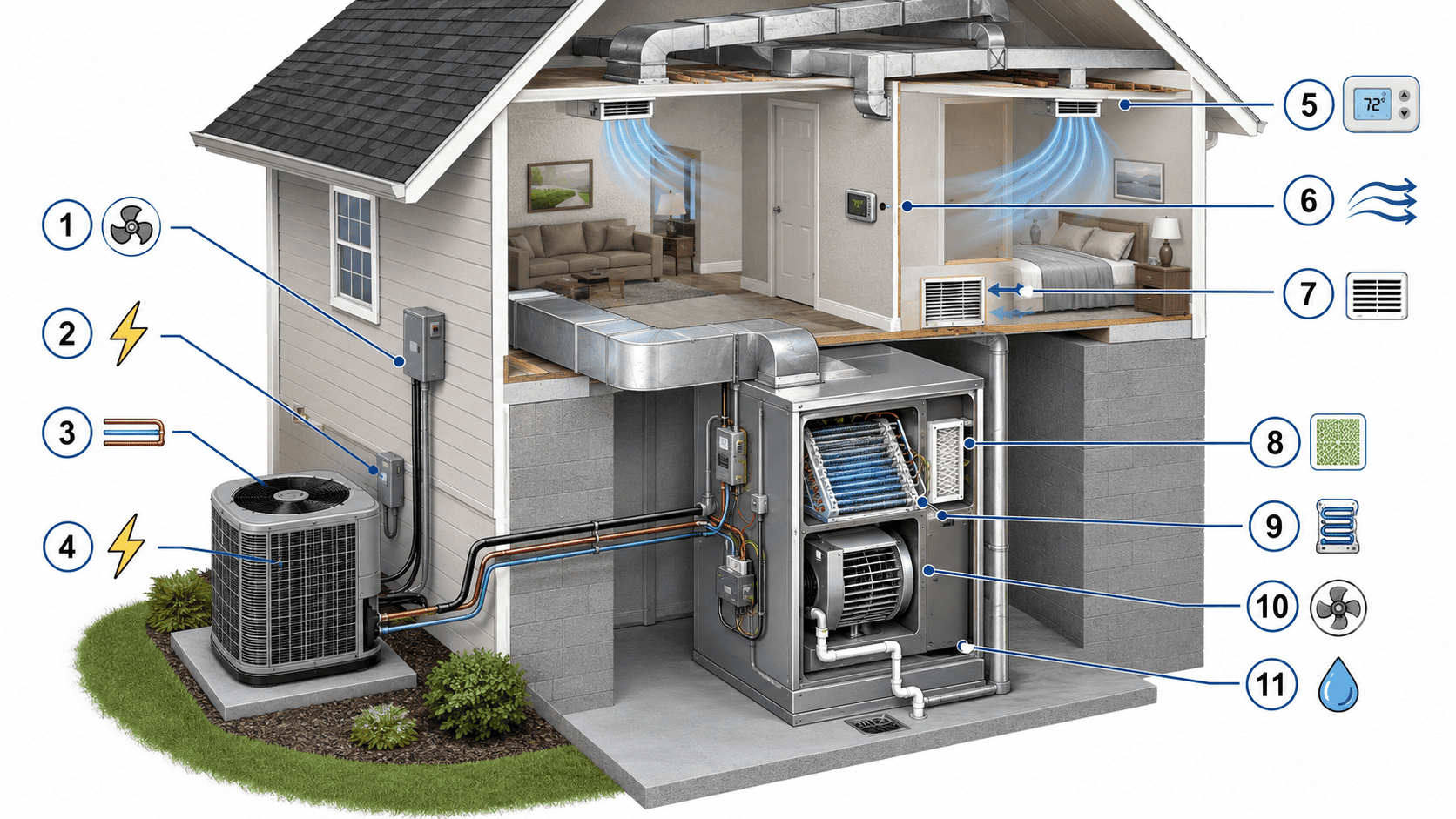
A complete AC maintenance checklist should cover both routine homeowner care and a professional inspection of the system’s electrical, refrigeration, airflow, drainage, and control components. Homeowners can safely monitor the system, replace accessible filters, and keep the equipment area clear. Internal cleaning, electrical measurements, refrigerant work, and mechanical adjustments should be performed by a qualified HVAC technician.
Use the following checklist to prepare your air conditioner for the cooling season and recognize problems that require professional attention.
Home AC Maintenance Checklist for Homeowners
1. Check the Air Filter
Inspect the HVAC filter regularly during the cooling season. A dirty filter can restrict airflow, allow dust to collect inside the system, and make it more difficult for the air conditioner to move cooled air through the home.
- Locate the filter at the return grille, furnace, or air handler.
- Turn the system off before removing the filter.
- Check whether the filter is visibly dirty or clogged.
- Replace disposable filters or clean reusable filters according to the manufacturer’s instructions.
- Install the replacement with the airflow arrow pointing in the correct direction.
- Use the filter size and type recommended for your HVAC system.
Checking the filter monthly does not mean every filter must be replaced monthly. Replacement frequency depends on the filter type, system use, household conditions, pets, renovation dust, and the equipment manufacturer’s guidance.
2. Check the Thermostat
Set the thermostat to cooling mode and confirm that the indoor temperature reading appears reasonable. Lower the set temperature enough to start a cooling cycle, then observe whether the system starts normally and delivers cool air.
- Confirm that the thermostat display is working.
- Replace thermostat batteries if the model uses them and the display is weak or blank.
- Check that the thermostat is set to Cool rather than Heat or Off.
- Use Auto fan mode for normal operation unless your HVAC professional recommends otherwise.
- Review programmed schedules after a power outage or seasonal time change.
A thermostat that loses power, displays incorrect temperatures, or does not start the system may need professional diagnosis. The problem can involve the thermostat itself, wiring, a safety switch, or another HVAC component.
3. Keep Supply and Return Vents Clear
Walk through the home and check accessible supply registers and return-air grilles. Furniture, rugs, curtains, boxes, and other objects can restrict airflow when they cover or block vents.
- Move objects away from supply registers and return grilles.
- Vacuum dust from accessible grille surfaces.
- Confirm that adjustable supply registers are open unless an HVAC professional has instructed you to close them.
- Look for rooms with noticeably weaker airflow than the rest of the home.
Weak airflow from several vents may be related to a clogged filter, blower problem, dirty indoor coil, duct restriction, or another system issue. Closing multiple vents is not a substitute for balancing or repairing the HVAC system.
4. Inspect the Outdoor AC Unit
The outdoor condenser needs unobstructed airflow to release heat from the home. Before the cooling season begins, visually inspect the unit and the area around it.
- Remove loose leaves, grass clippings, and other debris from around the cabinet.
- Trim vegetation that is growing against the unit while maintaining the clearance required by the manufacturer.
- Check whether the unit appears level and stable.
- Look for damaged panels, bent protective grilles, or obvious impact damage.
- Make sure roof runoff, irrigation, or a downspout is not continuously directing water onto the equipment.
Do not use a pressure washer on condenser coil fins. High water pressure can bend the thin metal fins and reduce airflow. Do not remove service panels or reach inside the cabinet. Internal debris removal and coil cleaning are safer when completed during a professional AC tune-up.
5. Look for Water Around the Indoor Unit
Air conditioners remove moisture from indoor air, and that water normally leaves through the condensate drainage system. Check the visible area around the furnace, air handler, and drain pan for moisture.
- Look for standing water or active dripping.
- Check for water stains, damp insulation, or corrosion around the drain pan.
- Watch for a system that shuts off unexpectedly when the drain safety switch activates.
- Contact an HVAC professional if water repeatedly returns after being cleaned up.
A blocked condensate drain can cause water leakage and may stop the cooling system when a safety switch is installed. Because drain configurations differ, avoid pouring chemicals into the line unless the equipment manufacturer or your HVAC technician specifically recommends a procedure for your system.
6. Inspect Visible Refrigerant Line Insulation
Central air conditioners usually have an insulated copper refrigerant line running between the indoor and outdoor equipment. Check the visible insulation for missing sections, splits, or severe deterioration.
Do not handle refrigerant connections, open valves, or attempt to add refrigerant. Refrigerant work requires specialized tools and training. Ice on the refrigerant line or outdoor unit can indicate an airflow problem, low refrigerant charge, or another malfunction that requires diagnosis.
7. Observe a Complete Cooling Cycle
After completing the visual checks, run the system and observe how it operates. You do not need specialized tools to notice meaningful changes in its behavior.
- Confirm that cool air begins moving from the vents.
- Listen for grinding, scraping, banging, buzzing, or rattling that was not present before.
- Notice whether the system starts and stops repeatedly within short periods.
- Check whether some rooms remain unusually warm.
- Watch for unusual odors, water leakage, ice, or a tripped circuit breaker.
Turn the system off and request professional service if it produces a burning odor, repeatedly trips a breaker, develops heavy ice, makes severe mechanical noises, or operates without cooling the home.
Professional Air Conditioning Maintenance Checklist
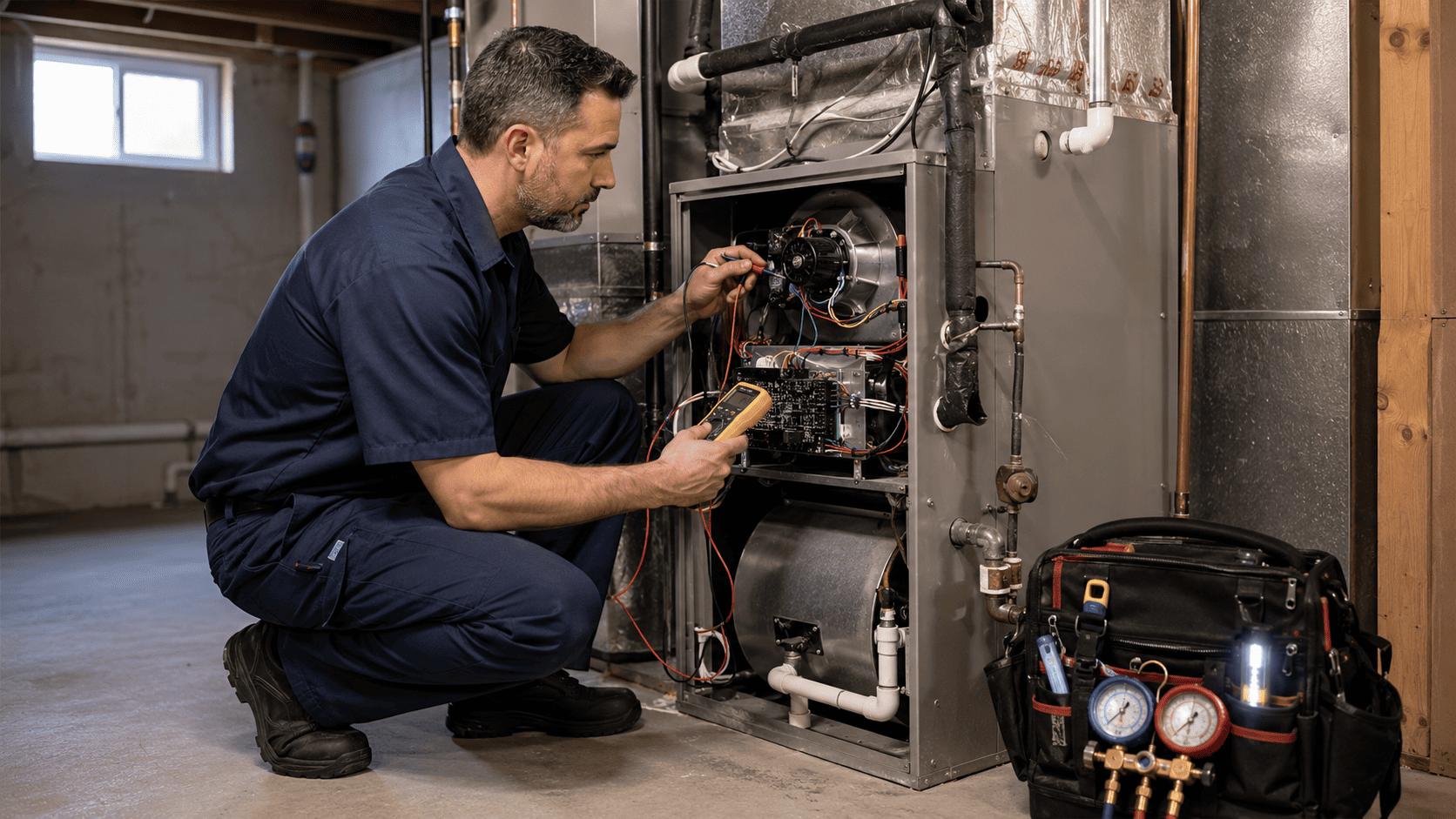
Homeowner maintenance helps keep the equipment area clean and allows problems to be noticed early. It does not replace a professional inspection. During an annual AC maintenance visit, the technician should evaluate the parts of the system that require technical training, electrical instruments, refrigeration tools, or access behind equipment panels.
The exact procedure depends on the type, brand, age, and condition of the air conditioner, but professional AC maintenance commonly includes the following tasks.
1. Inspect and Test the Thermostat
The technician checks thermostat operation, settings, wiring, and communication with the HVAC equipment. For programmable or smart thermostats, the technician may also review schedules and system configuration.
2. Inspect Electrical Components and Connections
The technician examines accessible wiring, terminals, contactors, capacitors, disconnects, and other electrical components for looseness, overheating, corrosion, or visible damage. Voltage and motor current may be measured where appropriate.
Electrical parts can retain or receive dangerous voltage even when the thermostat is off. These checks should not be treated as DIY maintenance.
3. Check the Starting, Operating, and Shutdown Cycle
The technician confirms that the air conditioner starts, runs, and shuts down correctly. This includes checking system controls and identifying abnormal delays, short cycling, or components that do not activate as expected.
4. Inspect and Clean the Condenser Coil
Dirt and debris on the outdoor coil can interfere with heat transfer and airflow. The technician evaluates the coil, cabinet, fan, and fins and cleans them when necessary using a method appropriate for the equipment.
5. Inspect the Evaporator Coil
The indoor evaporator coil is checked for dirt buildup, corrosion, ice, and signs of drainage or airflow problems. Because the coil may be located inside a sealed or difficult-to-access cabinet, inspection and cleaning are normally professional tasks.
6. Evaluate the Refrigerant System
The technician assesses refrigerant system performance using measurements appropriate for the equipment and operating conditions. If the system appears low on refrigerant, the cause should be investigated rather than treating repeated refrigerant additions as normal maintenance.
Air conditioners do not routinely consume refrigerant. A low charge can indicate a leak, an earlier service issue, or an incorrect initial charge.
7. Inspect the Blower and Airflow
The blower assembly, motor, wheel, and accessible indoor components are inspected for dirt, wear, and proper operation. The technician may evaluate airflow and temperature performance to determine whether the system is moving enough air across the indoor coil.
8. Inspect the Condensate Drain and Drain Pan
The technician checks the condensate pan, drain line, trap, pump, and safety switches when present. Blockages, leaks, corrosion, or poor drainage should be addressed before they cause water damage or system shutdowns.
9. Check Accessible Duct Connections
Visible duct connections near the indoor equipment may be inspected for disconnection, damage, or obvious air leakage. A complete duct leakage test is usually a separate diagnostic service and should not be assumed to be part of every basic tune-up.
10. Measure Overall Cooling Performance
After completing the inspection and any included cleaning or adjustments, the technician runs the system and reviews its performance. The homeowner should receive a clear explanation of the findings, including:
- Tasks completed during the visit
- Current system condition and cooling performance
- Components that require immediate repair
- Developing concerns that should be monitored
- Optional improvements that are not urgent
- Any work excluded from the maintenance service
What Is Not Always Included in Basic AC Maintenance?
Service packages vary between HVAC companies. Before scheduling, ask for a written description of what the maintenance visit includes. The following services may require additional authorization or a separate charge:
- Replacement parts and repair labor
- Refrigerant leak detection and repair
- Adding or recovering refrigerant
- Deep cleaning of heavily contaminated coils
- Duct cleaning, sealing, or airflow balancing
- Condensate pump replacement
- Thermostat replacement or rewiring
- Indoor air quality testing
A technician should explain why additional work is recommended and provide pricing before beginning repairs that are outside the agreed maintenance service.
Did your AC maintenance check uncover an urgent problem? Warm air, repeated short cycling, electrical odors, heavy ice, water leakage, or a system that will not start usually requires more than a routine tune-up. Home Rangers can inspect the equipment, identify the cause, and explain the repair options with upfront pricing before authorized work begins.
AC Maintenance Schedule: What to Check and When
A practical AC maintenance schedule combines regular homeowner checks with professional service before the cooling season. Not every task needs to be completed every month, but checking the system consistently makes it easier to notice restricted airflow, drainage problems, unusual noises, and declining cooling performance.
The schedule below applies to most residential central air conditioning systems. Always follow the maintenance instructions for your specific equipment, filter, thermostat, and warranty.
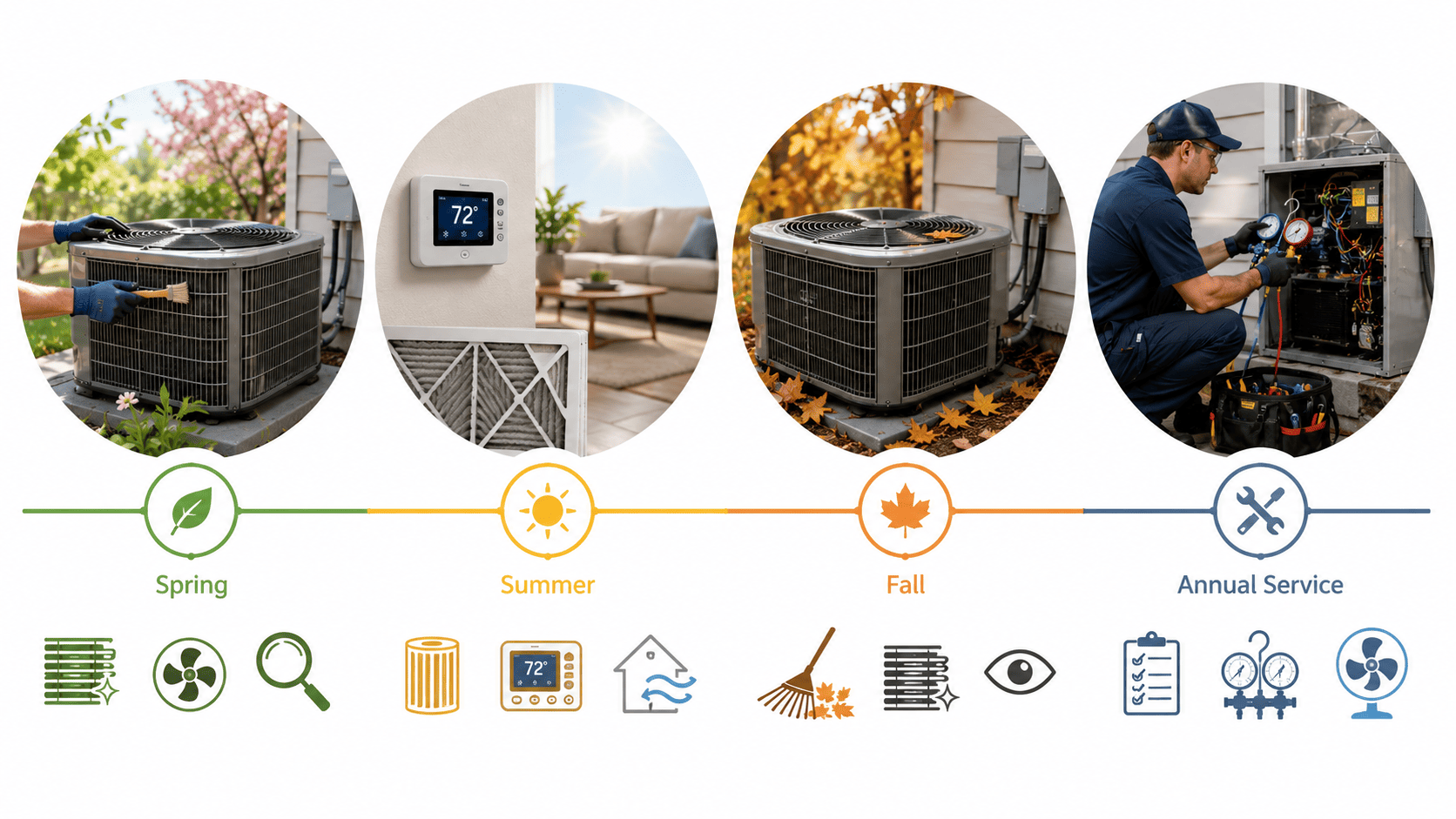
Monthly During the Cooling Season
During periods of regular AC use, complete a quick visual and operational check each month:
- Inspect the air filter and replace or clean it when needed.
- Confirm that supply vents and return grilles are not blocked.
- Review thermostat settings and programmed schedules.
- Listen for new buzzing, rattling, grinding, or clicking sounds.
- Check for water around the furnace, air handler, or drain pan.
- Look for ice on visible refrigerant lines or the outdoor unit.
- Notice whether cooling has become uneven between rooms.
- Watch for unusually short or frequent operating cycles.
These checks do not require opening equipment panels. Their purpose is to identify changes early so that a developing problem can be inspected before it causes a complete loss of cooling.
Spring AC Maintenance Checklist
Spring is usually the best time to prepare a residential air conditioner for summer. Scheduling professional service before extended hot weather can help uncover problems while the system is not yet operating under its heaviest seasonal workload.
Before the first long cooling cycle of the year:
- Replace or clean the air filter if needed.
- Remove leaves and loose debris from around the outdoor condenser.
- Trim vegetation away from the unit while maintaining the manufacturer’s required clearance.
- Check visible refrigerant line insulation for deterioration.
- Make sure supply vents and return grilles are open and unobstructed.
- Change thermostat batteries when applicable.
- Run the system and observe a complete cooling cycle.
- Schedule a professional AC tune-up.
Do not wait for the first extremely hot day to test the air conditioner. Running it earlier gives you time to address warm airflow, unusual operation, water leakage, or startup problems before cooling becomes urgent.
During Summer
Once the cooling season is underway, focus on airflow, drainage, and changes in system behavior.
- Continue inspecting the filter regularly.
- Keep grass clippings, weeds, and stored items away from the condenser.
- Check that the thermostat is not being affected by direct sunlight, lamps, or another nearby heat source.
- Watch for water near the indoor unit after long operating cycles.
- Pay attention to rising indoor humidity or rooms that no longer cool evenly.
- Contact an HVAC professional if the system repeatedly runs without reaching the thermostat setting.
Longer operation during very hot weather does not automatically mean the air conditioner is malfunctioning. However, a sudden change from its normal behavior, especially when combined with weak airflow or warm air, should be investigated.
At the End of the Cooling Season
When regular cooling is no longer needed, complete a final basic inspection:
- Check and replace the filter if it is dirty.
- Remove accumulated leaves and debris from around the outdoor unit.
- Look for visible damage caused by weather, landscaping equipment, or falling objects.
- Review any noises, drainage problems, or cooling concerns noticed during summer.
- Schedule repairs rather than leaving known problems until the following spring.
Do not tightly wrap a standard outdoor condenser in an airtight covering unless the manufacturer specifically recommends it. Trapped moisture can contribute to corrosion, and a cover may create a sheltered space for pests. Follow the equipment manufacturer’s seasonal protection instructions.
Annual Professional AC Maintenance
Most residential air conditioners should receive professional maintenance once each year. For cooling-only systems, this is commonly scheduled in spring. A heat pump that operates during both heating and cooling seasons may need separate seasonal inspections because it runs throughout more of the year.
An annual professional visit should include more than a visual glance at the equipment. The technician should inspect the operating condition of the system, complete the tasks included in the maintenance agreement, and explain any findings that require attention.
Ask the HVAC company these questions before scheduling:
- What inspections and cleaning tasks are included?
- Are electrical measurements included?
- Will the condensate drain and pan be inspected?
- Will refrigerant system performance be evaluated?
- Are the indoor and outdoor coils inspected?
- Will I receive written findings or service documentation?
- Are replacement parts and repairs priced separately?
When Should AC Maintenance Be Scheduled More Often?
Some systems may need more frequent inspection or filter attention because of their environment, usage, or condition. Consider checking the system more often when:
- The air conditioner runs for long periods during the summer.
- The home has pets that shed.
- Construction, remodeling, or sanding has created additional dust.
- The property is located near heavy pollen, dust, or airborne debris.
- The system serves a rental property or frequently occupied home.
- The equipment is older or has a history of drainage, airflow, or electrical problems.
- A household member depends on consistent indoor temperature control.
More frequent checking does not necessarily mean more frequent professional service. It means monitoring the filter and equipment condition closely and arranging service when operating conditions justify it.
Signs You Should Not Wait for the Next Scheduled Tune-Up
Routine maintenance is appropriate when the air conditioner is generally operating normally. Contact an HVAC professional sooner if you notice:
- Warm or room-temperature air from the vents
- Very weak airflow throughout the home
- Repeated short cycling
- Water leaking around the indoor equipment
- Ice on the evaporator area or refrigerant lines
- A burning or strong electrical odor
- Grinding, scraping, banging, or persistent buzzing
- A circuit breaker that repeatedly trips
- An outdoor unit that does not start
- A sudden and unexplained decline in cooling performance
These symptoms may indicate an active malfunction rather than a maintenance need. Continuing to operate the system can sometimes worsen component damage or cause additional water and electrical problems. Turn the equipment off when there is a burning odor, severe mechanical noise, heavy ice, or repeated breaker tripping, and arrange an AC repair inspection.
Get a clear estimate before approving AC work. Home Rangers can evaluate your system’s airflow, electrical components, drainage, refrigerant performance, and overall condition. If maintenance reveals a repair need, you will receive a clear explanation of the problem and upfront pricing before additional work begins.
Quick Home AC Maintenance Checklist
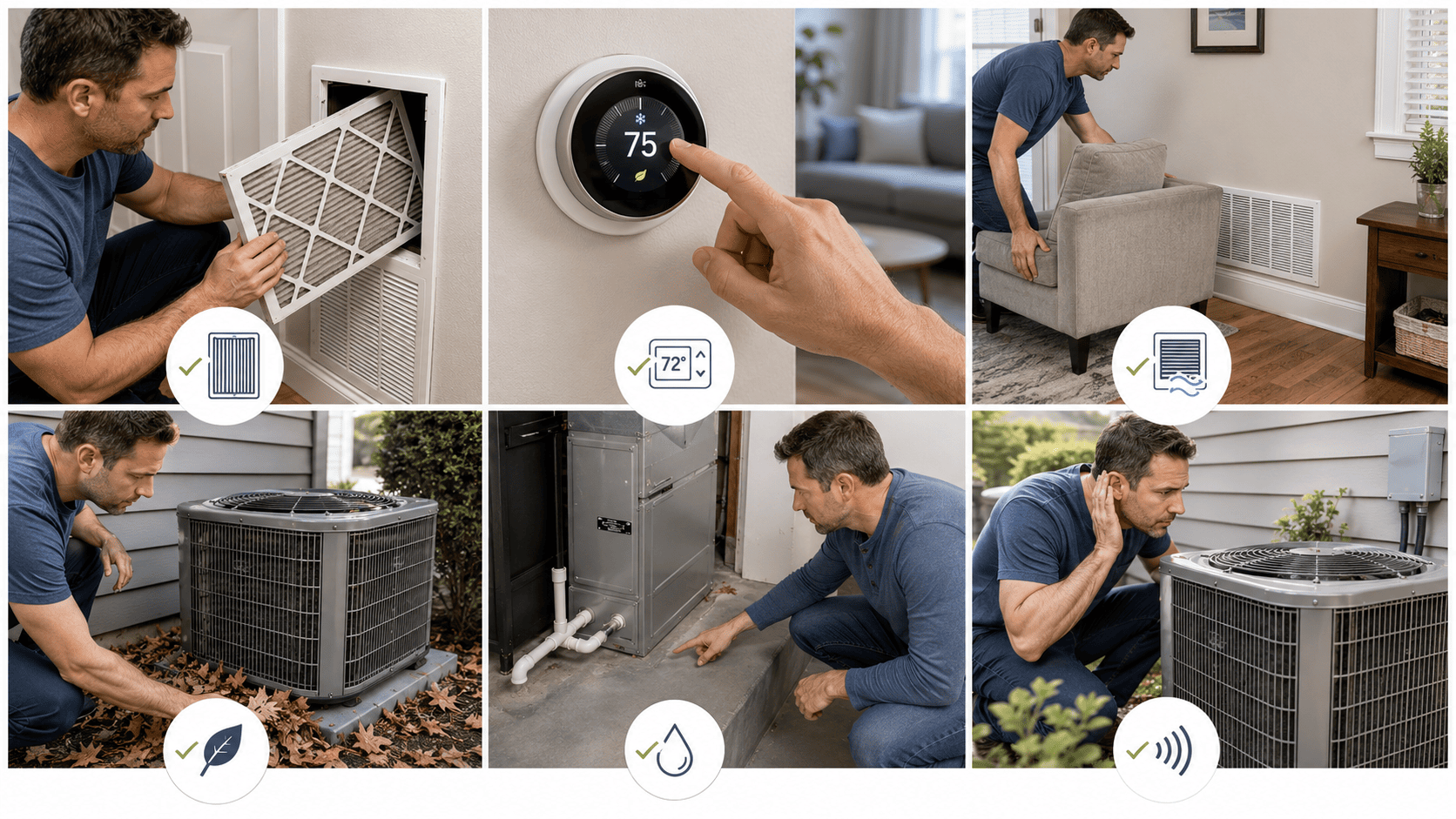
Use this condensed air conditioning maintenance checklist for a quick seasonal review. Complete only the tasks that can be performed safely without opening equipment panels or handling electrical and refrigerant components.
Homeowner AC Maintenance Check
- Inspect the air filter and replace or clean it when needed.
- Confirm the thermostat is set to cooling mode and working correctly.
- Check that supply vents and return-air grilles are open and unobstructed.
- Vacuum dust from accessible vent and grille surfaces.
- Remove leaves, weeds, and loose debris from around the outdoor unit.
- Maintain the equipment clearance required by the manufacturer.
- Inspect visible refrigerant line insulation for damage.
- Look for water around the indoor unit, drain pan, or condensate line.
- Check visible refrigerant lines and the outdoor unit for ice.
- Listen for new buzzing, rattling, grinding, scraping, or banging sounds.
- Notice whether airflow has become weaker or uneven between rooms.
- Observe whether the AC starts, runs, and shuts down normally.
- Schedule professional maintenance once a year, preferably before the cooling season.
Professional AC Preventive Maintenance Checklist
A qualified HVAC technician should complete the technical portion of the maintenance check. Depending on the equipment and service agreement, this may include:
- Testing thermostat operation and system controls
- Inspecting electrical wiring, terminals, contactors, and capacitors
- Measuring appropriate voltage and motor current
- Checking the complete startup, operating, and shutdown cycle
- Inspecting and cleaning the outdoor condenser coil when necessary
- Inspecting the indoor evaporator coil
- Evaluating refrigerant system performance
- Checking the blower motor, wheel, and system airflow
- Inspecting the condensate drain, drain pan, pump, and safety switches
- Checking accessible duct connections near the indoor equipment
- Testing overall cooling performance
- Documenting active problems and developing concerns
Stop the System and Request Service If You Notice:
- A burning or strong electrical odor
- Repeated circuit breaker trips
- Heavy ice on the refrigerant line or indoor coil area
- Grinding, scraping, or severe mechanical noise
- Water actively leaking around the indoor equipment
- Warm air when the thermostat is set to cool
- An outdoor unit that does not start
- Repeated short cycling
Routine maintenance is not intended to correct an active failure. When the system shows one of these symptoms, schedule an air conditioning repair diagnostic rather than continuing to operate it or waiting for the next annual tune-up.
Frequently Asked Questions About AC Maintenance
What does AC maintenance include?
AC maintenance typically includes checking the thermostat, air filter, electrical components, condenser and evaporator coils, blower, airflow, condensate drainage, refrigerant system performance, and the complete operating cycle. The exact scope depends on the equipment and the HVAC company’s service checklist.
How often should AC maintenance be performed?
Most residential air conditioning systems should receive professional maintenance once a year. Homeowners should also inspect the filter, vents, outdoor unit, thermostat, and visible drainage areas regularly during the cooling season.
What is the best time of year for AC maintenance?
Spring is usually the best time to schedule AC maintenance because the system can be inspected before extended summer use begins. However, maintenance can still be useful later in the season if the air conditioner has not yet been serviced.
Can I perform AC maintenance myself?
Homeowners can safely replace accessible filters, keep vents clear, remove loose debris from around the outdoor unit, check thermostat settings, and watch for water, ice, unusual noises, or weak airflow. Electrical testing, refrigerant work, internal coil cleaning, and equipment adjustments should be left to a qualified HVAC technician.
Is AC maintenance the same as an AC tune-up?
The terms are often used interchangeably. AC maintenance is the broader process of caring for the system throughout the year, while an AC tune-up usually refers to the professional inspection, testing, and cleaning performed during a scheduled service visit.
Does AC maintenance include adding refrigerant?
Not necessarily. Refrigerant is not normally consumed during AC operation, so adding refrigerant should not be treated as routine maintenance. If the system is low, the technician should evaluate why the refrigerant charge is incorrect and explain whether leak detection or repair is needed.
How long does an AC maintenance visit take?
The time required depends on the system type, accessibility, condition, and maintenance checklist. A system that is heavily contaminated, difficult to access, or showing signs of a malfunction may require additional diagnostic or cleaning time.
What happens if an air conditioner is not maintained?
Without regular maintenance, dirty filters, restricted airflow, blocked drainage, contaminated coils, worn electrical parts, and other developing problems may go unnoticed. This can contribute to reduced cooling performance, water leakage, unexpected repairs, or a system breakdown during hot weather.
Should I turn off my AC if it is frozen or leaking water?
Turn the system off if you see heavy ice, active water leakage, a burning odor, severe mechanical noise, or repeated breaker trips. These symptoms can indicate an active problem that requires professional diagnosis rather than routine maintenance.
Is annual AC maintenance necessary for a newer system?
A newer air conditioner can still develop airflow, drainage, electrical, installation, or control problems. Follow the manufacturer’s maintenance instructions and review any warranty requirements that apply to your equipment.
Prepare your air conditioner for reliable summer cooling.
A professional AC maintenance visit can identify airflow, drainage, electrical, and cooling-performance concerns before they become more disruptive. Schedule service with Home Rangers to have your system inspected, receive clear recommendations, and prepare your home for the 2026 cooling season.
Book My 2026 AC Maintenance Visit →
Or call us directly at (215) 454-0001