
A slow drain, a gurgling toilet, or a sewer smell in the yard usually means something is wrong underground where you can’t see it. Guessing at the cause and paying for the wrong fix wastes money and delays the real repair. A sewer line camera inspection solves that problem directly: a plumber feeds a waterproof camera through your sewer line and shows you, on a live monitor, exactly what’s blocking, cracking, or collapsing your pipe.
This guide explains how camera inspections for sewer lines work, what they can diagnose, when to schedule one, and what it typically costs, so you know what to expect before you call a plumber.
What Is a Sewer Line Camera Inspection?
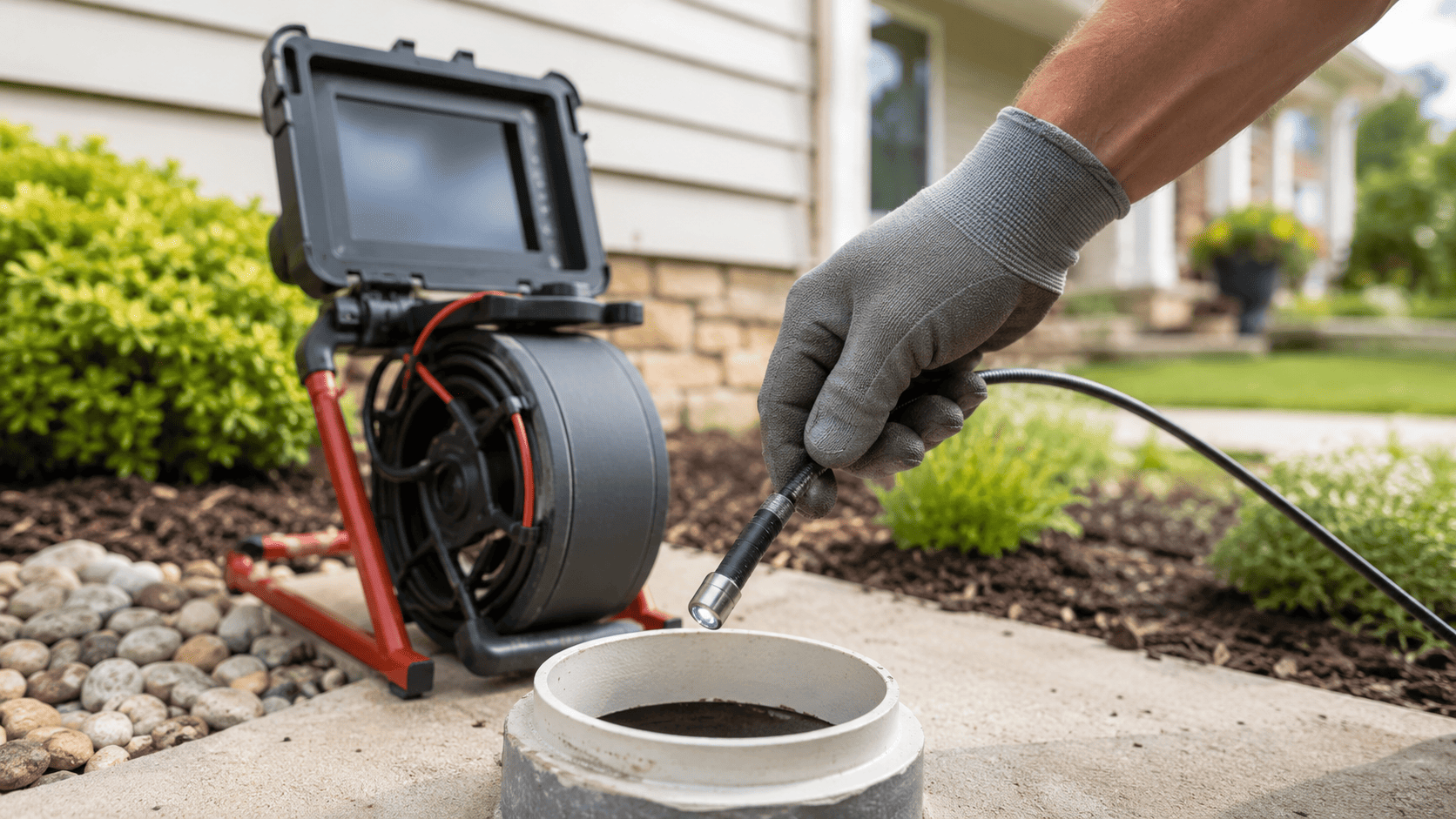
A sewer line camera inspection is a diagnostic service where a plumber inserts a flexible rod with a high-resolution, waterproof camera on the end into your sewer line through a cleanout, floor drain, or toilet connection. The camera feeds a live video image back to a monitor, letting the technician see the actual inside condition of the pipe in real time.
Unlike guessing based on symptoms alone, this method shows the exact location, type, and severity of a problem. Most inspection cameras also include a sonde (a small transmitter) that lets the technician mark the precise depth and position of an issue from above ground using a locator wand. That means when repair work starts, digging or trenchless repair can target the exact spot instead of the whole line.
This makes camera inspection the standard first step before any sewer repair, replacement, or home purchase involving an older sewer line.
What Problems Can a Sewer Line Camera Inspection Diagnose?
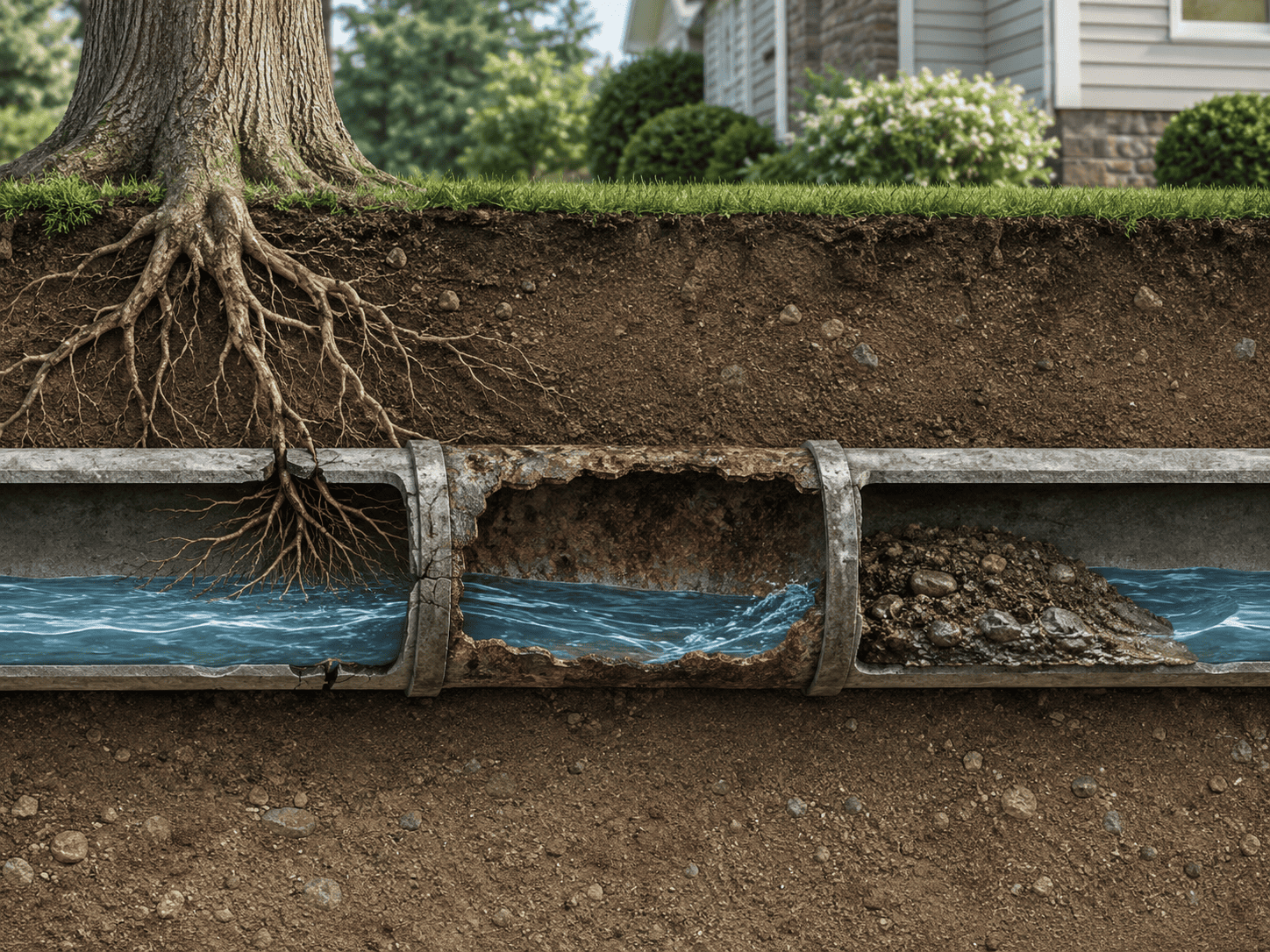
A camera inspection can identify most of the issues that cause slow drains, backups, or sewer odors, including:
- Tree root intrusion – roots growing through small cracks or joints, gradually blocking the pipe.
- Cracked or broken pipe – damage from ground shifting, age, or freeze-thaw cycles.
- Collapsed or bellied sections – a sunken part of the pipe where waste and water pool instead of flowing through.
- Grease and debris buildup – buildup narrowing the pipe over time, common in older cast iron lines.
- Offset or separated joints – pipe sections that have shifted apart, letting soil and roots in.
- Corrosion – deterioration in old cast iron or clay pipes, which can eventually lead to collapse.
- Bellied or misaligned pipe from settling – sections that have sunk due to soil erosion or poor original installation.
- Foreign objects or blockages – items accidentally flushed or fallen into a drain.
Because the technician can see the exact type of damage, the inspection also determines the right repair method – for example, whether root intrusion can be cleared and monitored, or whether a cracked section needs trenchless pipe lining or a full excavation.
Not sure what’s causing your drain or sewer issue? If your drains are backing up repeatedly, gurgling, or smell like sewage, ignoring these signs can lead to a full pipe collapse or backup. Home Rangers can run a camera inspection to pinpoint the exact problem and help you decide whether a spot repair, cleaning, or full replacement makes the most sense for your home.
Signs You Need a Sewer Line Camera Inspection
You don’t need to wait for a full backup to schedule an inspection. Consider one if you notice:
- Slow-draining sinks, tubs, or toilets in multiple fixtures at once
- Gurgling sounds coming from drains or toilets
- Recurring clogs that come back weeks after clearing
- Sewer odor in the yard, basement, or near cleanouts
- Unusually lush or soggy patches of grass over the sewer line
- Sinkholes or dips forming in the yard
- You’re buying an older home and want to check the sewer line’s condition before closing
Catching these signs early with a camera inspection often means the difference between a simple root cutting or pipe lining and a full sewer line replacement.
How the Sewer Line Camera Inspection Process Works
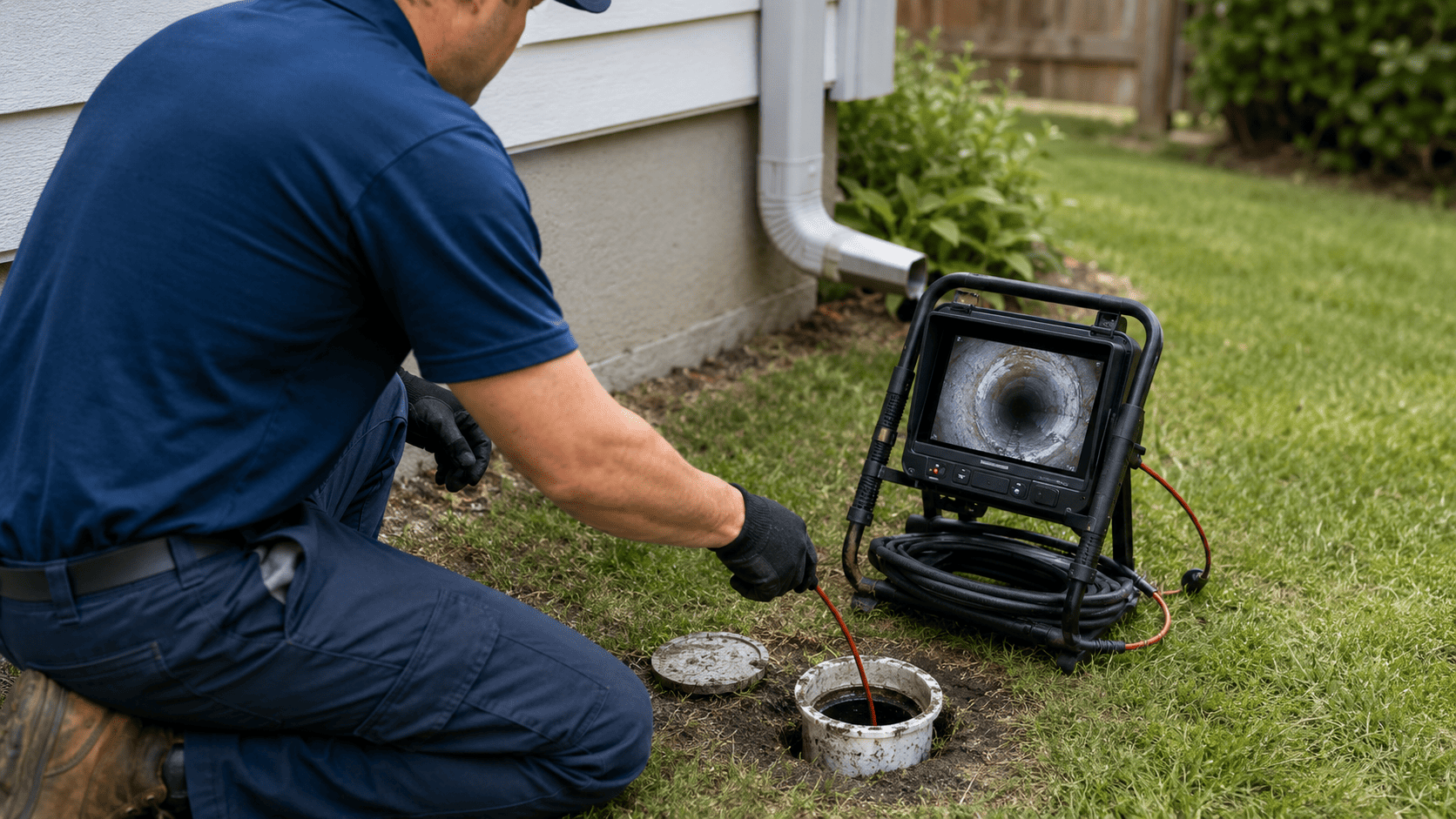
- Access point setup. The technician locates the nearest cleanout, or accesses the line through a toilet connection or roof vent if no cleanout exists.
- Camera insertion. A flexible cable with the camera head is fed into the pipe and pushed through the line.
- Live video review. The technician watches the footage in real time, noting the material, condition, and any damage or blockages.
- Locating the problem. Using the sonde transmitter and a ground locator, the technician marks the exact depth and position of any issue found.
- Recorded footage and report. Most companies provide recorded video or photos along with a written summary of findings, so you have documentation for repairs, insurance, or a home sale.
- Recommendation. Based on what the camera shows, the technician recommends the appropriate next step – clearing, root treatment, trenchless repair, or replacement.
The full inspection typically takes 30-60 minutes, depending on the length and accessibility of the line.
How Much Does a Sewer Line Camera Inspection Cost?
Pricing varies more than people expect, mostly based on one factor: whether your home already has a cleanout (a capped access pipe) for the camera to enter.
- With an existing cleanout: most straightforward residential inspections run $100–$300.
- Without a cleanout (requiring a toilet removal or roof vent access): expect $175–$750, since extra labor is involved.
- Longer or more complex lines, commercial properties, or lines requiring specialty equipment can run higher, sometimes into the thousands for extensive commercial runs.
- Emergency or after-hours calls typically carry an added surcharge compared to a scheduled weekday appointment.
The biggest cost drivers are pipe length, ease of access, and timing – not the camera technology itself. Because pricing depends on your specific property, the most accurate way to know your cost is a direct quote after a technician sees your access point and line length.
Dealing with a sewer backup and need fast, local help? When sewage is backing up into your home, waiting days for an appointment is not an option. Home Rangers provides rapid response with completely upfront pricing. Our local, licensed technicians are dispatched quickly to run a camera inspection and get your sewer line flowing again.
Why Choose Home Rangers for a Sewer Line Camera Inspection Near You
If you’re searching for a sewer line camera inspection near Warminster, PA, or anywhere in Bucks County or Montgomery County, Home Rangers is a local, family-owned team that has served this area since 2010. That matters for a service like this: a technician who knows the region’s common pipe materials, soil conditions, and older neighborhoods can spot problems faster and recommend the right fix, not just the most expensive one.
When you call Home Rangers for a camera inspection, you get:
- Upfront, transparent pricing before any work begins
- Licensed, local technicians familiar with Bucks and Montgomery County homes
- Same-day scheduling in most cases, with 24/7 phone support for urgent issues
- A clear video walkthrough of what the camera finds, explained in plain language
- Honest next-step recommendations – cleaning, spot repair, or replacement, based only on what the camera shows
Home Rangers serves homeowners throughout Warminster, Southampton, Horsham, Doylestown, Warrington, Hatboro, Willow Grove, and surrounding Bucks County communities.
Get an accurate, itemized cost estimate for your sewer line. Avoid the guesswork of unexpected repair expenses. Home Rangers runs a full camera inspection, pinpoints the exact issue, and reviews access and labor needs so you get a clear, transparent total cost before work begins. If a costly repair doesn’t make sense, we can also review trenchless options to avoid digging up your yard.
Frequently Asked Questions
How long does a sewer line camera inspection take?
Most residential inspections take 30-60 minutes, depending on the length of the line and how easy the access point is to reach.
Can a sewer camera inspection find a problem before it causes a backup?
Yes. This is one of the main reasons to schedule one proactively – a camera can catch early root intrusion, minor cracks, or a developing pipe belly long before they turn into a full blockage or backup.
Do I need a cleanout for a camera inspection?
No. If your home doesn’t have a dedicated cleanout, a technician can access the line through a toilet connection or roof vent instead, though this typically adds some labor cost.
Is a sewer line camera inspection worth it before buying a home?
Yes, especially for homes older than 20-30 years or properties with large trees nearby. It can reveal costly hidden issues, like a cracked or root-damaged line, before you close on the sale.
What’s the difference between a sewer camera inspection and a home inspection?
A standard home inspection does not include the sewer line. A sewer camera inspection is a separate, specialized service that examines the underground pipe directly with video.
How often should I get my sewer line inspected?
For newer homes, every 5–7 years is generally sufficient. For homes over 40 years old or properties with mature trees near the sewer line, an inspection every 1-3 years is a safer interval.
See what’s really going on inside your sewer line.
Stop guessing and get a clear, camera-verified answer before you pay for repairs. Schedule a professional sewer line camera inspection with Home Rangers today, lock in upfront pricing, and protect your home from an unexpected backup.
Book My Sewer Camera Inspection →
Or call us directly at (215) 454-0001