

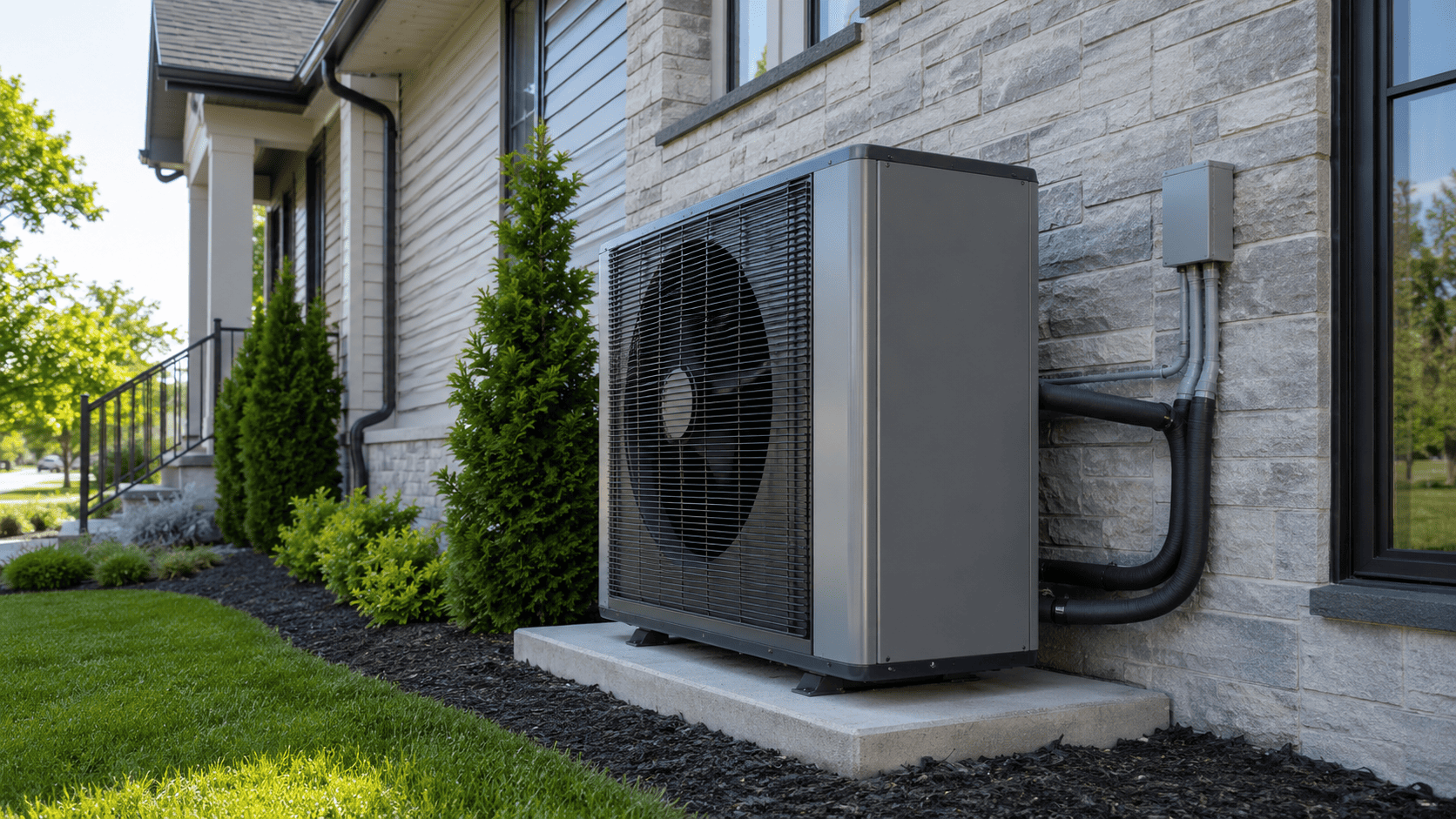
When it comes to maintaining a comfortable indoor climate year-round, homeowners are increasingly turning to modern HVAC technology. If you are asking yourself, “how much does heat pump installation cost?” or trying to figure out if this eco-friendly upgrade fits your household budget, you are in the right place. A heat pump is a highly efficient system that both heats and cools your home, making it an excellent alternative to traditional furnaces and air conditioners.
Quick Answer: How Much is Heat Pump Installation?
On average, the cost of a heat pump and installation ranges from $5,500 to $12,500 for a standard standard air-source system. However, high-efficiency models, multi-zone ductless mini-splits, or geothermal systems can range between $14,000 and $35,000+ depending on your home’s size and structural needs.
- National Average Cost: $9,500
- Typical Range: $5,500 – $15,000
- Low-End Cost: $4,000 (Single-zone mini-split)
- High-End Cost: $35,000+ (Geothermal / Complex multi-zone)
What is Heat Pump Installation?
To understand the total pricing, it is essential to define what is heat pump installation and how these systems operate. Unlike traditional split systems that generate heat through combustion or electrical resistance, a heat pump transfers thermal energy. In the summer, it functions exactly like an air conditioner by pulling heat out of your house and expelling it outdoors. In the winter, the process reverses: the system extracts ambient heat from the outside air (or ground) and pumps it indoors.
A professional heat pump installation involves more than just swapping out an old appliance. It requires a comprehensive load calculation (Manual J) to determine the exact size your property needs, setting up an outdoor condenser unit, mounting an indoor air handler, running refrigerant linesets, configuring electrical connections, and ensuring your existing ductwork can handle the airflow requirements. Because these systems rely heavily on precise pressure balances and electrical synchronization, proper professional installation is critical to achieving the promised energy efficiency.
In this comprehensive guide, we will break down exactly what is the cost of a heat pump installation, examine why prices vary so significantly, explore how the installation process works, and show you how to leverage federal tax credits and Pennsylvania utility rebates to maximize your return on investment.
Average Heat Pump Installation Cost by System Size
When calculating what is the cost of a heat pump and installation, the single most critical factor is the size of the system, measured in “tons.” In the HVAC industry, tonnage does not refer to the actual weight of the equipment, but rather its cooling and heating capacity. One ton of HVAC capacity equals 12,000 BTUs (British Thermal Units) per hour.
If your system is too small, it will run constantly, skyrocketing your utility bills and wearing out prematurely. If it is too large, it will short-cycle, failing to dehumidify your home properly. A professional contractor must perform a Manual J Load Calculation to determine the exact tonnage your property requires based on square footage, insulation quality, and local climate zones.
To give you a clear baseline, here is a breakdown of how much for heat pump and installation based on the size of your home:
| System Size (Tons) | Home Size (Sq. Footage) | Average Cost (Equipment & Installation) |
|---|---|---|
| 2.0 Tons | 1,000 – 1,500 sq. ft. | $5,500 – $8,500 |
| 3.0 Tons | 1,500 – 2,000 sq. ft. | $7,500 – $11,000 |
| 4.0 Tons | 2,000 – 2,500 sq. ft. | $9,500 – $14,500 |
| 5.0 Tons | 2,500 – 3,000+ sq. ft. | $12,000 – $18,500+ |
How Efficiency Ratings (SEER2 and HSPF2) Impact the Price
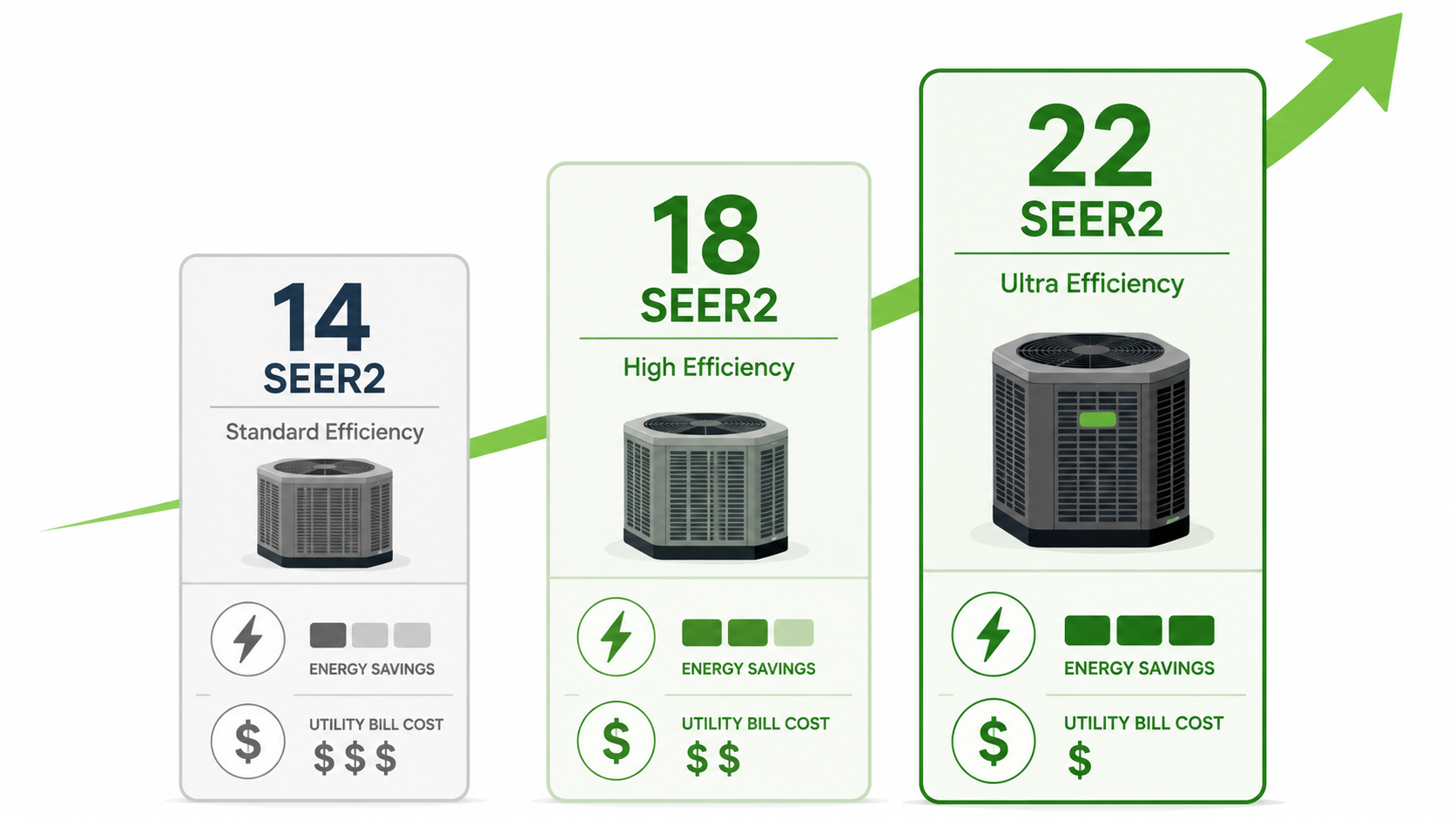
Another major component that determines what is cost of heat pump with installation is its energy efficiency rating. Modern heat pumps are rated using two standardized metrics: SEER2 (Seasonal Energy Efficiency Ratio for cooling) and HSPF2 (Heating Seasonal Performance Factor for heating). Higher numbers mean the system uses less electricity to condition your home, but the upfront equipment cost will be higher.
Here is what you can expect to pay for a standard 3-ton system based on different efficiency tiers:
- Standard Efficiency (14.3 – 16 SEER2): $6,000 – $8,500. These systems meet the minimum regional standards. They have a lower upfront cost but offer fewer long-term savings on monthly utility bills.
- High Efficiency (16.1 – 19 SEER2): $8,500 – $12,500. This is the sweet spot for many homeowners. These units often feature two-stage compressors and qualify for substantial federal tax credits and local utility rebates.
- Ultra-High Efficiency (20+ SEER2): $13,000 – $19,000+. These top-tier systems utilize variable-speed (inverter) technology. They operate continuously at lower, whisper-quiet speeds to maintain a perfectly steady indoor temperature and offer the maximum possible energy savings.
When analyzing what is the price of heat pump installation, it is vital to balance the initial investment with your long-term energy savings. Investing in a high-efficiency system often pays for itself within a few years through drastically reduced monthly energy bills, especially in regions with fluctuating seasonal temperatures.
Not sure if it is time to upgrade to a heat pump? If your current furnace or air conditioner is over 10–15 years old, demands frequent repairs, or drives up your monthly bills, switching to a high-efficiency system is a smart move. Home Rangers can evaluate your home’s layout and help you calculate the exact energy savings a new heat pump will deliver.
Heat Pump Installation Costs by System Type
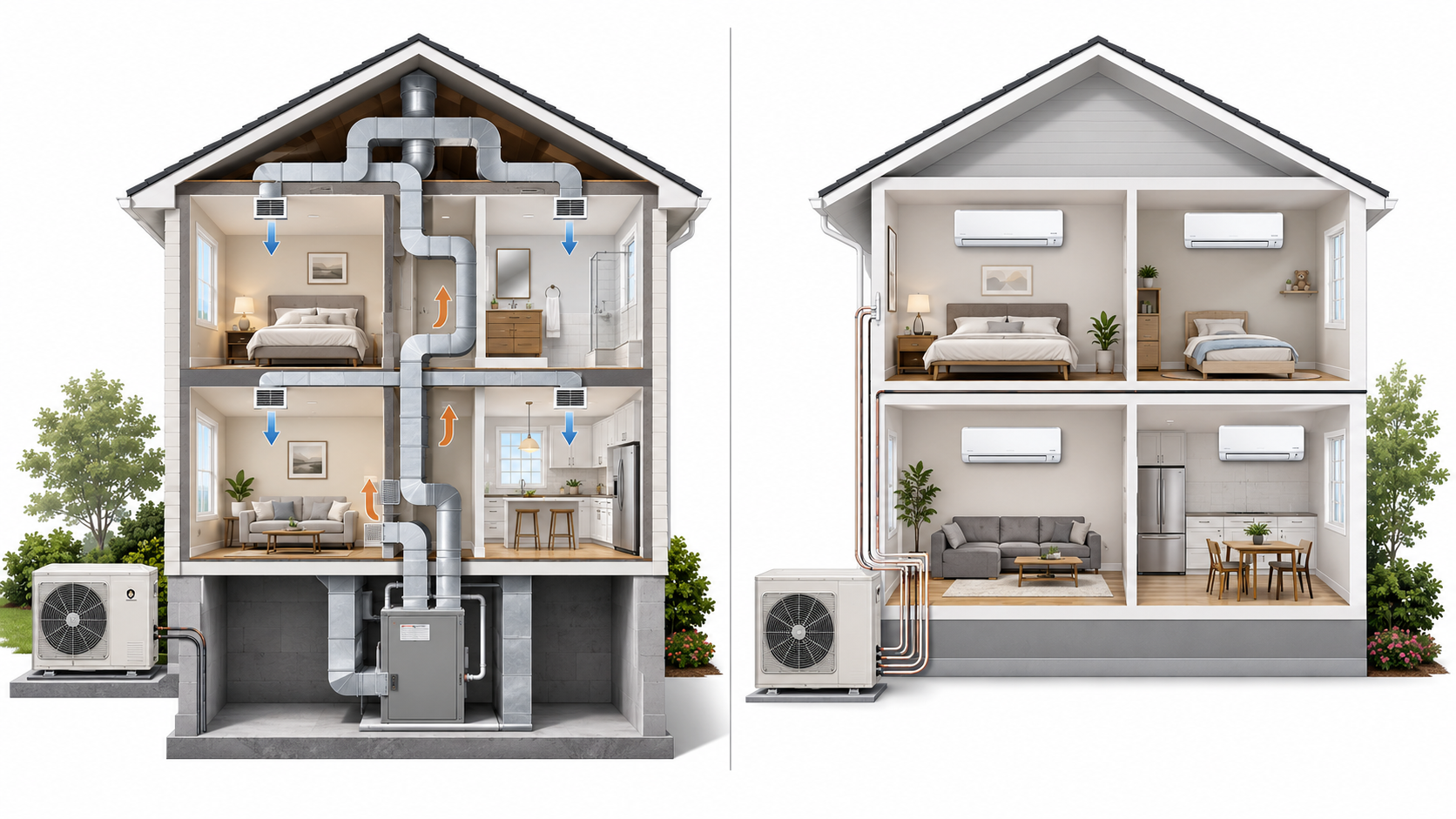
Not all heat pumps are engineered the same way. The architectural layout of your home, the presence of existing ductwork, and your specific zoning preferences will dictate which system type fits your property. Below, we examine the financial breakdown of the three primary residential configurations available in 2026.
1. Standard Ducted Air-Source Heat Pumps
This is the most common option for American households. An air source heat pump installation utilizes a central network of ducts to distribute conditioned air throughout the house. If you are replacing a traditional central air conditioner and furnace combination, this system hooks directly into your current ductwork.
The average price for a central air source heat pump installation typically ranges from $6,000 to $15,000. It represents a highly cost-effective upgrade because it minimizes structural alterations to your home, assuming your existing duct network is sealed and properly sized.
2. Ductless Mini-Split Heat Pumps
If your home lacks built-in ductwork (common in historic Pennsylvania homes utilizing older boiler systems), a ductless multi-zone split configuration is your best alternative. These systems feature an outdoor compressor linked directly to independent indoor air handlers mounted on your walls or ceilings.
- Single-Zone Mini-Split: $2,500 – $7,500 (Ideal for individual rooms, additions, or finished basements).
- Multi-Zone Mini-Split (Whole Home): $6,500 – $15,000+ (Features one outdoor condenser powering 2 to 5 indoor units).
While the upfront equipment cost for a multi-zone ductless layout can be higher per ton compared to a central system, it completely bypasses the massive expense of installing a brand-new duct network from scratch, which can add thousands to a project.
3. Geothermal (Ground-Source) Heat Pumps
Geothermal systems represent the pinnacle of HVAC efficiency and longevity. Instead of exchanging thermal energy with the fluctuating outside air, they tap into the stable temperatures underground using a closed loop of buried pipes. The total financial investment for a geothermal heat pump installation ranges between $15,000 and $35,000+. The higher price is due to the heavy excavation, drilling, and trenching required to install the subterranean loop field. However, these systems reduce utility consumption by up to 70 percent and can last for decades.
What Do You Need for a Heat Pump Installation?
Homeowners frequently wonder, “what do you need for a heat pump installation?” to ensure their line-item estimate is comprehensive. A professional installation involves an array of specialized hardware components beyond the main equipment boxes. When reviewing a contract from a company that provides heat pump installation services, verify that the following essential components are explicitly included:
- The Primary Equipment: This includes the outdoor condenser unit (which contains the compressor and expansion valve) and the corresponding indoor air handler or gas furnace backup.
- Refrigerant Linesets: Pairs of insulated copper pipes responsible for circulating the chemical refrigerant between your indoor and outdoor components.
- Condensate Drain Lines and Pumps: PVC piping or specialized pumps designed to safely route the moisture pulled from your indoor air out of your home’s foundation.
- Electrical Infrastructure: Heavy-duty electrical disconnect boxes, whip lines, and occasionally a dedicated 240-volt circuit breaker upgrade installed inside your main panel.
- A Modern Thermostat: A specialized smart thermostat capable of managing multi-stage heat pump operation and auxiliary heat strips efficiently.
- An Outdoor Equipment Pad or Wall Brackets: A concrete-composite pad or heavy-duty steel brackets designed to keep the outdoor condenser elevated above snow accumulation and completely level to prevent internal compressor damage.
Know exactly what your heat pump installation estimate includes. A proper HVAC quote should be based on more than a rough guess. Home Rangers checks your existing ductwork, performs a thorough Manual J load calculation, inspects your electrical panel capacity, and reviews zoning needs so you understand the exact scope and total cost before any work begins.
How Does a Heat Pump Installation Work?
Understanding how does a heat pump installation work helps you prepare your home and manage your expectations when the HVAC technicians arrive. A professional installation is a meticulous, orderly process designed to optimize system pressure, establish safe electrical infrastructure, and ensure perfectly sealed refrigerant loops.
Every standard installation follows a critical sequence of technical steps. Deviating from this order can jeopardize the lifespan of the compressor or void the manufacturer’s factory warranty. Here is exactly what happens during the setup:
Step 1: Initial Site Assessment and Preparation
The installation crew begins by verifying the physical placement of both indoor and outdoor components. They confirm that electrical panels have the exact capacity required for the new load, set up protective drop cloths to keep your living spaces clean, and stage all necessary tools and equipment.
Step 2: Decommissioning and Old Equipment Removal
The technicians safely disconnect your legacy air conditioner, furnace, or boiler. Using specialized recovery machines, they extract the old chemical refrigerant in strict accordance with EPA regulations before physically removing the heavy legacy hardware from your property.
Step 3: Mounting and Securing the New Hardware
The new outdoor condenser is mounted securely on its designated foundation to keep it completely level. Indoors, the new air handler unit is precisely aligned, mounted, and integrated directly into your home’s central plenum or existing duct network.
Step 4: Running Linesets and Electrical Wiring
Technicians drill a small, insulated exterior penetration to run the copper refrigerant linesets, electrical control wiring, and condensate drainage tubes. This establishes a seamless connection and clear communication pathway between the indoor and outdoor units.
Step 5: Pressure Testing and Vacuum Evacuation
This is the most critical technical step of the installation. The new linesets are pressurized with dry nitrogen to check for micro-leaks. Once verified, a vacuum pump pulls the entire system down below 500 microns to remove all trace moisture and non-condensables before releasing the fresh refrigerant.
Step 6: System Commissioning and Calibration
The system is fully powered up for testing. The technicians measure real-time airflow, verify static pressures, check the temperature differential across the indoor coils, and calibrate your smart thermostat to confirm peak operational performance and efficiency.
What Does a Heat Pump Installation Look Like?
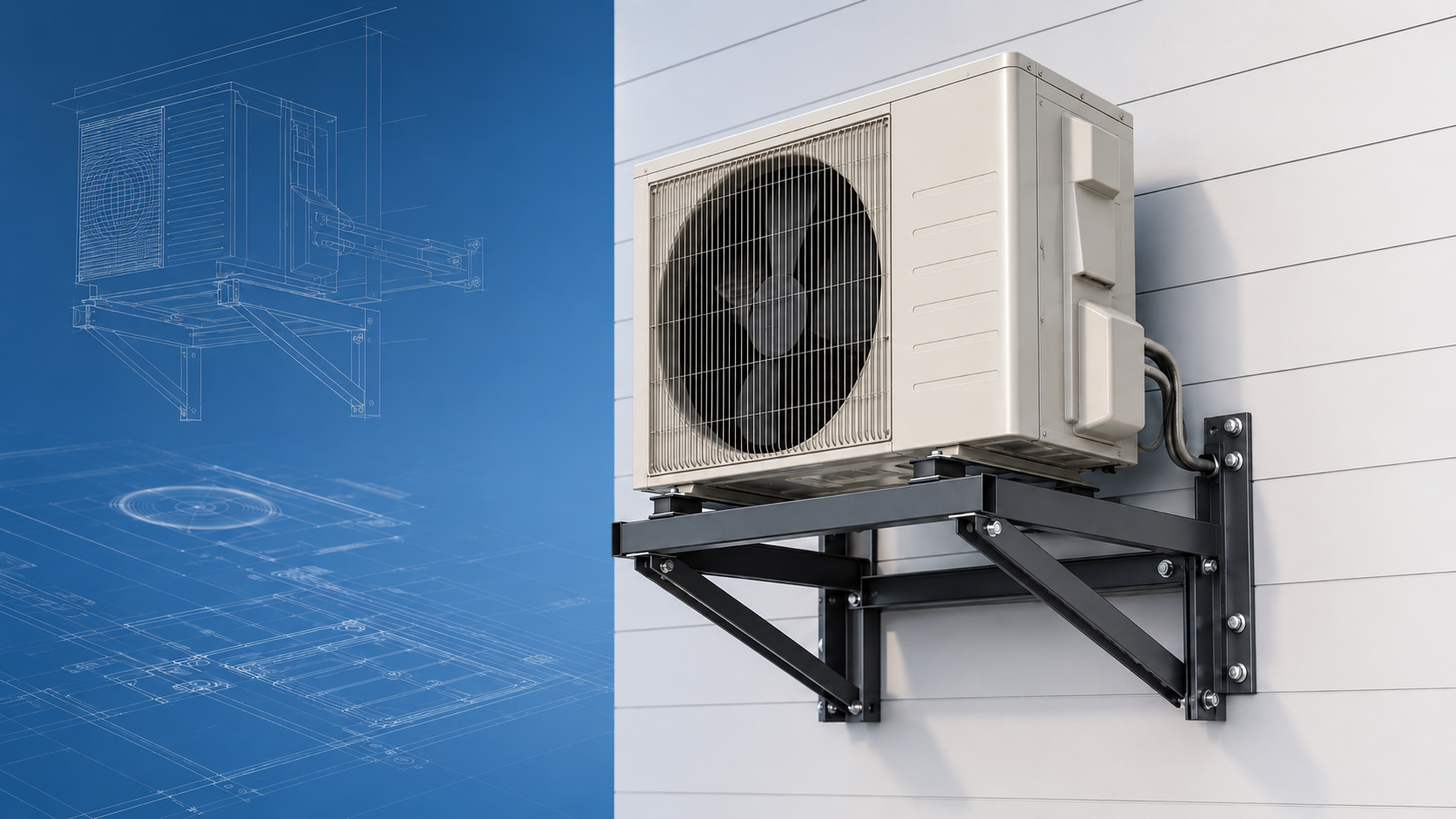
When visualizing what does a heat pump installation look like, the most prominent visual element is the outdoor condenser unit. Depending on your property’s topography, landscaping, and local snowfall averages, your HVAC contractor will choose one of three primary mounting configurations to position the heavy outdoor unit safely.
As shown in the technical reference above, your installation might utilize a flat, low-profile ground pad if your lawn has solid drainage, or heavy-duty steel wall brackets that mount directly to your home’s structural foundation to keep the unit elevated above deep snowbanks. In regions prone to severe winters, a raised steel stand is often used to maximize airflow underneath the chassis and prevent ice build-up during the system’s automated defrost cycles.
How Long Does Heat Pump Installation Take?
One of the most common logistical questions homeowners ask is, “how long does heat pump installation take?” The short answer is that a typical installation takes between 1 to 3 days. However, the exact duration depends heavily on the architectural complexity of your home and whether your existing infrastructure requires modifications.
Here is a realistic timeline breakdown based on different project scenarios:
- Standard System Swap (1 Day): If you are simply replacing an old central air conditioner and furnace with a new ducted heat pump, and your current ductwork is in excellent condition, a skilled 2-to-3-person crew can generally complete the entire project within 8 to 10 hours.
- Multi-Zone Ductless Mini-Split (1–2 Days): Installing a multi-zone layout involves running independent linesets and mounting individual air handlers across multiple rooms. Because each zone requires dedicated wall drilling and precise cosmetic finishing, these projects usually span two full working days.
- Complex Conversions and Custom Projects (2–3+ Days): If your home requires extensive duct modifications, a complete electrical panel upgrade to handle the 240-volt load, or if you are investing in a subterranean geothermal loop field, the project can easily take three days to a week.
Key Factors Influencing Your Total Heat Pump Installation Cost
When evaluating what is the cost of heat pump installation, looking strictly at the price tag of the outdoor compressor is a mistake. The physical reality of your property introduces several logistical variables that can either minimize or inflate the final invoice. Understanding these variables ensures you avoid surprise expenses during the project.
1. Ductwork Condition and Structural Modifications
If you are choosing a central ducted configuration, your new high-efficiency heat pump will rely entirely on the integrity of your existing ductwork. Older heating systems, particularly legacy furnaces, operated under different static pressure thresholds than modern heat pumps.
- Duct Sealing and Repair ($500 – $2,000): Leaky joints can reduce system efficiency by up to 30 percent. Technicians must often seal accessible seams with mastic or specialized foil tape to meet energy code requirements.
- Complete Duct Replacement ($3,000 – $7,500+): If your current ducts are undersized, collapsed, or full of mold, running a completely new network of insulated sheet metal or flexible ductwork will be necessary, significantly increasing how much for heat pump system installation total costs.
2. Electrical Panel Upgrades
A standard heat pump system requires a dedicated, heavy-duty 240-volt circuit. Many older residences operate on an aging 100-amp electrical service panel. Modern variable-speed heat pumps, especially when equipped with emergency auxiliary heat strips, demand substantial electrical infrastructure.
If your current panel is maxed out, you will need an electrical service upgrade before the HVAC crew can begin mounting the hardware. Upgrading a main electrical panel from 100 amps to 200 amps typically adds between $2,000 and $4,500 to the total project cost. This must be performed by a licensed electrician and requires local municipal permitting.
3. Cold-Weather Performance and Regional Climate Factors
Geography plays a massive role in determining how much is a typical heat pump installation. In milder southern regions, standard air-source heat pumps function flawlessly year-round. However, in regions prone to freezing winter temperatures, standard systems can lose heating capacity as the thermometer drops below 32°F.
To counteract this, homeowners have two primary choices:
- Cold-Climate Heat Pumps ($1,500 – $3,000 equipment premium): These advanced systems utilize specialized inverter-driven compressors designed to extract ambient heat from the outside air even when outdoor temperatures drop down to -15°F.
- Dual-Fuel/Hybrid Systems ($1,000 – $2,500 integration cost): This setup pairs an air-source heat pump with your existing gas or oil furnace. The heat pump handles the heating duties during mild autumn and spring days, and the system automatically switches to the fossil-fuel furnace when extreme winter freezes arrive to maximize cost-efficiency.
4. Zoning and Indoor Air Handlers
If you are installing a ductless system, the number of indoor “zones” (individual rooms with independent temperature controls) acts as a primary cost driver. While a single-zone wall unit is relatively inexpensive, a whole-home solution requiring four or five independent indoor heads linked to a single outdoor condenser requires extensive line-set routing, condensate drain management, and labor-intensive wall mounting, pushing the final investment closer to the high-end tier.
How to Lower Your Upfront Heat Pump Installation Cost: 2026 Rebates & Tax Credits
While the initial financial layout for a new system can seem substantial, 2026 features some of the most aggressive financial incentives ever introduced to accelerate residential electrification. By stacking federal tax programs, state-administered funds, and local utility rebates, homeowners in southeastern Pennsylvania can offset their total invoice by thousands of dollars.
1. Local Utility Rebates (PECO & EAP Stacking Advantages)
If you live in Bucks County, Montgomery County, or the greater Philadelphia area, your primary electric utility provider is PECO. Under PECO’s active Energy Efficiency Program, you can secure direct cash-back rebates simply by installing an ENERGY STAR certified system.
The real secret to maximizing savings in our local area is “rebate stacking” through the Electrical Association of Philadelphia (EAP). When you hire an approved, registered contractor, your baseline PECO rebate can be combined with EAP tier bonuses:
- PECO Base Air-Source Heat Pump Rebate: $200 – $300 back on qualifying models.
- EAP Tier 1 Bonus (Min 15.2 SEER2): Capped at $500.
- EAP Tier 2 Bonus (Min 16.0 SEER2): Capped at $1,000.
- EAP Tier 3 Bonus (Min 18.0 SEER2): Up to $1,400 back for top-tier variable-speed systems.
- Hybrid/Dual-Fuel Bonus Adder: An extra $250 if you pair your new heat pump with a high-efficiency gas furnace backup.
By maximizing these localized programs, homeowners can secure up to $1,950+ in combined regional utility rebates alone, directly lowering the net cost of the project.
2. Federal Incentives & State HEEHRA Rebates
Beyond local utilities, the federal framework under the Inflation Reduction Act (IRA) offers robust point-of-sale financial relief through state-administered programs like the High-Efficiency Electric Home Rebate Act (HEEHRA):
- Low-Income Households (Under 80% Area Median Income): May qualify for up to 100 percent of their installation costs covered, with a maximum cap of $8,000 strictly for the heat pump unit.
- Moderate-Income Households (80% to 150% Area Median Income): Can receive up to 50 percent of the project total covered, capped at $4,000.
- Geothermal Tax Credits (Section 25D): If you choose a ground-source system, you can claim a non-refundable federal tax credit worth a massive 30 percent of the total equipment and labor installation cost when filing IRS Form 5695.
Choosing the Right Pro: Who Provides the Best Heat Pump Installation Services?
When searching for who offers the best heat pump installation?, it is crucial to understand that an HVAC system’s real-world efficiency is entirely dependent on the quality of its installation. Unlike a refrigerator or a washing machine, a heat pump is not a plug-and-play appliance. It is a highly engineered technical system assembled directly inside your home.
To identify top-tier contractors who provide heat pump installation services with integrity, prioritize the following criteria during your selection process:
- HICRA Registration & Utility Approval: In Pennsylvania, your contractor must be registered under the Home Improvement Consumer Protection Act (HICRA). Furthermore, to qualify for the PECO and EAP rebates outlined above, the business must be an officially recognized, certified partner within the utility’s trade ally network.
- NATE Certification: Ensure the technicians performing the physical labor hold North American Technician Excellence (NATE) certifications. This indicates they have passed rigorous testing regarding refrigerant dynamics, airflow mechanics, and electrical safety.
- Comprehensive Load Calculations: Avoid any company that offers a quick estimate based strictly on the square footage of your home. Who offers heat pump installation services that genuinely protect your investment? Contractors who perform a comprehensive Manual J Load Calculation to analyze wall thickness, window orientations, and insulation values.
Investing time into selecting a qualified local expert ensures your system runs safely, qualifies for all regional rebate checks, and delivers the exact energy-saving percentages promised by the manufacturer.
Maximizing 2026 incentives helps you avoid high upfront installation costs. Stacking your federal 25C tax credits with local PECO and EAP utility rebates can significantly slash your initial out-of-pocket investment. Home Rangers handles the complex documentation and ensures your specific equipment qualifies for every single dollar available.
Frequently Asked Questions About Heat Pump Installation
How much does a typical heat pump installation cost?
For a standard single-family home, a typical heat pump installation costs between $5,500 and $12,500. This range covers a traditional ducted air-source heat pump system, including the outdoor condenser unit, indoor air handler, essential line sets, and standard professional labor fees.
What is the average cost of a heat pump installation for a 2,000 sq. ft. home?
The average cost of a heat pump installation for a 2,000-square-foot home generally falls between $7,500 and $11,500. This usually requires a 3-ton or 3.5-ton system capacity. The final price varies depending on the exact SEER2 efficiency rating you choose and whether your home’s existing ductwork needs modifications or sealing.
How much is a heat pump with installation if I choose a ductless mini-split system?
If you choose a ductless configuration, the cost depends on the number of zones. A single-zone mini-split costs between $2,500 and $7,500. However, a multi-zone configuration designed to heat and cool an entire house ranges from $6,500 to $15,000+, depending on how many indoor air handlers are required.
What is the cost of heat pump installation if I factor in the 2026 federal tax credits?
Under the active 25C Energy Efficient Home Improvement Credit, you can claim a federal tax credit of 30% of the total project cost, capped at $2,000 per year, for qualifying high-efficiency air-source heat pumps. When combining this with local utility rebates, you can effectively reduce your net out-of-pocket expenses by $2,500 to $4,000.
How long does heat pump installation take from start to finish?
A standard system replacement typically takes 1 full working day (8 to 10 hours) if the existing ductwork requires no major repairs. Complex retrofits, converting a home from a legacy boiler to an air-source system, or setting up a multi-zone ductless mini-split network usually take 2 to 3 days.
How much for air source heat pump installation compared to geothermal?
An air-source system is significantly more affordable upfront, costing between $5,500 and $15,000. A geothermal (ground-source) heat pump system requires heavy excavation and trenching, bringing the total installation cost to between $15,000 and $35,000+. However, geothermal units offer much lower monthly operational bills and a longer equipment lifespan.
Upgrade your home’s comfort with a modern heat pump.
Take control of your utility bills and prepare your property for both freezing winters and scorching summers. Schedule a professional heat pump installation consultation to lock in your 2026 rebates and federal tax credits today.
Schedule My Heat Pump Installation →
Or call us directly at (215) 454-0001