
If your pipes are frozen, check for leaks, open the affected faucet, and gently warm the accessible area. If a pipe is leaking or damaged, shut off the main water supply and call a plumber. Never use a torch or leave heating equipment unattended.
This guide from Home Rangers covers household water supply pipes. A frozen drain, water heater, or heating-system line needs a different diagnosis.
What to Do If Your Pipes Are Frozen
- Look for damage first. Check for dripping, wet ceilings, pooling water, or a visible split. Shut off the water if damage is present. Stay out of water near electrical equipment.
- Check several faucets. Test hot and cold separately. Note whether one fixture, one room, or the entire house has lost water.
- Check for a supply interruption. Ask a neighbor and check your utility’s notices before assuming every pipe is frozen.
- Open the affected faucet. Leave an outlet for melting water. An open faucet and a closed main valve are different things: keep the main closed if damage is suspected.
- Warm only what you can safely reach. Keep the home heated and open the sink cabinet. Call a plumber for hidden piping, suspected damage, or unsuccessful thawing.
The Philadelphia Water Department’s frozen-pipe guidance recommends checking with a neighbor, warming the surrounding area, and inspecting pipes and the meter afterward. In Philadelphia, use the house-side shutoff near the meter for damaged pipes; report a leaking meter to the utility.
How Do You Know If Your Pipes Are Frozen?
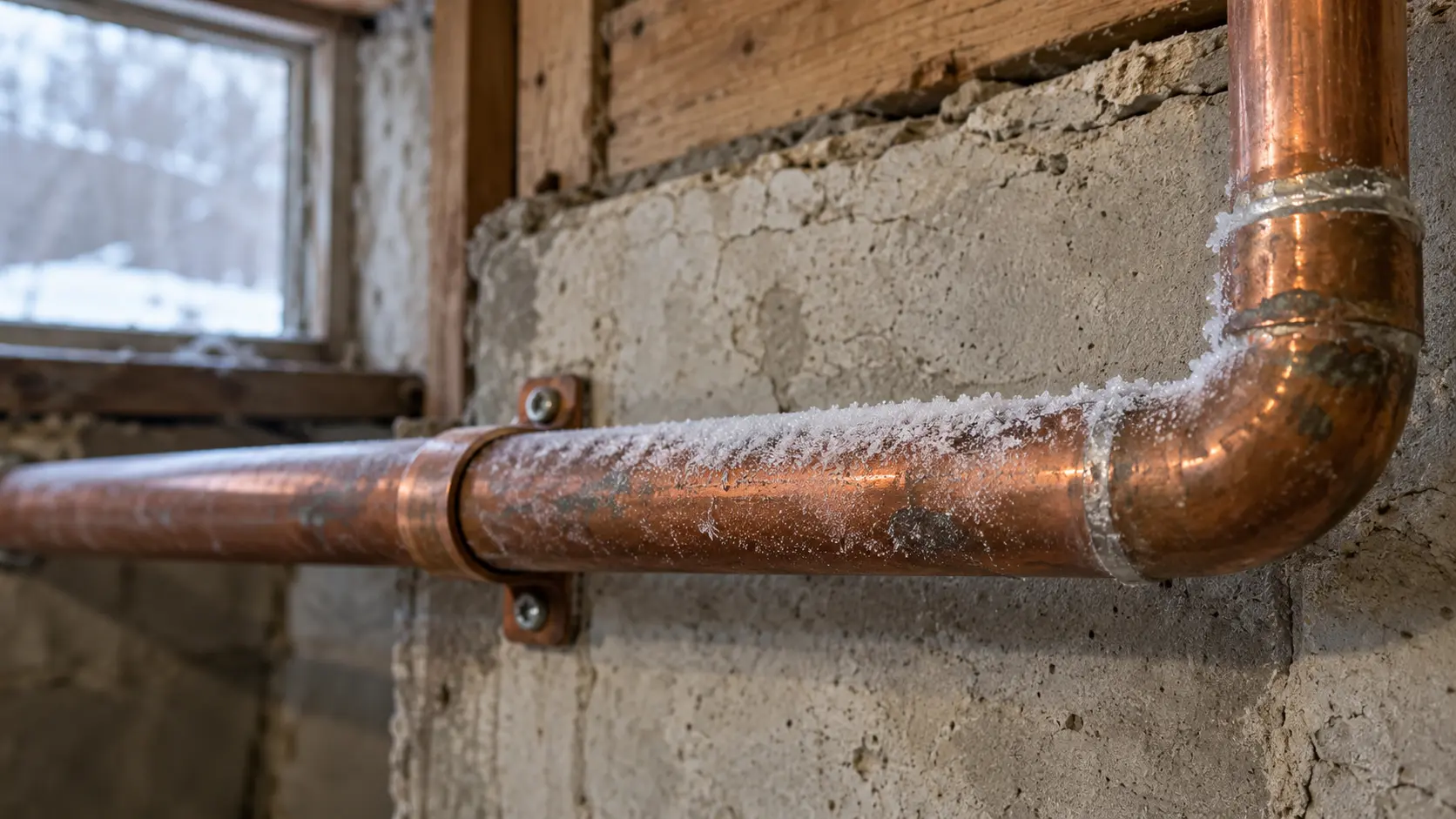
A faucet that suddenly produces little or no water during freezing weather is a warning sign. Frost on accessible piping adds evidence, but a frozen section can be hidden and show no visible ice.
| What you notice | What to check next |
|---|---|
| Kitchen has no water; bathroom works | Inspect the kitchen branch and cabinet along the outside wall. |
| Cold water works; hot does not flow | Check other hot taps; distinguish blocked flow from water that flows but stays cold. |
| No water anywhere | Check utility notices, the incoming supply area, and whether neighbors have water. |
| Water returns, but pressure stays low | Check for remaining blockage or leakage; arrange diagnosis if it persists. |
These patterns help locate the problem; they do not prove freezing. A closed valve or fixture fault can produce similar symptoms. Damp drywall and ceiling stains warrant a leak inspection. PURE Insurance’s inspection guidance also flags unexpected water accumulation and unusual plumbing noises. Noise alone cannot confirm an ice blockage.
How to Thaw Frozen Pipes Safely
Attempt gentle warming only when the affected piping is accessible, appears intact, and the work area is dry. Locate the shutoff before starting.
- Open the affected tap and cabinet. Allow heated room air to reach the plumbing. Move cleaning products away from children and pets.
- Warm the area gradually. Use warm air from a hair dryer at a safe distance, keeping it moving and away from water. Follow the pipe manufacturer’s instructions; avoid concentrated high heat.
- Stay with the equipment. Watch the piping and nearby surfaces as flow returns. Stop and close the water supply if leakage appears.
- Check the result. Once flow is restored, inspect accessible joints and surrounding rooms. If the supply was isolated because damage was suspected, have a plumber assess it before reopening.
The CDC recommends slow thawing with warm air. If using an electric space heater to warm a room, keep it at least three feet from combustible materials, away from water, and plugged directly into a suitable wall outlet. Do not put it inside a sink cabinet.
Avoid torches, heat guns, boiling water, improvised electrical thawing, and fuel-burning construction heaters. Do not pour drain cleaner, antifreeze, or alcohol into household water lines. Pouring hot water down a sink does not thaw its separate supply pipe.
Can’t find or safely reach the frozen pipe? Stop before opening walls or applying stronger heat. Home Rangers can inspect the affected plumbing and recommend the next step for restoring water and addressing any damage.
Frozen Pipes in Walls, Crawl Spaces, or Underground
Inside a wall: Maintain room heat and open nearby cabinets. Do not drill blindly or direct heat through holes. A plumber can determine whether access is needed and check for concealed damage.
Under the house: Avoid entering a flooded, electrically unsafe, or cramped crawl space with heating equipment. Identify the affected fixture and describe the pipe route when requesting help.
Underground or outside: Contact your water utility to rule out a supply problem, then arrange a plumbing inspection. Do not dig or connect a welder to the line. Equipment selection depends on the material and location.
What About Frozen PEX or Plastic Pipes?
PEX can freeze; flexibility does not make the installation freeze-proof. Uponor’s PEX installation guide permits gradual warming methods for its products, including warm towels and gently applied warm air. Follow the instructions for your specific piping rather than transferring a method between PEX, copper, PVC, and CPVC.
Will Frozen Pipes Thaw on Their Own?
They may thaw when the surrounding space warms enough, but warmer outdoor weather does not prove a hidden pipe has thawed. There is no reliable universal thawing time: access, ice-blockage length, and available heat differ.
If your pipes have been frozen for two days, seek professional diagnosis rather than waiting another night. A returning water supply can reveal previously hidden damage. Arrange monitoring if you must leave; tell the plumber whether the main valve is open or closed.
Who to Call and What Frozen Pipe Repair Costs
Call a licensed plumber for inaccessible pipes, visible damage, persistent loss of water, or thawing that is not progressing. For active leakage or an unusable water supply, contact an emergency plumber. Tell the dispatcher which fixtures work, when flow stopped, and whether you have shut off the water.
Thawing an accessible intact pipe and replacing a damaged concealed line are different jobs. Ask whether the estimate includes diagnosis, access work, replacement fittings, leak checks, and wall restoration. Request a quote for your situation before approving work.
A useful service visit should answer three questions: where is the blockage, has anything been damaged, and why did this section freeze? Ask the plumber to explain how they will check for leaks after restoring flow. If the same kitchen or upstairs bathroom freezes repeatedly, request a prevention plan as well as an immediate fix.
Water leaking as the pipe thaws? Shut off the supply if you can reach the valve safely. Call Home Rangers to describe the leak, confirm current technician availability, and discuss the next step. Avoid electrical equipment in wet areas.
How to Prevent Frozen Pipes
Start with the places that have frozen before. During a cold spell, check those fixtures before bed and again in the morning so reduced flow does not go unnoticed. Keep a record of which tap loses water first; that detail can help narrow down the vulnerable branch during an inspection.
- Maintain heat. Keep a steady thermostat setting during severe cold. The American Red Cross recommends at least 55°F when away; colder concealed spaces still need protection.
- Insulate exposed hot and cold lines. Prioritize unheated basements, garages, and crawl spaces.
- Keep cold drafts away. Repair broken windows and address gaps near plumbing without blocking required ventilation.
- Let warm air circulate. Open sink cabinets and keep garage doors closed where water lines are present.
- Disconnect outdoor hoses. Isolate and drain outdoor branches according to their design.
- Use dripping strategically. A trickle through vulnerable piping can help during severe cold. Follow utility advice; one dripping faucet does not protect every branch.
For heating cable, choose a product approved for the pipe and installation. The CPSC advises following manufacturer instructions on wrapping, overlap, and insulation, and replacing damaged cable. Do not assume every cable can thaw an existing blockage.
Should You Drip Hot or Cold Water?
The vulnerable branch determines which water needs to move. Opening only the cold side does not move water through a separate hot-water branch. Ask your plumber or utility which fixtures to use for your layout. Confirm that the sink drains freely before leaving a faucet dripping, and do not treat dripping as a substitute for maintaining heat.
During a prolonged power outage, electric heating cable cannot protect piping without power. If heat cannot be maintained, ask about professional winterization. Closing the main alone leaves water in the system; draining water heaters, heating loops, and other equipment requires a system-specific plan. For repeated freezing, arrange a plumbing inspection to address the vulnerable route.
Frozen Pipes FAQ
Should I leave the faucet open if pipes are frozen?
Yes, leave the affected faucet open during supervised thawing. If there is damage or suspected leakage, close the main supply as well. An open faucet does not make a damaged line safe to pressurize.
Can I flush a toilet when pipes are frozen?
If only its supply line is frozen and the tank is full, the toilet may flush once but not refill. Do not keep flushing if the bowl rises, drains back up, or a frozen waste line is suspected.
Why is there no hot water after a freeze?
First distinguish no flow from water that flows but stays cold. They need different checks. Do not repeatedly reset or restart a water heater that may be frozen or damaged; have the equipment and connected piping assessed.
What should I do about frozen pipes in an apartment?
Notify emergency maintenance or the landlord promptly. Report affected fixtures and any leakage. Avoid operating shared building valves or attempting repairs to concealed plumbing; responsibility depends on the circumstances and applicable requirements.
Get help with frozen pipes before damage spreads.
Contact Home Rangers Heating, Air & Plumbing about frozen lines, loss of water, or leaks in Bucks County, Montgomery County, and nearby Philadelphia communities. Describe the problem so we can confirm availability and recommend the next step.
Or call us directly at (215) 454-0001