
To keep a tankless water heater from freezing, maintain the power required by its freeze-protection system, protect exposed water pipes, and follow the manufacturer’s cold-weather instructions. Outdoor installations, unheated garages, and power outages need particular attention. Built-in freeze protection does not necessarily protect the pipes and valves connected to the heater.
If your hot water has already stopped during a freeze, first check for leaks and compare hot- and cold-water flow. Do not repeatedly restart the heater or assume that turning up its temperature will melt an ice blockage. A frozen supply pipe, a blocked condensate drain, and an unrelated heating fault require different responses.
This guide covers residential tankless water heaters, including how to prepare before a cold snap, recognize possible freezing, and decide when to call a plumber.
Can a Tankless Water Heater Freeze?
Yes. Although a tankless unit does not store a large tank of hot water, water remains inside its heat exchanger and connected plumbing. If that water freezes, it can obstruct flow or damage components. The risk depends on the installation, exposure, available power, and the protection built into the particular model.
Do not confuse the freezing point of water with a manufacturer’s equipment rating. Water freezes at approximately 32°F, but that does not mean every heater freezes as soon as the outdoor temperature reaches 32°F. Equally, a published subzero protection rating is not a guarantee that the entire plumbing installation is protected.
When reviewing your manual, identify whether its temperature rating applies to an indoor or outdoor model, what operating conditions it assumes, and which components it excludes. An unprotected valve beneath the cabinet may be vulnerable even when the heater itself has freeze protection.
How to Keep a Tankless Water Heater From Freezing
1. Confirm what your model needs for freeze protection
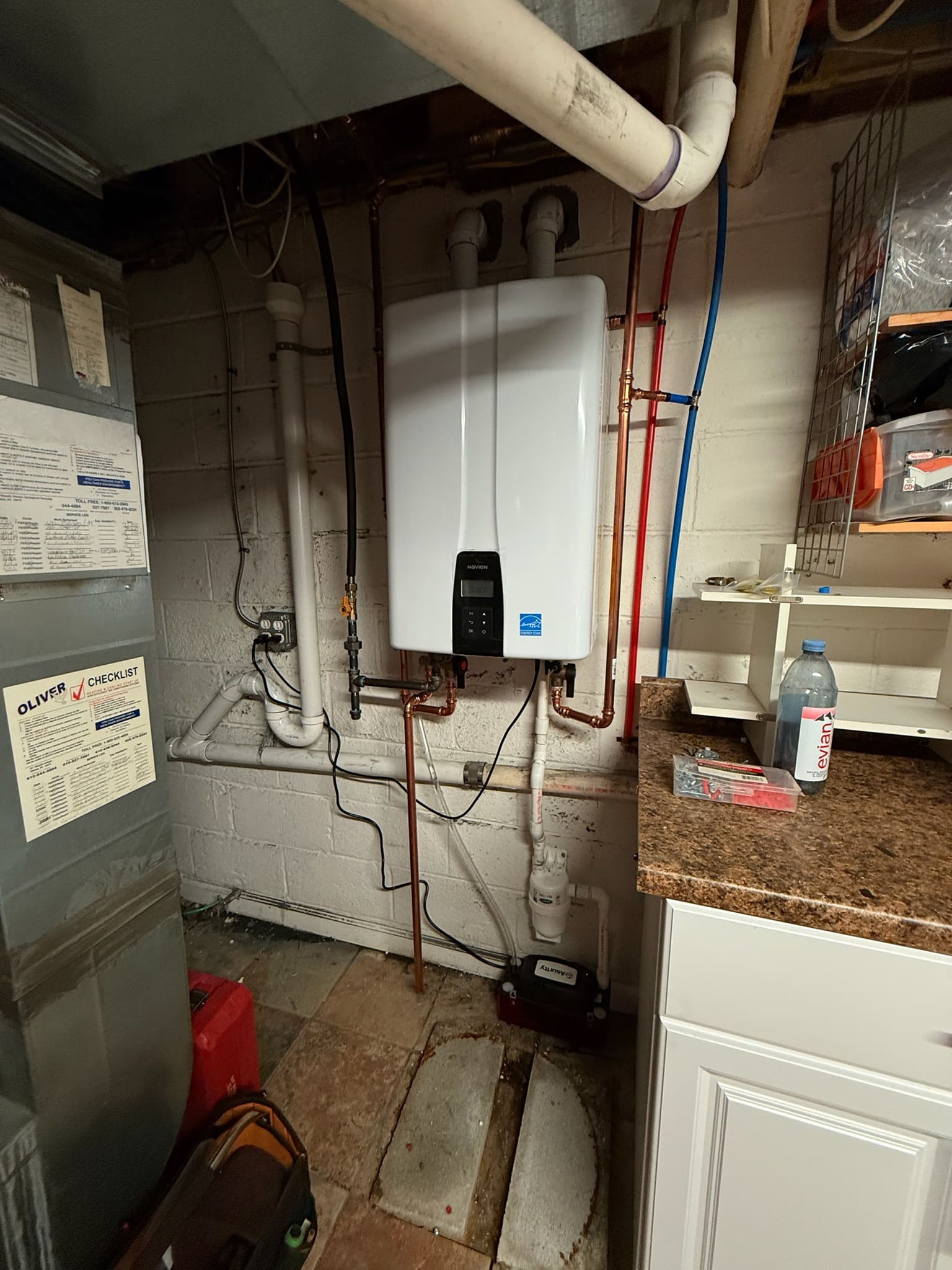
Find the model number on the equipment label and locate the freeze-protection section of its installation or owner’s manual. Check the requirements for electrical power, gas supply where applicable, and any settings or accessories. Do this before freezing weather arrives, while you have time to resolve questions.
Do not assume that switching off the front control panel is equivalent to unplugging the unit. On some models, protective functions can remain available with the display off, provided the required power supply remains connected. The exact behavior is model-specific.
For normal winter operation, keep the supplies required by the manufacturer available. Suspected leaks, electrical damage, or a gas emergency require a different response; routine freeze-prevention advice is not an instruction to keep damaged equipment operating.
2. Protect exposed pipes and valves
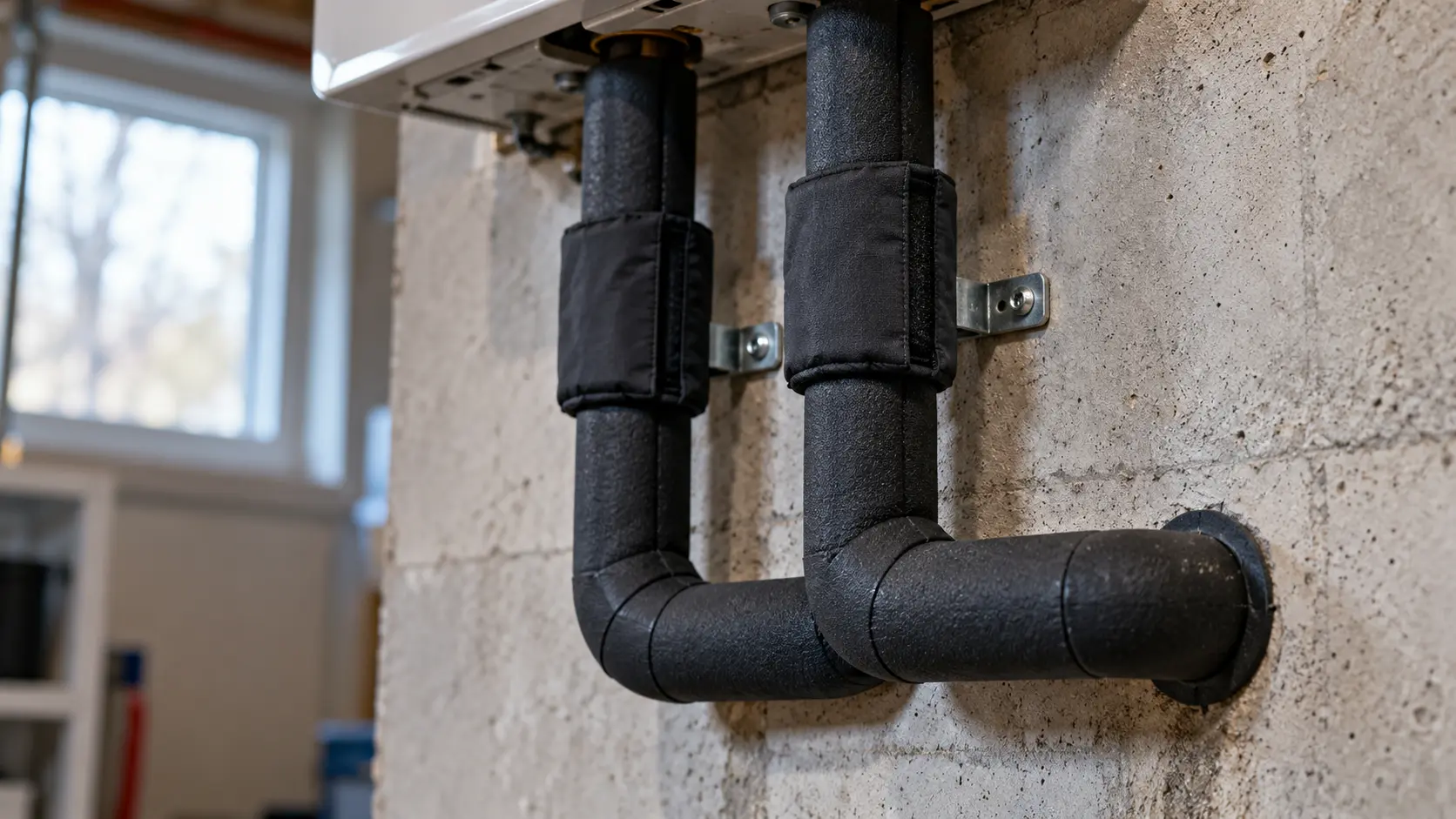
Inspect the cold-water inlet and hot-water outlet, including sections passing through garages, crawl spaces, and exterior walls. Look for missing insulation, open seams, and exposed fittings. Pay attention to the whole pipe route rather than only the short section immediately below the heater.
Proper pipe insulation slows heat loss. Where additional protection is necessary, a qualified installer can select heat-tracing equipment compatible with the pipe material, exposure, insulation, and electrical requirements. Heat cable is not interchangeable across every application.
Keep service valves accessible. Do not wrap the entire appliance in a blanket or cover its air openings, exhaust outlet, labels, or controls. Insulating water piping and enclosing a combustion appliance are different jobs.
3. Keep the surrounding space protected
An indoor location is only helpful if it provides suitable conditions. A garage, attic, or utility area that becomes very cold can still expose equipment and piping to freezing. Keep garage doors closed when practical and address unwanted drafts around building penetrations.
Do not seal openings intended to supply combustion air. If cold air appears to enter through the heater’s venting, have the vent arrangement evaluated rather than plugging the opening. A weatherproofing improvement must not interfere with safe appliance operation.
4. Make an outage plan before the temperature drops
Electrical freeze protection cannot be relied on during a power failure. Decide in advance whether your installation will use an approved backup-power arrangement or require draining according to the manufacturer. A gas-fired heater may still need electricity for its controls and protective functions.
Do not assume that a battery backup capable of powering the controls will also support every accessory. Ask the installer to account for any required pumps or heat tracing and to explain the expected runtime. Electric tankless water heaters have very different power requirements from gas models.
5. Use running water only as your manual directs
Some manufacturers describe maintaining water flow as a cold-weather precaution. However, a generic recommendation to “let a faucet drip” is not a complete tankless freeze-protection plan. The required flow and equipment settings can vary.
Check the instructions for your model before using this method. Do not rely on running water when the supply is interrupted, the drain is blocked, or a leak is suspected. It also does not replace proper insulation or an outage plan.
Not sure your tankless system is ready for freezing weather? Home Rangers can assess your installation, exposed piping, and cold-weather concerns. If recurring problems point to an unsuitable location or an aging unit, we can help you evaluate installation and replacement options for your home.
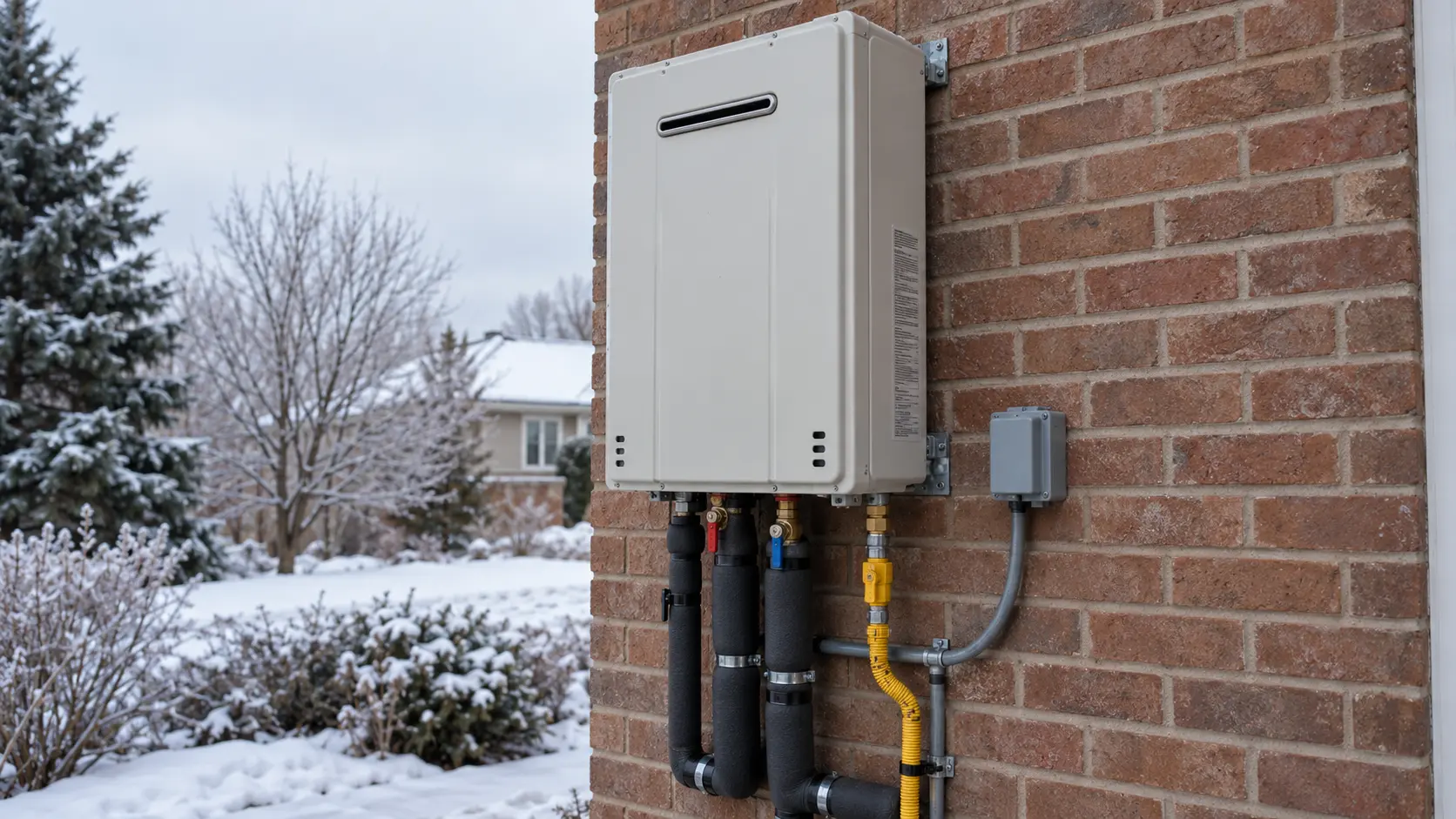
How to Keep an Outdoor Tankless Water Heater From Freezing
Protecting an outdoor tankless water heater starts with confirming that the model and installation are suitable for the location. An outdoor-rated cabinet does not make the connected plumbing immune to freezing. Wind exposure, exterior pipe runs, and interrupted power all deserve attention.
Review these points before a cold snap:
- Model suitability: verify the manufacturer’s outdoor installation and temperature requirements.
- Pipe protection: inspect both water connections and exposed valves, not just the appliance cabinet.
- Approved accessories: use pipe covers or protective accessories intended for the installation.
- Clear openings: keep the appliance’s required air and exhaust paths unobstructed.
- Outage response: know who will drain or otherwise protect the system if power is lost.
A homemade insulated box can create new problems if it blocks exhaust, restricts combustion air, or prevents servicing. Have any enclosure reviewed against the installation instructions. Never place a portable heater inside a makeshift cover around the water heater.
If the unit freezes repeatedly, record the weather, outage history, and affected pipe locations. Those observations help an installer distinguish a protection problem from a location or installation issue.
What to Do During a Power Outage or Winter Absence
Planning for freezing weather should include situations when nobody is using hot water. Leaving a water-filled system unattended with its required power or fuel disconnected can defeat the protections you normally rely on.
In its cold-weather guidance for tankless water heaters, Navien explains that freeze protection depends on electricity and advises draining when power or gas must be disconnected for an extended period. Follow the instructions for your exact model rather than applying another brand’s draining procedure.
Draining a tankless unit is not necessarily accomplished by opening a faucet. The required procedure may involve isolation valves, drain points, and other water-containing components. A condensate trap or connected piping may need separate attention.
Before leaving home, arrange a clear plan: who monitors the property, who can access the water shutoff, and who will respond if heat or power fails. If you are unfamiliar with the draining procedure, have a qualified professional winterize the equipment before the risk develops.
How to Recognize a Possible Frozen Tankless Water Heater
Start by describing what the water is doing. “No hot water” can mean no flow at all, normal flow at a cold temperature, or hot water that becomes cool during use. These are different symptoms, and none by itself proves that the heater’s internal components are frozen.
| Observation | What to investigate | Useful next step |
|---|---|---|
| Cold taps work, but hot taps have little or no flow | A restriction somewhere in the hot-water supply path | Check whether several fixtures are affected and report the pattern |
| Both hot and cold flow are reduced | A broader supply or piping problem | Check other fixtures and any known water-service interruption |
| Water flows normally but stays cold | A heating, power, fuel, or control problem | Record the display message and whether power was interrupted |
| A fault appears during freezing weather | The cause associated with that model’s error code | Photograph the code before attempting any permitted reset |
| A leak appears as temperatures rise | Possible damage that became visible during thawing | Stop using the system and arrange inspection |
These observations help narrow the problem; they are not a substitute for diagnosis. Avoid removing the cabinet to look for ice. A technician can inspect internal components and determine whether the heater, connecting pipes, or another part of the system is responsible.
What to Do if Your Tankless Water Heater Freezes
Do not try to force the heater to run through an ice blockage. Raising the setpoint or repeatedly resetting a fault does not establish that the water path is clear or the equipment is safe.
- Check for immediate hazards. If you smell gas, leave the area and contact your gas utility or emergency services from a safe location. Stay away from standing water near electrical equipment.
- Look for visible leakage from a safe position. If water is escaping, close the appropriate water supply valve if safely accessible. Do not touch wet electrical controls.
- Follow the model’s shutdown guidance. Procedures for suspected freezing differ from normal winter operation. Contact a professional if the instructions are unclear.
- Identify whether the problem is accessible piping or the appliance. Leave internal thawing and cabinet access to a qualified technician.
- Check for damage before returning to service. Restored flow does not prove that every component survived. Watch for leaks and persistent faults.
The American Red Cross guidance on frozen pipes warns against using an open flame for thawing and recommends a plumber when the frozen area cannot be located, accessed, or thawed. General pipe-thawing advice should not be treated as permission to heat a water heater’s internal components.
No hot water after a freeze, or seeing a leak as your system thaws? Home Rangers diagnoses tankless water heater flow problems, error codes, and leaks. Contact our team to describe the symptoms and arrange service before restarting equipment that may be damaged.
Tankless Water Heater Condensate Drain Freezing
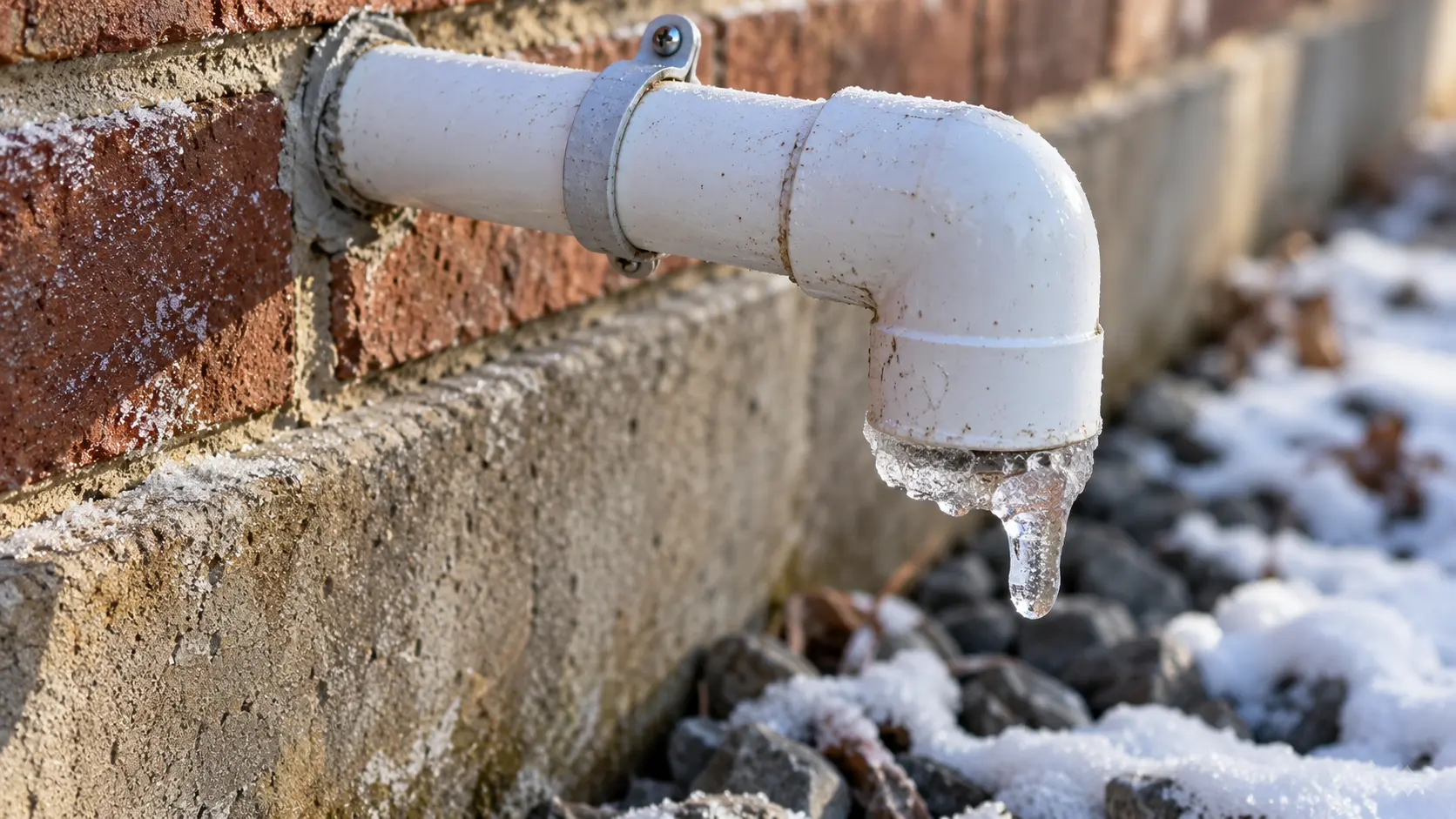
A condensing tankless heater has a drain for condensate produced during operation. This is separate from the hot- and cold-water piping. A frozen drain can interfere with operation even when water still flows through the household fixtures.
If trouble starts during a freeze, note whether the drain passes through an unheated area or terminates outdoors. Report any visible ice, backed-up drainage, or recurring fault to the technician. Do not assume that a particular error code always means frozen condensate; its meaning depends on the model.
A lasting correction may require changes to drain routing or protection consistent with the manufacturer’s requirements. Simply thawing the visible end may leave the underlying exposure unchanged. Do not disconnect the drain and allow condensate to spill indoors as a workaround.
Check ventilation separately
Snow or ice at an air intake or exhaust termination presents a different issue. Observe accessible terminations from a safe location and keep surrounding snow from accumulating against them. Do not insert tools into the vent, chip ice from appliance components, or alter the vent termination yourself.
Repeated icing needs evaluation of the installation. The goal is to understand why it occurs and restore the required airflow, not bypass a safety shutdown.
Rinnai, Navien, and Rheem: Check the Specific Model
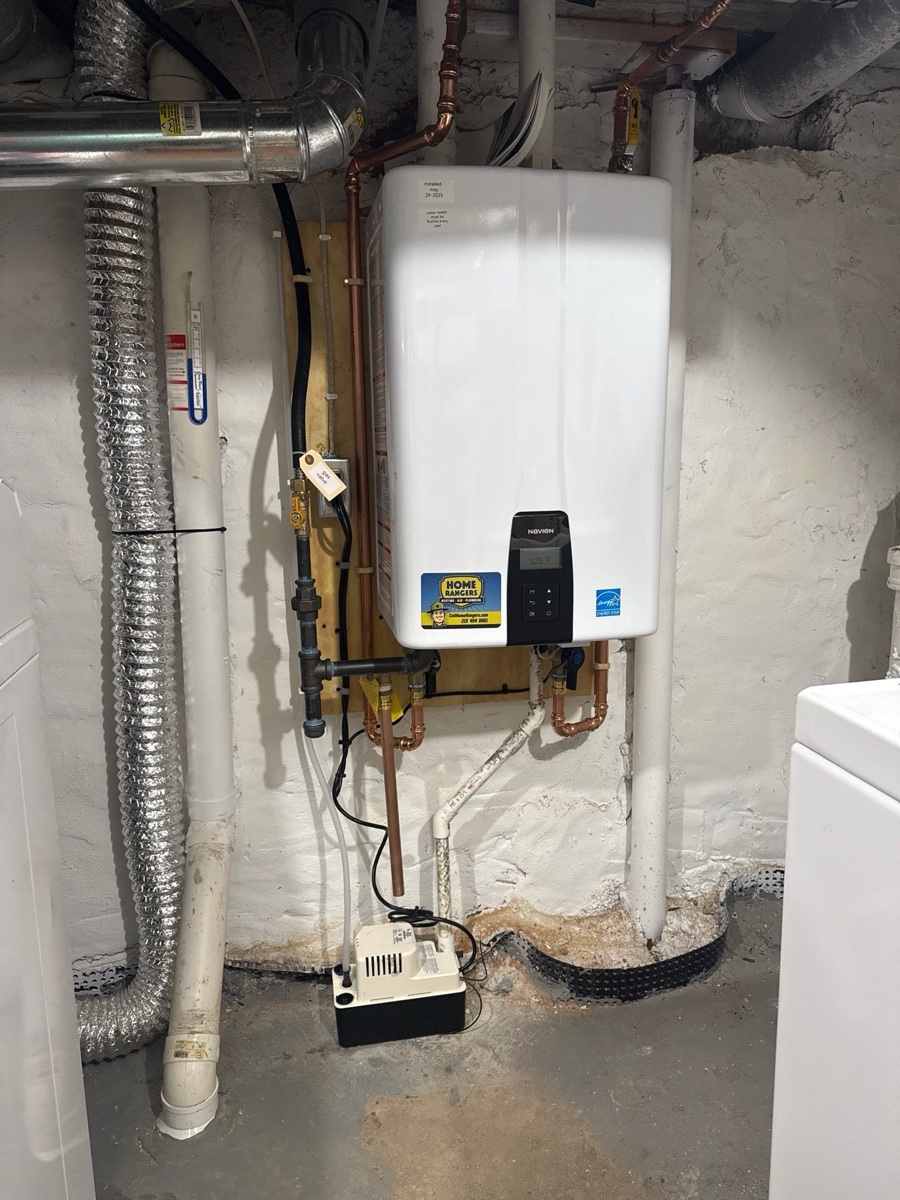
For a Rinnai tankless water heater freezing concern, start with the model number and its freeze-protection instructions. Rinnai’s official FAQ distinguishes built-in protection from the additional protection needed for external pipes and valves. A protected cabinet does not mean every nearby connection is protected.
Navien and Rheem owners should make the same model-specific checks. Confirm indoor versus outdoor use, required power and fuel, draining instructions, and permitted accessories. Do not transfer a temperature rating from a different product simply because it carries the same brand name.
Rheem’s explanation of freezing damage describes how freezing can affect a tankless heat exchanger and other components. That is why an inspection after a suspected freeze matters even if the equipment later produces hot water.
Frequently Asked Questions
How do you keep a tankless water heater from freezing overnight?
Follow the model’s freeze-protection instructions, keep its required supplies available, and protect exposed piping. Check the forecast before bedtime and have an outage plan. If the manufacturer recommends maintaining water flow, use its specified method rather than assuming any slow drip is sufficient.
Can an indoor tankless water heater freeze?
Yes. An indoor unit can still be exposed to freezing conditions in an unheated space or during a loss of building heat. Look at the temperature around the equipment and the entire connected pipe route, not just whether the cabinet is inside the house.
Does a gas tankless water heater need electricity for freeze protection?
Many gas tankless models use electricity for controls and freeze-protection functions. A working gas supply alone does not establish that protection is operating. Check your manual and plan for power failures before freezing weather arrives.
Should I turn up the temperature during freezing weather?
Do not use a higher hot-water setpoint as a substitute for freeze protection. It does not verify that exposed pipes are protected or that an ice blockage has cleared. Keep normal settings within the manufacturer’s guidance and investigate any loss of flow or heating separately.
Why does my tankless hot water heater struggle in cold weather?
Freezing is only one possibility. Colder incoming water requires a greater temperature rise, which affects available hot-water output. If the problem appears when several fixtures run together, have demand and capacity assessed. Restricted flow, fuel problems, and equipment faults also require diagnosis.
Is freeze damage covered by the warranty?
Check the warranty for your exact model. Do not assume that the presence of freeze protection guarantees coverage for freezing damage. Keep the model number, installation records, photographs, and service findings available when discussing a potential claim with the manufacturer or installer.
Get Help With Winter Tankless Water Heater Problems
If your system loses flow during cold snaps, repeatedly shuts down, or leaks after thawing, have the cause investigated. When you contact a technician, share the model number, error message, outage history, and whether the problem affects one fixture or the whole home.
Home Rangers Heating, Air & Plumbing serves homeowners in Bucks County, Montgomery County, Philadelphia, and nearby communities. Our team can evaluate tankless water heater problems and explain the next steps for your installation.
Protect your hot water supply through freezing weather.
Concerned about frozen pipes, a tankless water heater fault, or damage after a cold snap? Schedule a visit with Home Rangers to identify the problem and discuss practical protection for your system.
Book My Tankless Water Heater Service →
Or call us directly at (215) 454-0001